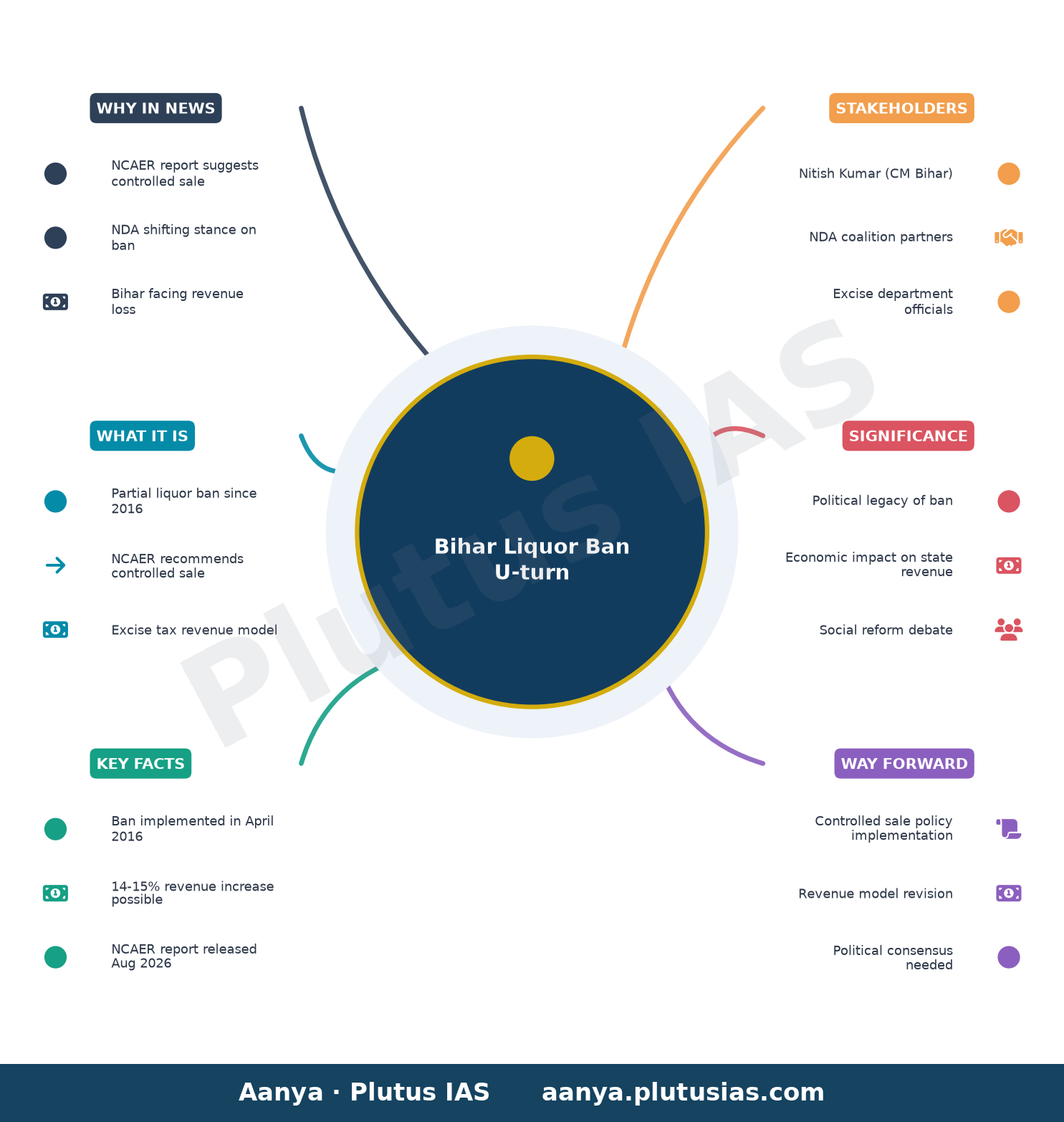
✎ Bihar's liquor ban faces U-turn due to economic losses, with NCAER recommending controlled sale for 14-15% revenue boost.
Relevance for Banking, SSC & RBI Grade B exams: Economy/Governance
Bihar’s decade-old prohibition policy is facing renewed scrutiny after the National Council of Applied Economic Research (NCAER) recommended a controlled sale of liquor to boost state revenue by 14-15%. The report highlights the economic strain of prohibition, citing increased illicit liquor trade and higher enforcement costs, while also questioning its claimed social benefits, such as reduced domestic violence. This shift in stance has intensified political debates, with NDA allies adopting divergent positions—JDU insists on maintaining the ban, while leaders like Chiraag Paswan oppose its removal and others suggest a Gujarat-style regulated model. The controversy underscores the tension between social welfare goals and fiscal sustainability, a key theme for governance and economic policy discussions in competitive exams.
For banking and SSC aspirants, this case study exemplifies the interplay between policy decisions and macroeconomic indicators like tax revenue and illicit trade. RBI Grade B candidates should note how such reforms could impact fiscal deficits, excise duty collections, and law enforcement budgets—critical for understanding fiscal federalism. The debate also reflects governance challenges in balancing populism with economic pragmatism, a recurring theme in governance sections of these exams.
Source: amarujala.com
Generated by AanyaAi for educational purpose.
