
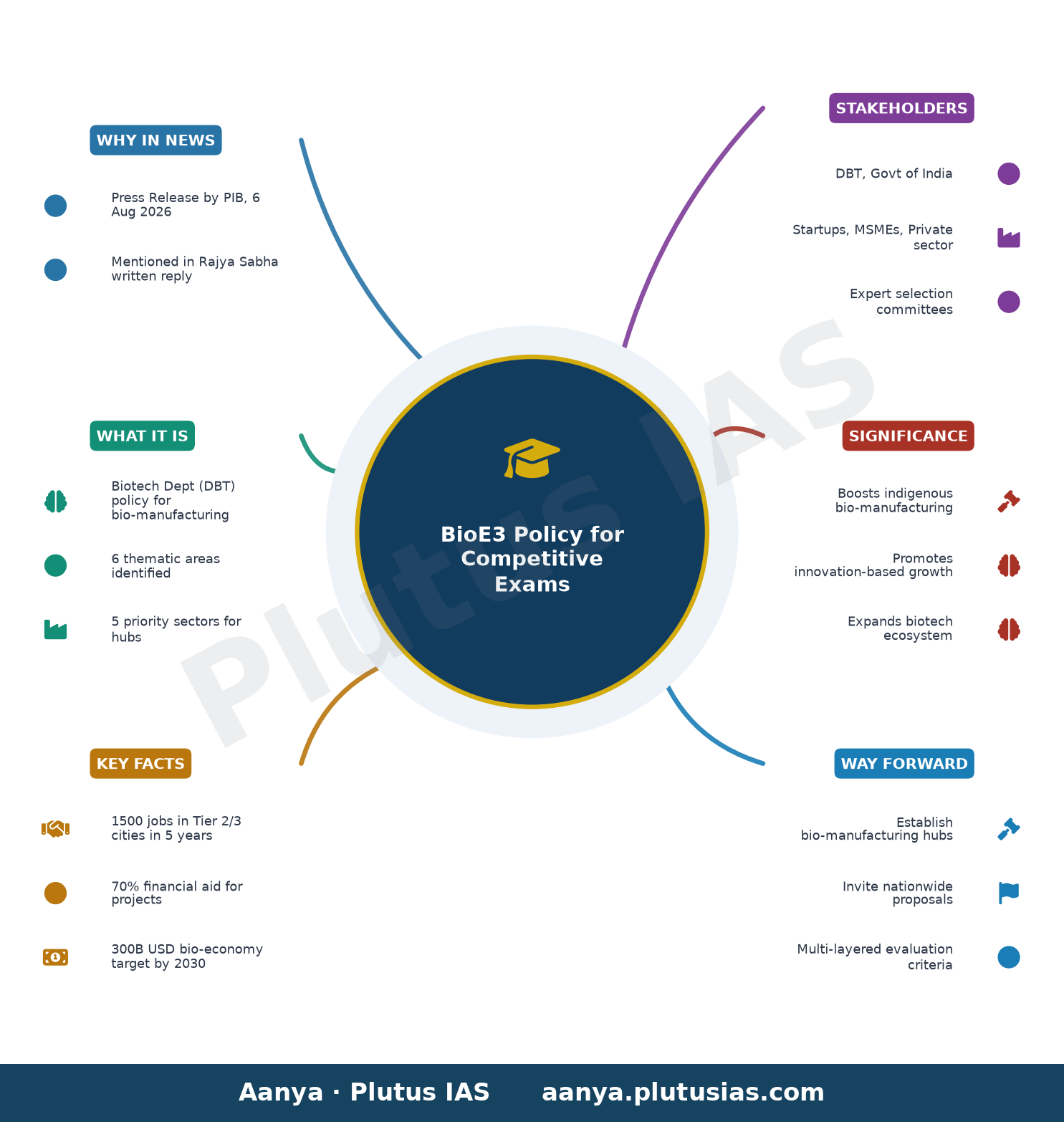
✎ BioE3 policy aims to strengthen indigenous bio-manufacturing, create jobs, and achieve a $300B bio-economy by 2030.
Relevance for Banking, SSC & RBI Grade B exams: Polity & Governance
The *BioE3* policy, launched by the Department of Biotechnology (DBT), aims to boost high-potential bio-manufacturing by integrating six thematic areas—bio-based chemicals, bioplastics, active pharmaceutical ingredients, functional foods, precision biomedicine, climate-resilient agriculture, biofuels, and futuristic marine/space research—alongside five priority sectors: Ayurveda, genome diagnostics, synthetic biology, biomolecular design, and bio-AI hubs. These initiatives, including the establishment of bio-manufacturing hubs, biofoundries, and bio-AI centers, are designed to foster indigenous innovation, create employment opportunities—particularly in tier-II and tier-III cities—and align with India’s goal of achieving a $300 billion bio-economy by 2030. The policy’s structured selection process, involving multi-tiered evaluations of technical and financial feasibility, ensures robust participation from startups, MSMEs, and private industries, with up to 70% financial support for eligible projects. This approach not only strengthens self-reliance in biotechnology but also positions India as a global leader in sustainable and high-tech bio-manufacturing.
For banking and SSC aspirants, the *BioE3* policy underscores the government’s push for *Make in India* through bio-based industries, which can stimulate demand for financial services like loans, venture capital, and insurance—key areas for exam questions on economic policies and financial inclusion. RBI Grade B candidates should note how such policies contribute to structural reforms in the economy, particularly in sectors like pharmaceuticals, agriculture, and clean energy, which are critical for inflation control, employment generation, and sustainable growth. The policy’s emphasis on public-private partnerships and innovation also reflects broader governance trends, making it a relevant case study for questions on policy implementation, fiscal incentives, and employment generation in competitive exams.
Source: PIB (Press Information Bureau)
Generated by AanyaAi for educational purpose.
