
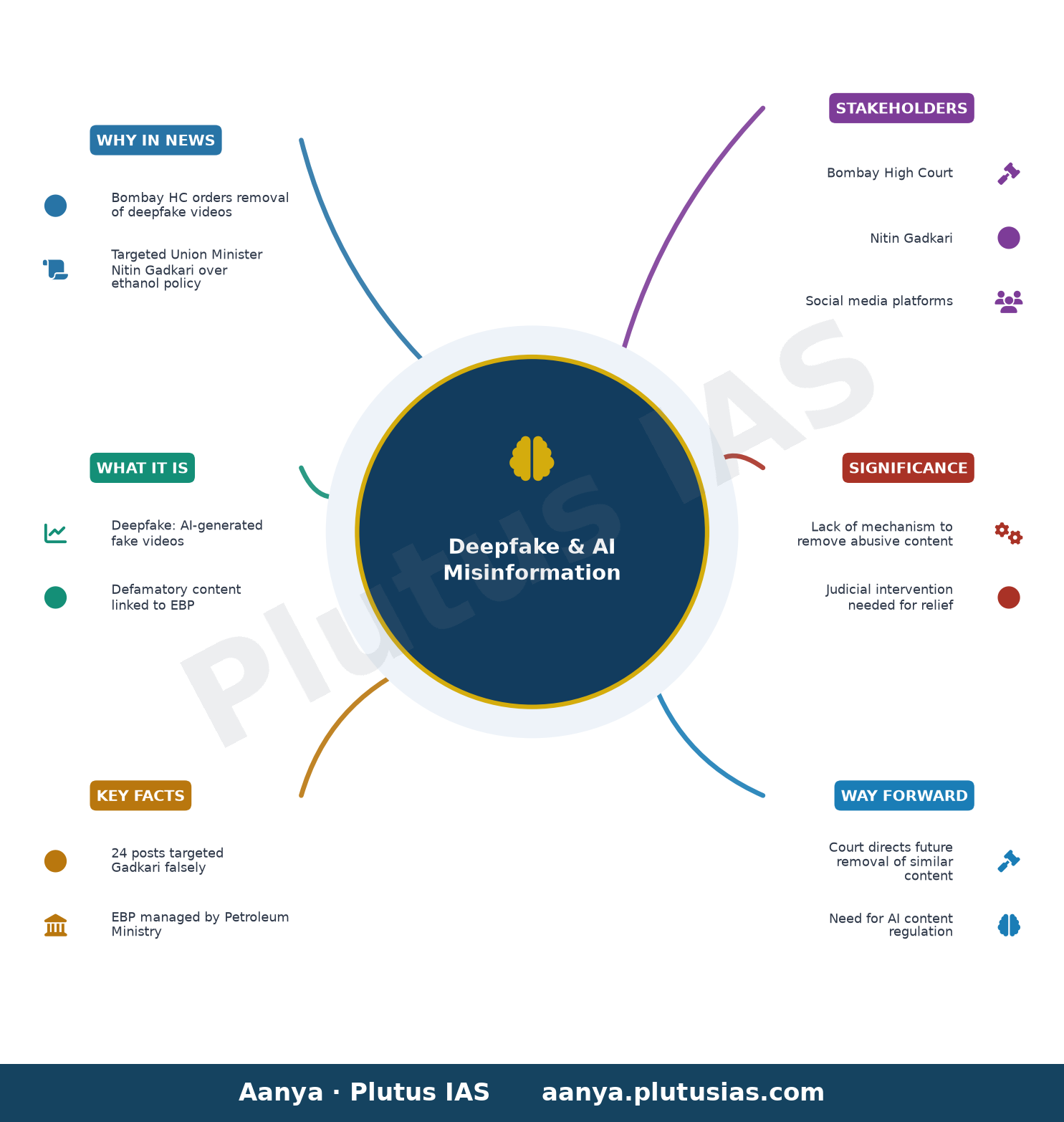
✎ Deepfakes targeting policymakers highlight legal gaps in AI-generated misinformation and the judiciary's role in addressing it.
Relevance for Banking, SSC & RBI Grade B exams: Polity & Governance
The Bombay High Court’s recent directive to remove deepfake videos targeting Union Minister Nitin Gadkari over his alleged role in the Ethanol Blending Programme (EBP) highlights critical issues in digital governance and legal recourse for defamation. The court’s observation that individuals must repeatedly approach judicial authorities to address abusive online content underscores the urgent need for a robust regulatory framework to curb misinformation and deepfakes. This case is particularly relevant for aspirants of banking and SSC exams, as it reflects the intersection of technology, law, and public policy—a domain increasingly scrutinized in governance assessments. For RBI Grade B candidates, the ruling serves as a case study in how judicial intervention shapes regulatory responses to emerging digital threats, a topic often tested in economic and financial awareness sections.
The order also emphasizes the role of social media platforms in moderating content, a subject relevant to current affairs in competitive exams. Aspirants preparing for Bank PO, IBPS, or SSC should note how the court’s intervention in Gadkari’s defamation case aligns with broader debates on accountability, free speech, and the ethical use of AI. The case further ties into the government’s ethanol policy, a key topic in economic surveys and policy discussions, making it a potential question in descriptive exams. Understanding such judicial precedents helps candidates analyze the legal and administrative challenges in tackling disinformation, a skill crucial for both written and interview stages of these examinations.
Source: The Hindu
Generated by AanyaAi for educational purpose.
