
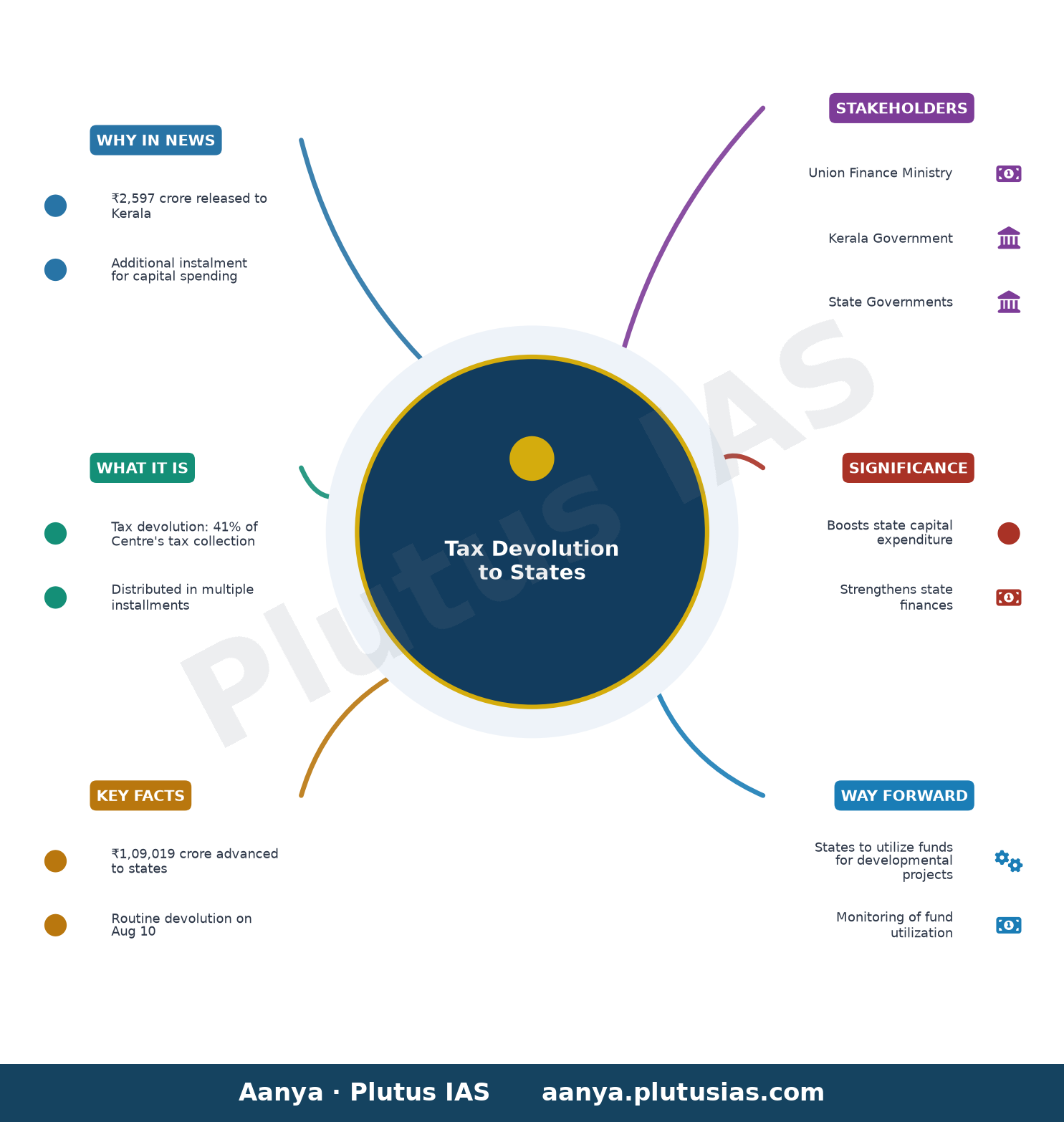
✎ Tax devolution is a key fiscal federalism tool where 41% of Centre's tax is shared with states in installments to boost developmental spending.
Relevance for Banking, SSC & RBI Grade B exams: Economy
The Union government released ₹2,597 crore to Kerala as an additional instalment of tax devolution to support capital expenditure, in addition to the routine monthly devolution scheduled for August 10. This ₹1,09,019 crore advance instalment, distributed among states, aims to strengthen their finances and accelerate developmental spending, with 41% of central tax collections being devolved to states in multiple tranches annually. For banking and SSC aspirants, this highlights the significance of fiscal federalism, tax devolution mechanisms, and the role of the Finance Ministry in resource allocation, which are often tested in exams like IBPS, SBI, and SSC CGL. Understanding such transfers is crucial for grasping India’s fiscal policy dynamics and state-centre financial relations.
For RBI Grade B aspirants, this move underscores the Centre’s efforts to bolster state-level capital spending, which can influence monetary policy, inflation control, and economic growth. The distribution of tax devolution also reflects the principles of the 15th Finance Commission, making it relevant for topics like fiscal transfers, GST compensation, and the Union Budget’s impact on state finances. Banking exams may test knowledge of such fiscal measures in the context of liquidity management, while SSC aspirants should focus on the broader implications for state budgets and developmental projects.
Source: The Hindu
Generated by AanyaAi for educational purpose.
