
Relevance for Banking, SSC & RBI Grade B exams: Polity & Governance
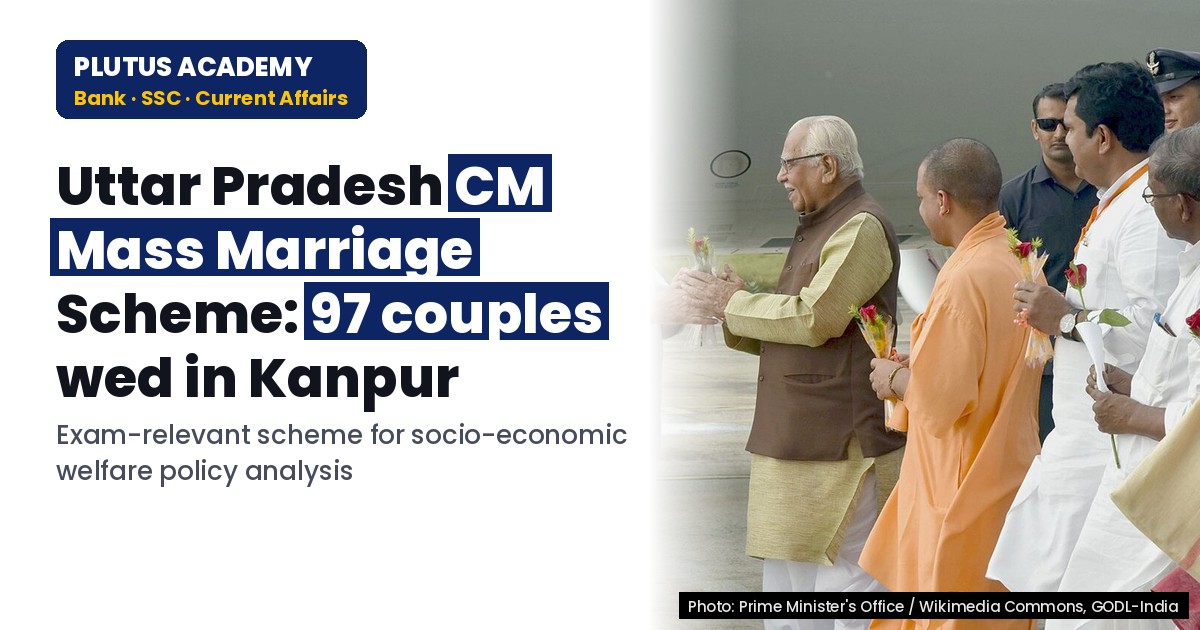
In Uttar Pradesh’s Kanpur, 97 couples solemnized their marriages under the Chief Minister’s Mass Marriage Scheme on Sunday, marking a significant initiative by the state government to promote social welfare. The event, held in Bithanwa’s Kathera village, saw Hindu couples perform the traditional *Saptapadi* ritual with Vedic chants, while two Muslim couples had their *Nikah* conducted by a cleric. The scheme, aimed at reducing financial burdens on economically weaker sections, reflects the government’s focus on inclusive governance and poverty alleviation, aligning with broader policy objectives of social equity and empowerment.
This initiative holds relevance for Banking, SSC, and RBI Grade B aspirants as it underscores the intersection of governance, social welfare schemes, and economic policies—key areas often tested in competitive exams. Questions may arise on the implementation of such schemes, their funding mechanisms (possibly through state budgets or central allocations), and their impact on socio-economic indicators like poverty reduction and gender equality. Additionally, the scheme’s emphasis on *Nikah* and *Saptapadi* highlights India’s pluralistic society, a topic relevant for exams covering Indian polity, governance, and cultural diversity.
Source: amarujala.com
Generated by AanyaAi for educational purpose.

2 comments on “Chief Minister’s Mass Marriage Scheme: 97 Couples Wed in Kanpur”