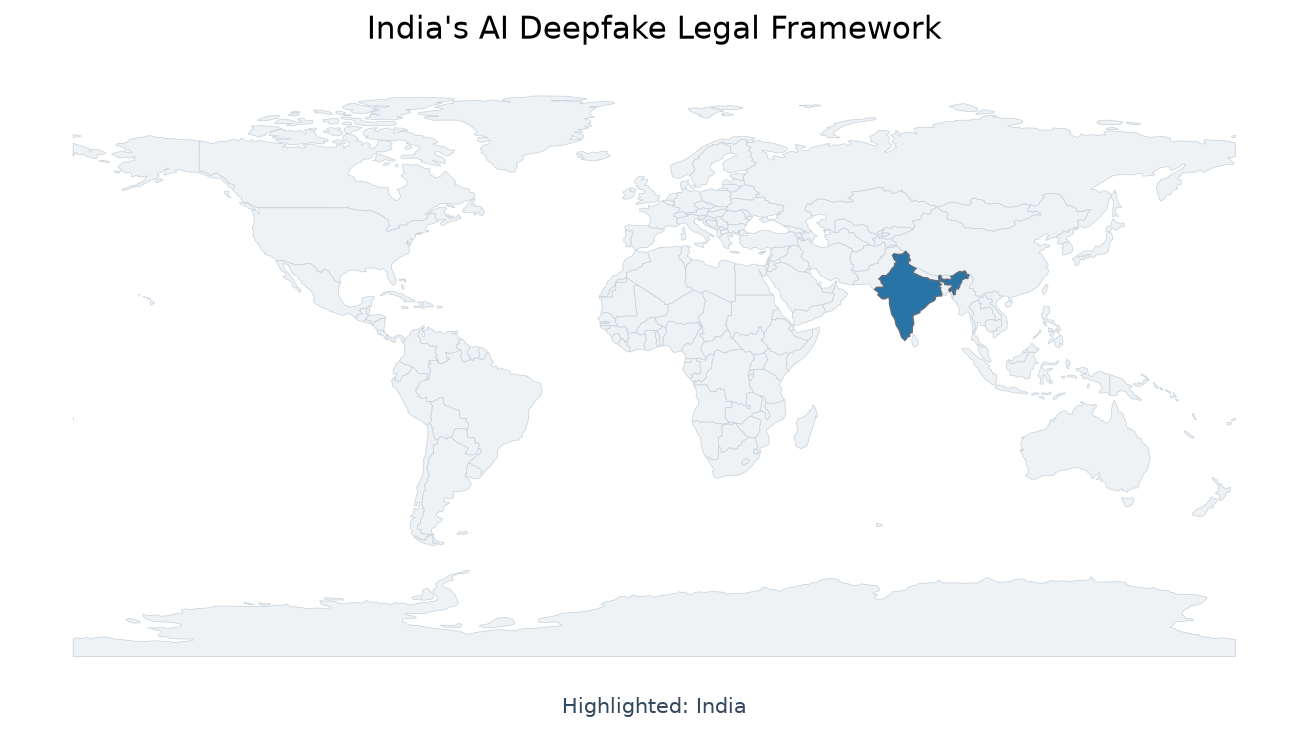
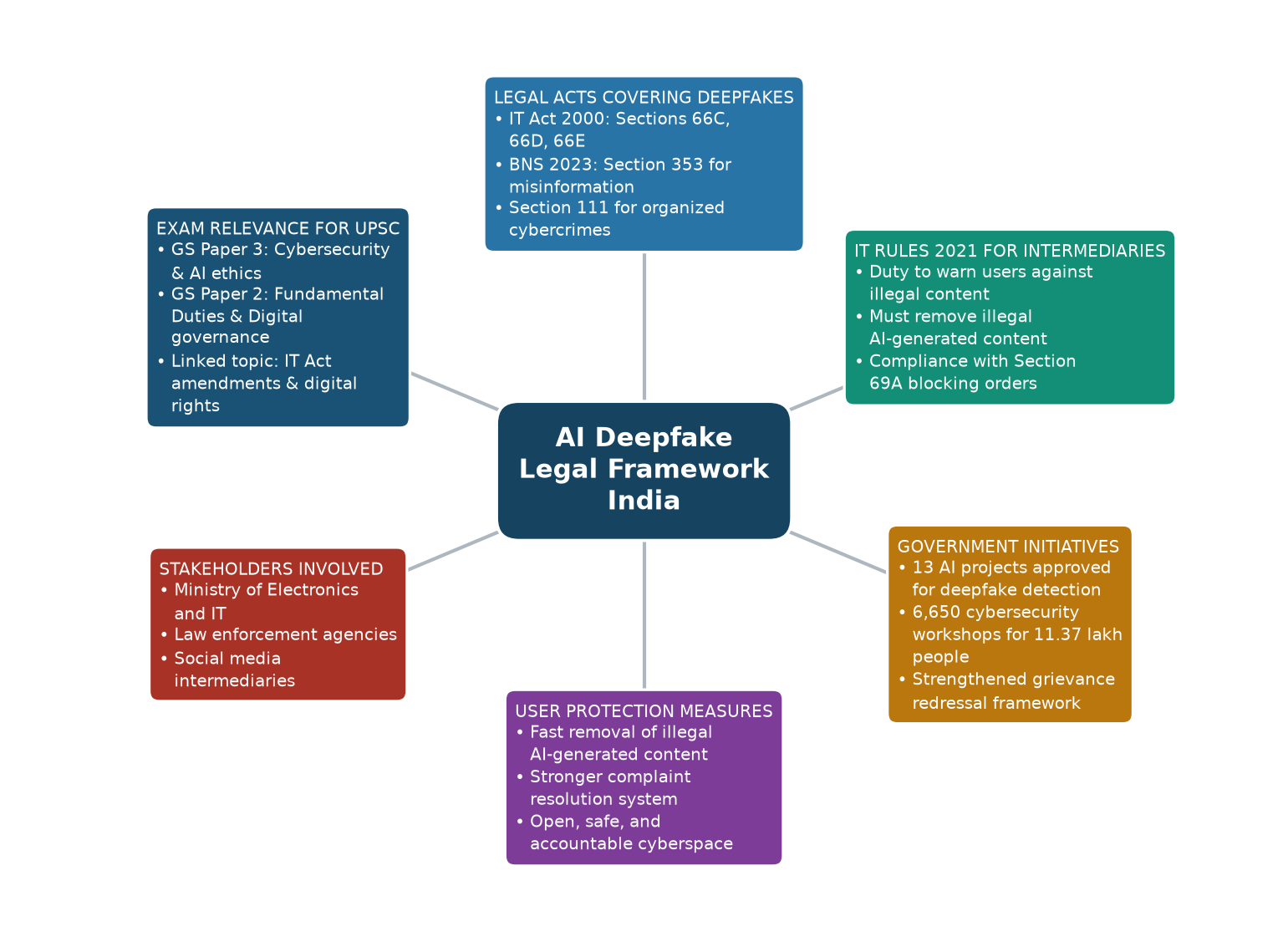
Map & concept mind-map: India’s AI Deepfake Legal Framework
Relevance for Banking, SSC & RBI Grade B exams: Security
The government has strengthened the regulatory framework to combat AI-generated deepfakes by enhancing legal safeguards, platform accountability, and citizen protection measures. It has approved 13 responsible AI projects for deepfake detection and conducted over 6,650 cybersecurity awareness workshops, benefiting over 11.37 lakh people. The IT Act, 2000, criminalizes identity theft, impersonation, privacy violations, and the publication of obscene or sexually explicit content, while the IT Rules, 2021, mandate intermediaries to remove illegal AI-generated content and ensure user safety. Recent amendments in February 2026 further tightened compliance, requiring clear labeling of AI-generated content and reducing removal timelines for illegal material from 36 hours to just 3 hours. These measures are crucial for banking and financial institutions, as deepfakes pose risks like fraud, identity theft, and misinformation, which could undermine trust in digital transactions and cybersecurity protocols.
For SSC and RBI Grade B aspirants, understanding these regulatory measures is essential as they highlight the intersection of technology, law, and governance. The IT Act and IT Rules provide a legal backbone to combat cyber threats, including deepfakes, which are increasingly used in financial scams and misinformation campaigns. The emphasis on intermediary accountability and swift grievance redressal mechanisms reflects the government’s proactive stance on cybersecurity, a critical area for aspirants preparing for exams that test awareness of current affairs, digital governance, and regulatory frameworks. Mastery of these topics can provide an edge in interviews and descriptive sections of SSC and RBI Grade B exams.
Source: PIB (Press Information Bureau)
Generated by AanyaAi for educational purpose.
