
Relevance for Banking, SSC & RBI Grade B exams: Polity & Governance
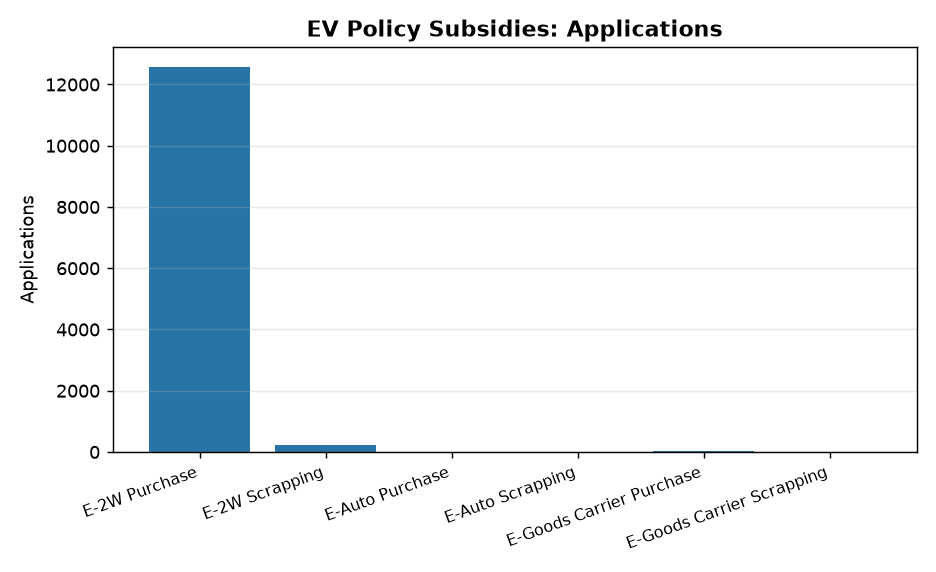
Delhi’s ambitious Electric Vehicle Policy 2026, despite offering significant subsidies for commercial vehicles like electric auto-rickshaws and goods carriers, has seen minimal adoption, contrasting sharply with the interest in two-wheeler incentives. With a deadline of January 1, 2027, for only electric auto-rickshaws to be registered in the city, government data reveals no applications for electric auto purchase incentives and only 37 for electric goods carriers, along with virtually no takers for scrapping incentives for conventional-fuel three-wheelers or goods carriers. This low uptake is attributed to technical issues with the Delhi EV portal not showing certified models, high vehicle costs, inadequate charging infrastructure, and the perception that current subsidies are insufficient to offset these challenges, even though the policy offered the biggest benefits in its first year.
This situation is relevant for Banking, SSC, and RBI Grade B exams under Polity & Governance as it highlights the practical challenges in implementing environmental policies aimed at reducing urban air pollution, a critical public health and governance issue. It demonstrates the complexities of policy design and execution, particularly concerning public-private partnerships, infrastructure development, and consumer behaviour in adopting new technologies. Furthermore, it touches upon economic aspects like subsidy effectiveness, market dynamics, and the role of government intervention in promoting sustainable transport, all of which are crucial for understanding broader economic and regulatory environments.
Source: The Indian Express
Generated by AanyaAi for educational purpose.

2 comments on “Delhi EV Policy: Low Uptake for Commercial Vehicle Subsidies”