✎ Government extended sugar storage limit to 30 days for bulk consumers via AAS/TRQ imports to stabilize prices and ensure festive supply.
Relevance for Banking, SSC & RBI Grade B exams: Polity & Governance
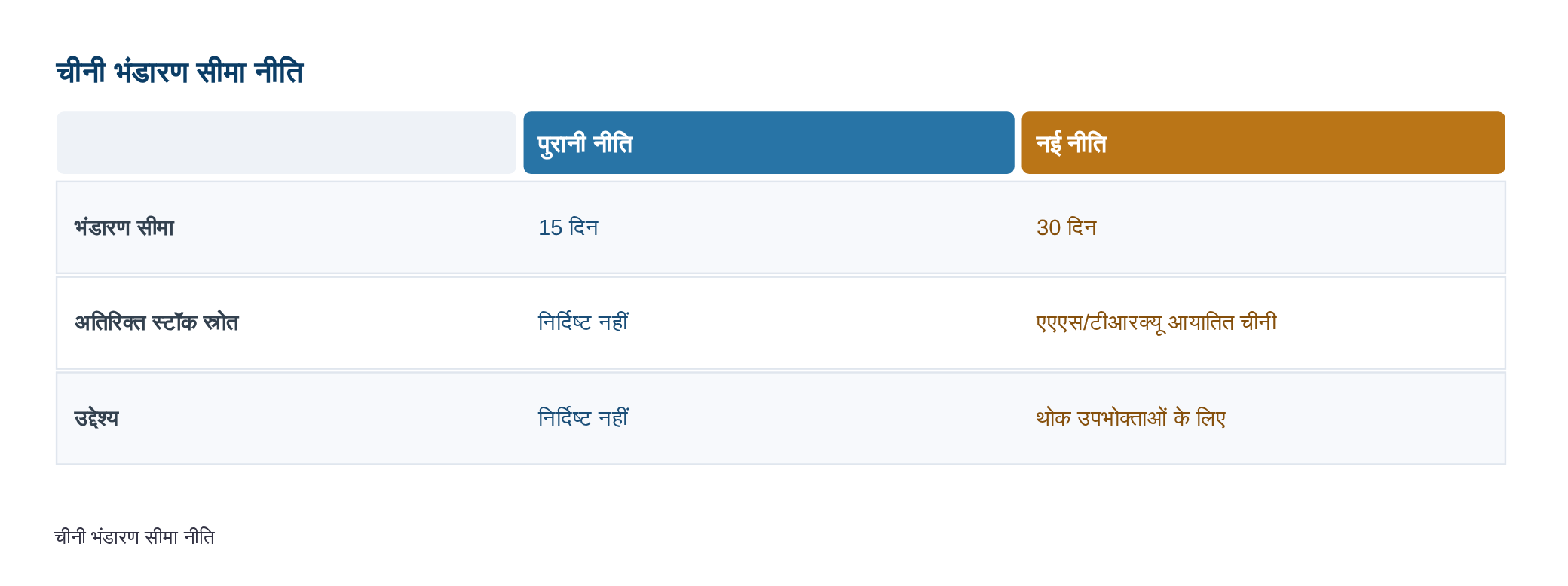
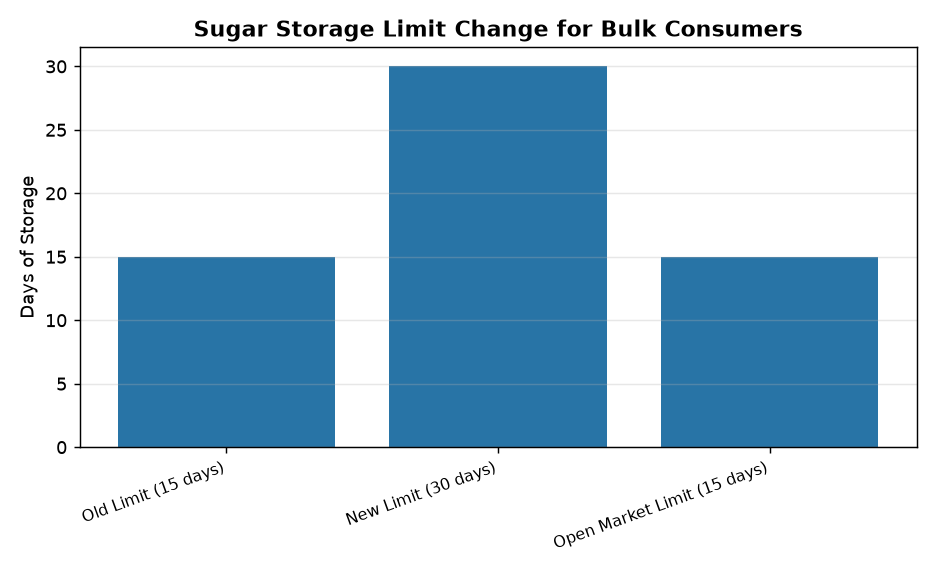
The government has increased the sugar storage limit for bulk consumers from 15 days to 30 days, with the additional stock permitted only from imported sugar under the Advance Authorization Scheme (AAS) and Tariff Rate Quota (TRQ). This decision, aimed at ensuring smooth industrial consumption during the festive season, allows bulk consumers—those using over 10 metric tonnes of sugar monthly—to hold larger inventories without disrupting domestic supply. The move also mandates weekly stock declarations via the Food & Public Distribution Department’s online portal to monitor market stability. For banking aspirants, this reflects government intervention in commodity markets to balance supply-demand dynamics, a key theme in economic governance. SSC candidates should note the policy’s focus on price stabilization and its impact on inflation, while RBI Grade B exams may test understanding of how such measures influence monetary policy and fiscal coordination.
The policy’s emphasis on imported sugar under AAS and TRQ highlights India’s reliance on global trade to manage domestic shortages, a critical aspect for competitive exams assessing international trade and policy frameworks. Additionally, the 10% decline in retail sugar prices—from ₹65 to ₹58.50—underscores the government’s push for fair price dissemination, urging traders to pass benefits to consumers. Banking exams may link this to liquidity management in commodity-linked sectors, while SSC aspirants should recognize the socio-economic implications of price controls. For RBI Grade B, the focus could extend to how such interventions align with inflation targeting and supply-side economics, testing candidates’ grasp of macroeconomic tools in governance.
Source: PIB (Press Information Bureau)
Generated by AanyaAi for educational purpose.
