
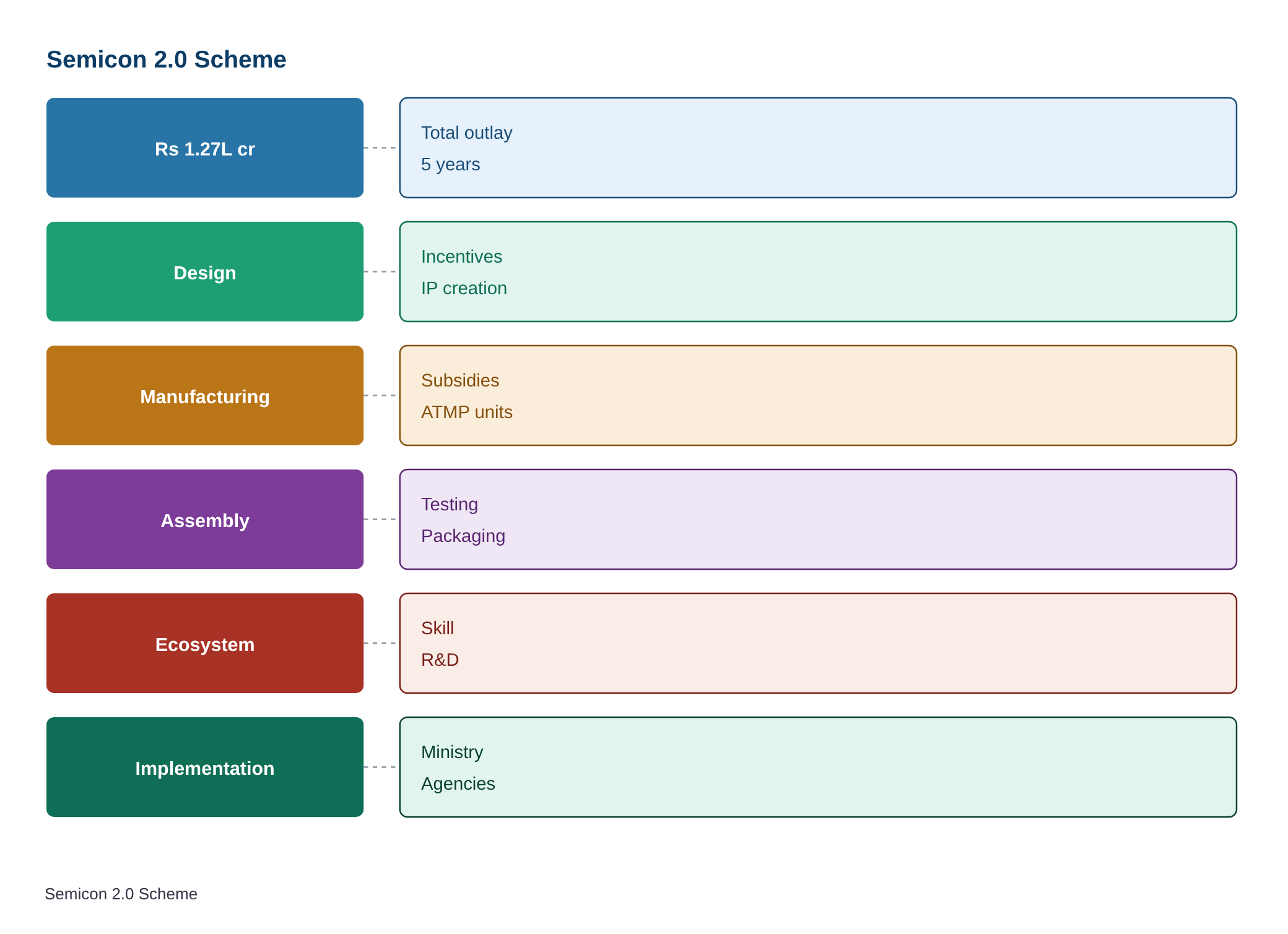
✎ Semicon 2.0 scheme aims to make India a global chip manufacturing hub with Rs 1.27 lakh crore investment.
Relevance for Banking, SSC & RBI Grade B exams: Polity & Governance
The Union government has notified the Semicon 2.0 scheme with an outlay of ₹1.27 lakh crore to strengthen India’s semiconductor ecosystem, covering chip design, fabrication, assembly, packaging, and testing. The scheme, divided into six segments, aims to foster self-reliance by supporting Indian firms in developing semiconductor Intellectual Property (IP) cores, System-on-Chips (SoCs), and modules for critical infrastructure. By incentivizing local production and innovation, the initiative seeks to reduce dependency on imports, enhance supply chain resilience, and position India as a global hub for semiconductor technology, aligning with broader goals of digital sovereignty and strategic autonomy.
For banking and SSC aspirants, this scheme highlights the government’s push for industrial growth and technological advancement, which can influence macroeconomic indicators like GDP, employment, and foreign investment. RBI Grade B candidates should note that semiconductor self-sufficiency could impact import bills, inflation dynamics, and monetary policy considerations, as reduced reliance on chip imports may stabilize costs and boost domestic manufacturing output. The scheme also underscores the intersection of technology, governance, and economic policy—a recurring theme in competitive exams.
Source: orissapost.com
Generated by AanyaAi for educational purpose.
