
✎ 2018 GSI report predicted Mumbai landslide; ignored warnings led to 8 deaths in 2026.
Relevance for Banking, SSC & RBI Grade B exams: Economy/Governance
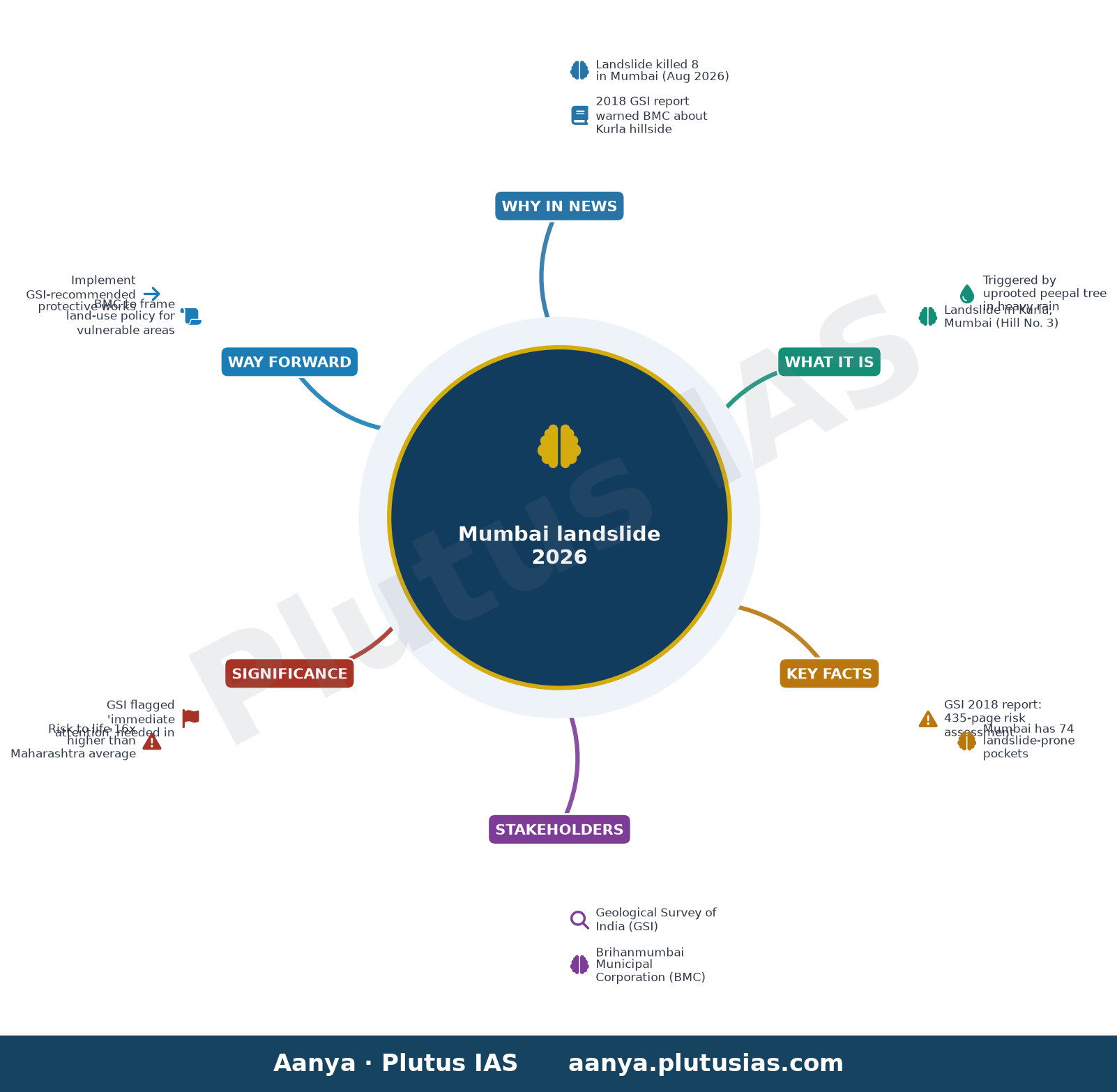
A 2018 Geological Survey of India (GSI) report had explicitly warned the Brihanmumbai Municipal Corporation (BMC) about the high landslide risk at Hill No. 3 in Kurla, Mumbai, categorizing it as a “highly vulnerable” zone and recommending immediate construction of retaining walls, drainage systems, and slope stabilization measures. The report, based on a 435-page risk assessment of 74 landslide-prone pockets in Mumbai, had also flagged the dangers of unchecked construction, slope cutting, and inadequate drainage—factors that contributed to Wednesday’s deadly landslide, which killed eight people. Despite these clear warnings, none of the recommended protective measures were implemented, underscoring systemic failures in urban governance, disaster preparedness, and inter-agency coordination.
For banking and SSC aspirants, this case highlights critical governance and economic risks tied to urban infrastructure neglect, which can lead to financial liabilities for public authorities and insurers. For RBI Grade B officers, it serves as a case study in policy implementation gaps, where delayed or unexecuted disaster mitigation projects can escalate systemic risks, affecting economic stability and public trust in governance. The incident also reflects broader themes relevant to banking exams, such as the importance of risk assessment, resource allocation, and accountability in public expenditure—key areas often tested in exams like IBPS, SBI, and SSC.
Source: The Indian Express
Generated by AanyaAi for educational purpose.
