
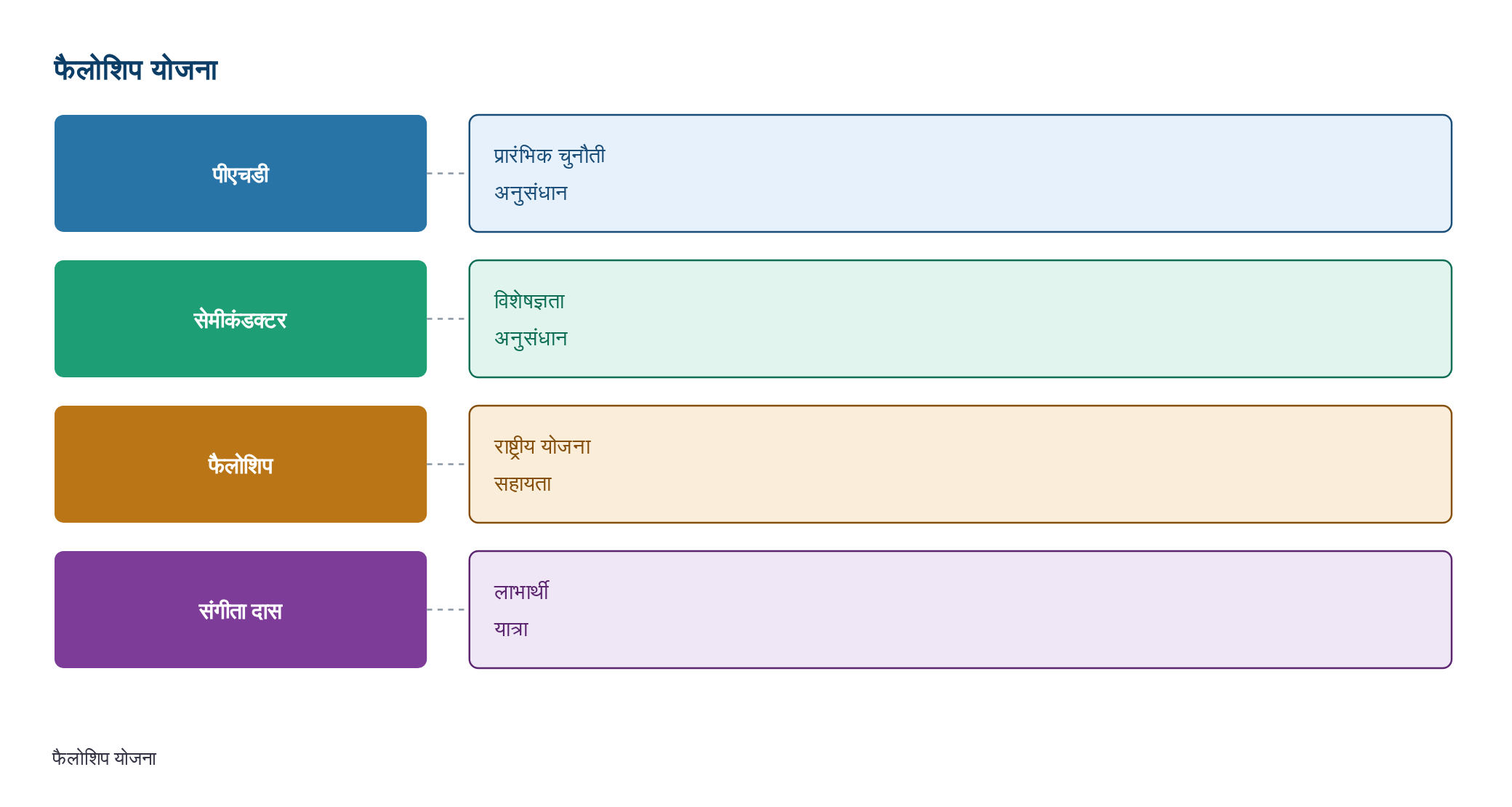
✎ NFSF empowers SC scholars to overcome financial and personal challenges while pursuing advanced research.
Relevance for Banking, SSC & RBI Grade B exams: Polity & Governance
The National Scheduled Castes Fellowship Scheme (NFSC) has emerged as a critical intervention in promoting higher education and research among marginalized communities, as highlighted by the success story of Sangita Das, a 34-year-old SC scholar. Her journey—from overcoming financial and personal challenges during her PhD to securing a position as Project Associate-II under the Centre’s ‘Chips to Startup’ program—underscores the transformative role of timely fellowship support. The scheme, which provided her with ₹31,000 per month, not only alleviated her financial burden but also enabled her to balance research responsibilities, childcare, and caregiving for her ailing father. Such initiatives are particularly relevant for banking and SSC aspirants, as they reflect the government’s commitment to inclusive growth and skill development, themes often tested in exams like RBI Grade B and IBPS.
Sangita’s case also illustrates how targeted welfare schemes can bridge socio-economic gaps in STEM fields, where representation of marginalized groups remains low. For banking exams, this highlights the importance of policies like NFSC in fostering human capital development, a key driver of economic progress. Similarly, SSC exams often include questions on government schemes and their socio-economic impact, making this a relevant case study. The RBI Grade B syllabus, which emphasizes governance and development, could draw parallels between such fellowships and broader initiatives like the ‘Chips to Startup’ program, which aims to boost India’s semiconductor ecosystem—a sector critical to the country’s technological sovereignty.
Source: PIB (Press Information Bureau)
Generated by AanyaAi for educational purpose.
