Relevance for Banking, SSC & RBI Grade B exams: Polity & Governance
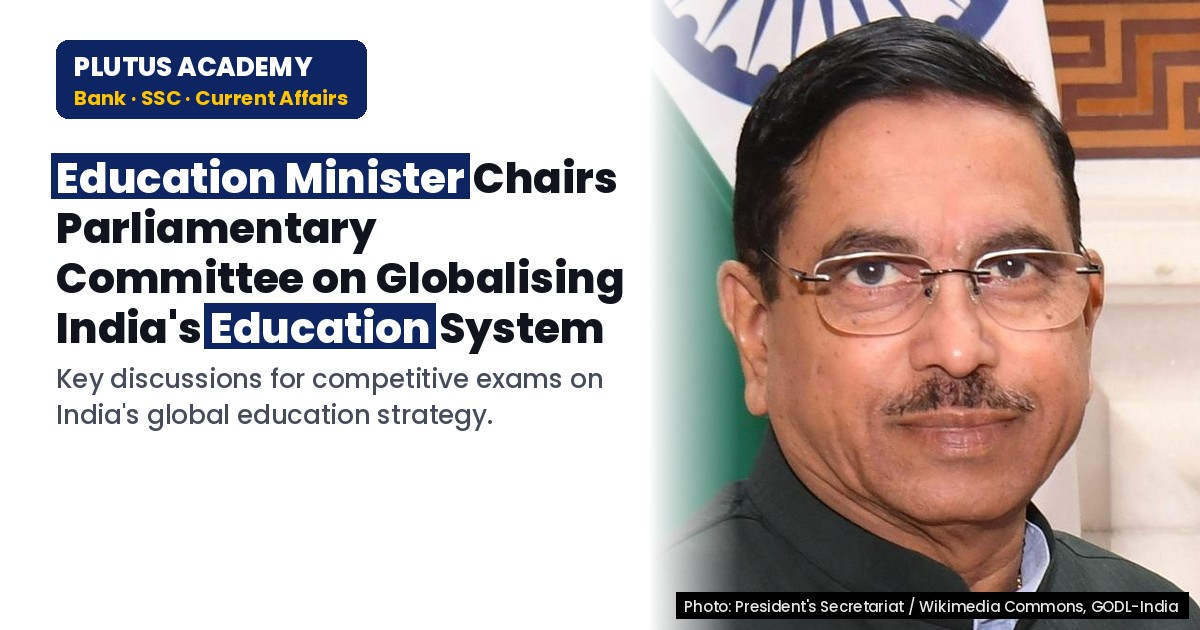
A parliamentary consultative committee meeting, chaired by Union Education Minister Pralhad Joshi in 2026, focused on strengthening India’s education system globally and developing the nation as a global knowledge hub. Discussions included increasing the international reach of Indian universities, encouraging foreign universities to establish campuses in India, and fostering research partnerships with global institutions. The committee also considered boosting the enrollment of foreign students in Indian institutions, promoting student and teacher exchange programs, and expanding CBSE Global and the National Institute of Open Schooling (NIOS) for international school education outreach. Other topics addressed were multilingual education, international exchange for Indian teachers, curriculum reforms, and familiarizing students with other cultures, all aligning with the National Education Policy (NEP) 2020 and Prime Minister Narendra Modi’s ‘Viksit Bharat 2047’ vision.
For Banking, SSC, and RBI Grade B aspirants, this development highlights the government’s strategic focus on human capital development and international collaboration, which can impact economic growth and foreign exchange inflows. Questions may arise on government initiatives related to education policy, skill development, and international partnerships, as these directly influence the socio-economic landscape and can be reflected in economic surveys, budget documents, and current affairs sections of these exams. Furthermore, understanding such policy shifts is crucial for comprehending India’s evolving global standing and its implications for various sectors, including finance and governance.
Source: amarujala.com
Generated by AanyaAi for educational purpose.

2 comments on “Indian Education System Globalisation: Key Discussions”