✎ Kerala HC’s interim stay highlights the tension between RTI transparency and privacy rights in PSC recruitment data disclosure.
Relevance for Banking, SSC & RBI Grade B exams: Polity
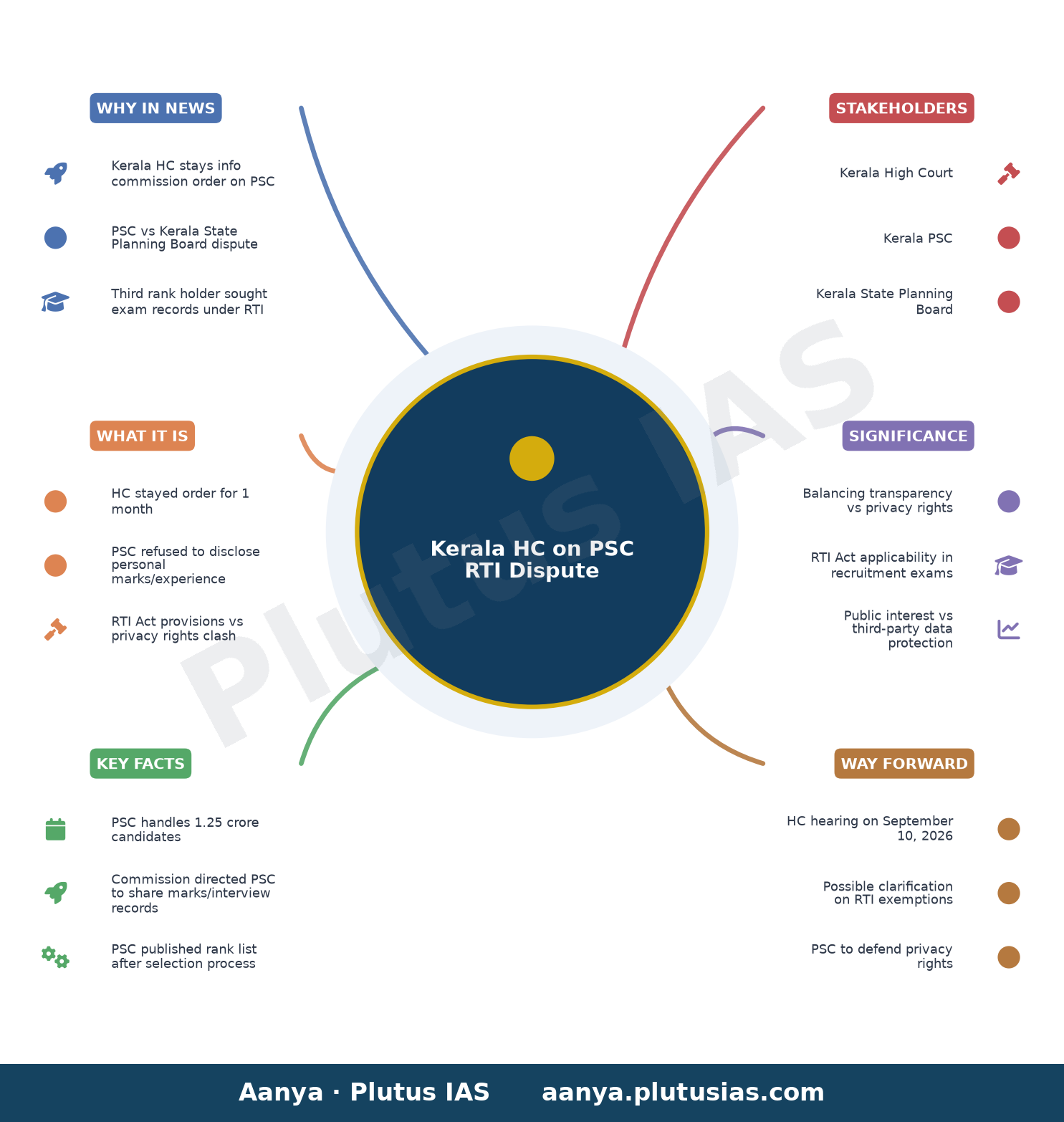
The Kerala High Court has temporarily stayed an order by the State Information Commission directing the Kerala Public Service Commission (PSC) to disclose personal and examination-related details of candidates, including marks and experience certificates, to the Kerala State Planning Board. The PSC had argued that disclosing such information—pertaining to over 1.25 crore candidates—would violate privacy rights under the RTI Act, as no compelling public interest was established. The court’s interim stay, granted for a month, highlights the tension between transparency and privacy in governance, a recurring theme in public administration and legal frameworks. For aspirants preparing for Banking, SSC, and RBI Grade B exams, this case underscores the importance of understanding the Right to Information (RTI) Act’s provisions, particularly its balance between disclosure and protection of personal data, as well as the role of judicial intervention in administrative decisions.
The ruling also reflects broader constitutional principles, such as the right to privacy (Article 21) and the right to information (Article 19(1)(a)), which are frequently tested in competitive exams. Candidates should note how the PSC’s argument about practical challenges—handling vast volumes of sensitive data—ties into governance efficiency, a topic often discussed in the context of administrative reforms. Additionally, the case’s progression to a full hearing on September 10, 2026, could set a precedent for future RTI-related disputes, making it a relevant case study for exam preparation. Understanding such judicial interventions helps aspirants grasp the interplay between law, policy, and public accountability, which is crucial for roles in banking, civil services, and regulatory bodies.
Source: The Hindu
Generated by AanyaAi for educational purpose.
