
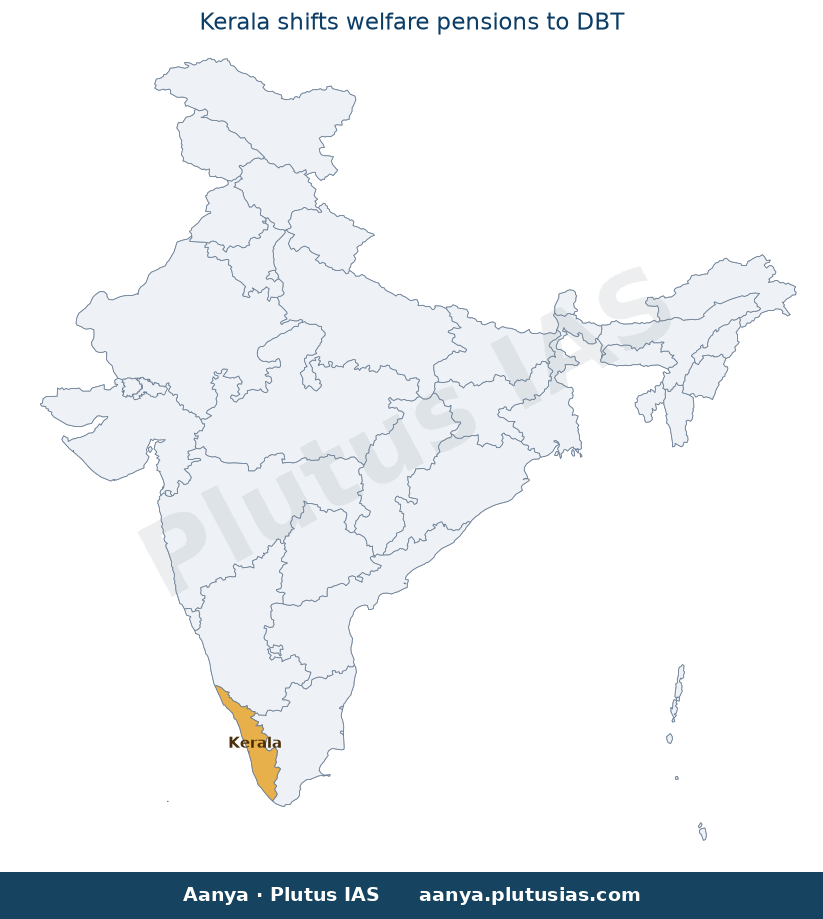
✎ Kerala replaces cooperative bank pension delivery with DBT for efficiency and transparency, except for bedridden beneficiaries.
Relevance for Banking, SSC & RBI Grade B exams: Economy
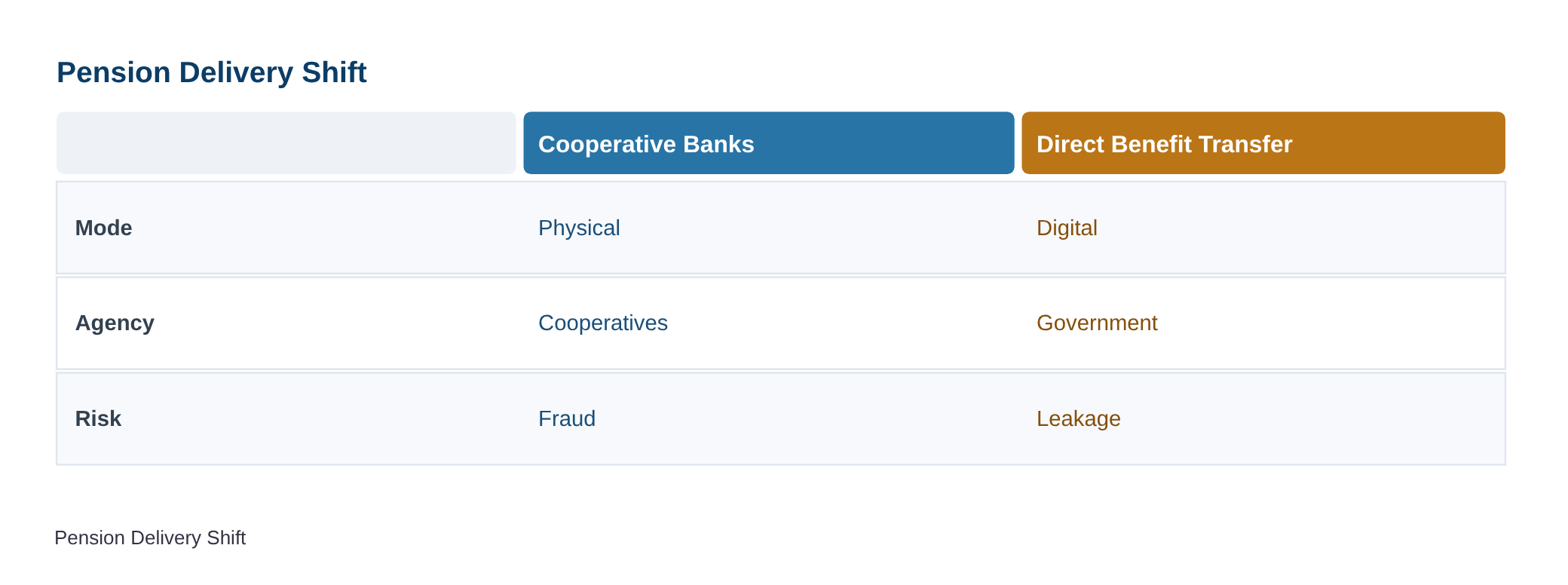
The Kerala government has decided to discontinue the distribution of social security and welfare pensions through cooperative banks and instead mandate Direct Benefit Transfer (DBT) to Aadhaar-linked bank accounts for all beneficiaries, except bedridden patients. This shift aims to address inefficiencies in the existing system, including delays in remitting undistributed pension amounts, failure to update records, and instances of duplicate payments. The move also aligns with DBT norms to ensure compliance with central financial assistance requirements, as continuing the current system risked losing such support. The government’s review highlighted the financial burden of incentive payments to cooperative banks for doorstep delivery, prompting this transition to a more transparent and efficient mechanism.
This decision holds significant relevance for Banking, SSC, and RBI Grade B exam aspirants. For banking exams, understanding DBT’s role in welfare schemes and its impact on financial inclusion is crucial, as cooperative banks’ reduced role may influence rural banking dynamics. SSC aspirants should note the government’s emphasis on Aadhaar-linked payments and compliance with DBT norms, which are often tested in general awareness sections. For RBI Grade B, this reflects broader trends in digital governance and fiscal efficiency, a key topic in economic and financial policy discussions.
Source: The Hindu
Generated by AanyaAi for educational purpose.
