
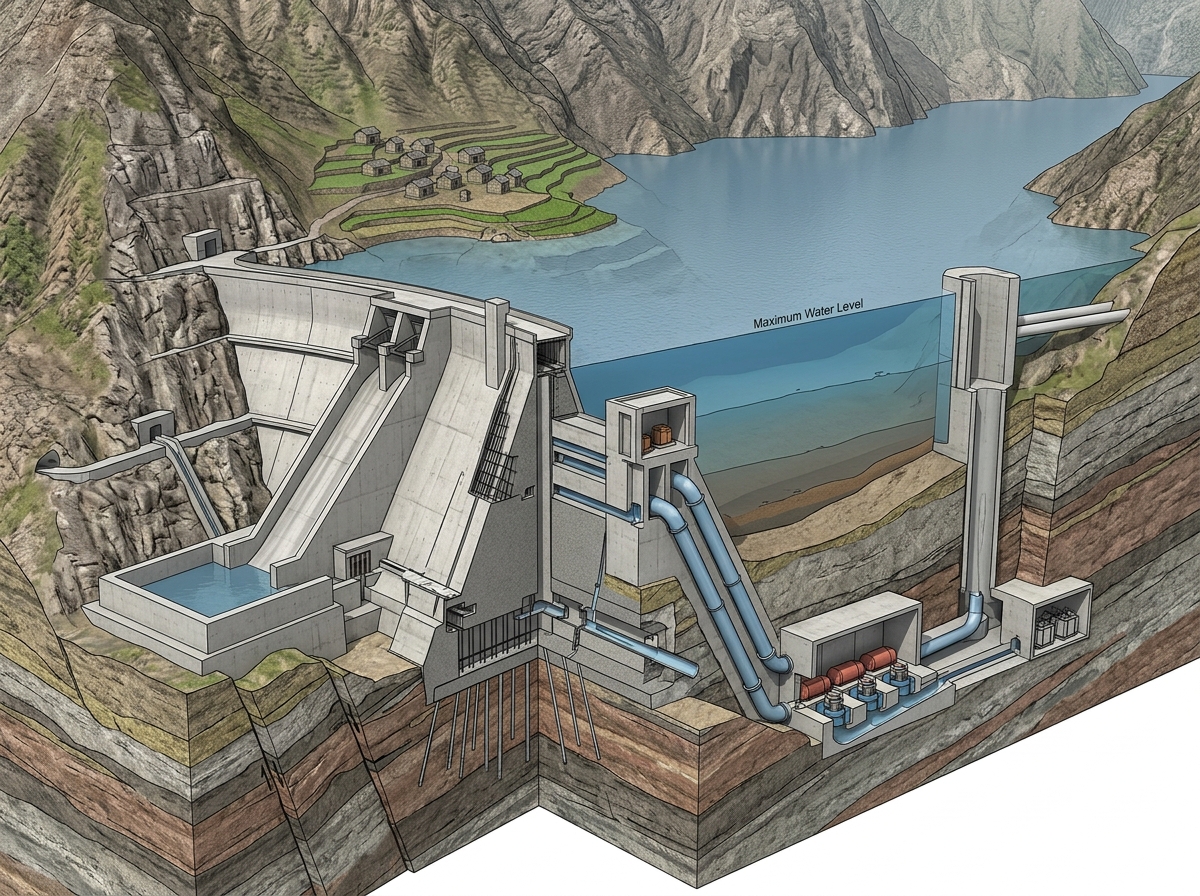
✎ Kishau Dam project faces opposition due to land acquisition and livelihood threats, with villagers seeking divine and political intervention.
Relevance for Banking, SSC & RBI Grade B exams: Polity & Governance
The Kishau Multipurpose Dam Project in Dehradun has escalated into a socio-political and cultural crisis, with local women seeking divine intervention to protect their ancestral land. On September 19, 2026, women from Kwanu village gathered at the Mahasu Devta temple, submitting petitions to safeguard their livelihoods and land rights, which they claim are threatened by the MoU signed between six states on September 15. The project, aimed at irrigation and hydroelectric power, risks displacing families reliant on agriculture, horticulture, and animal husbandry, sparking protests including effigy burnings. The women’s appeal reflects broader concerns over inadequate compensation, rehabilitation policies, and the erosion of traditional rights, underscoring the intersection of governance, environmental policy, and community resistance.
For banking and government exam aspirants, this case highlights critical themes in polity and governance, such as federalism (multi-state agreements), environmental impact assessments, and the socio-economic consequences of large-scale infrastructure projects. Questions in exams like RBI Grade B or SSC CGL may probe the role of institutions like the NGT in mediating such conflicts, the legal framework governing land acquisition (e.g., RFCTLARR Act), or the balance between development and indigenous rights. Additionally, the episode exemplifies how public protests often intertwine legal, economic, and cultural dimensions, a recurring topic in current affairs sections of these exams. Understanding such real-world scenarios can help candidates analyze governance challenges and policy trade-offs effectively.
Source: amarujala.com
Generated by AanyaAi for educational purpose.

1 comment on “Kishau Dam Project: Women Seek Divine Intervention to Save Ancestral Land in Uttarakhand”