
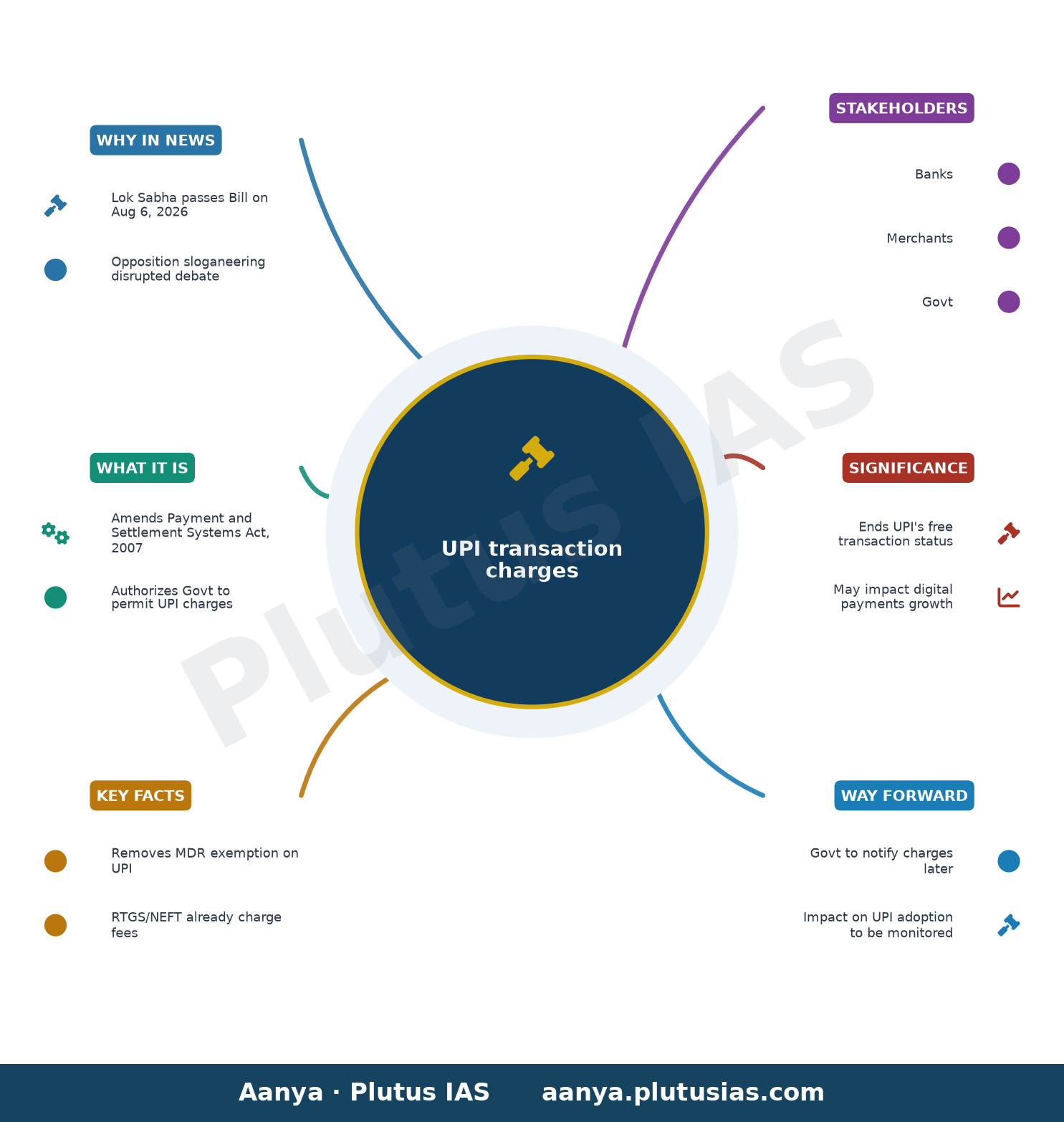
✎ UPI may no longer be free as Govt can now permit banks to levy charges on transactions.
Relevance for Banking, SSC & RBI Grade B exams: Polity
The Lok Sabha passed the Taxation and Other Laws (Amendment) Bill, 2026, which amends the Payment and Settlement Systems Act, 2007, to empower the government to permit banks and payment service providers to levy charges on UPI transactions and other notified electronic payment modes. The amendment seeks to remove the existing legal provision that prohibits banks from charging Merchant Discount Rate (MDR) on these transactions, which have been exempt from such fees so far. The move aims to create a sustainable revenue model for banks and payment infrastructure firms while ensuring small charges for consumers and businesses. The Bill was passed without debate due to opposition sloganeering, reflecting the political sensitivity around digital payment policies.
For banking and SSC aspirants, this development is crucial as it highlights the evolving regulatory framework governing digital payments, a key area in financial inclusion and digital economy policies. RBI Grade B candidates must understand the implications of MDR on UPI, which could impact transaction costs and digital payment adoption. The amendment also ties into broader themes like financial sustainability, digital infrastructure investment, and the balance between consumer convenience and industry viability, making it relevant for exam preparation.
Source: The Hindu
Generated by AanyaAi for educational purpose.
