
✎ UPI transactions may no longer be free as government can now permit banks to levy charges.
Relevance for Banking, SSC & RBI Grade B exams: Polity
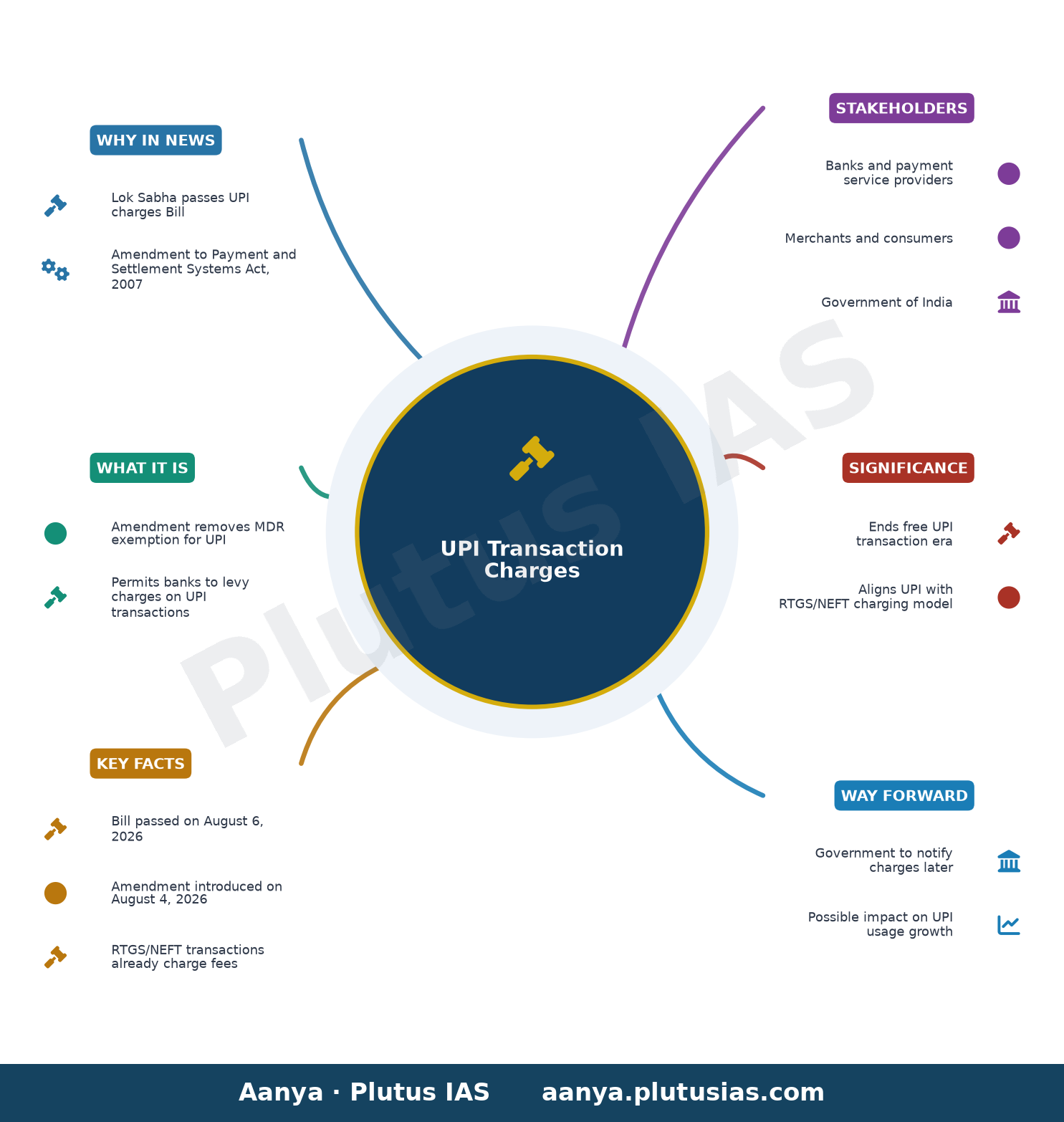
The Lok Sabha recently passed the Taxation and Other Laws (Amendment) Bill, 2026, which includes amendments to the Payment and Settlement Systems Act, 2007, allowing the government to permit banks and payment service providers to levy charges on UPI transactions and other notified electronic payment modes. The amendment seeks to remove the existing legal provision that currently prevents banks from charging Merchant Discount Rate (MDR) on these transactions. While UPI has been free for users so far, the proposed changes aim to introduce small charges to ensure a sustainable revenue model for banks and payment infrastructure firms, which have long advocated for such measures to support the digital payments ecosystem.
This development holds significant relevance for Banking, SSC, and RBI Grade B exam aspirants. For banking exams like IBPS PO, SBI Clerk, and RBI Grade B, understanding the regulatory framework governing digital payments, including UPI and MDR, is crucial as it impacts banking operations, revenue models, and customer transactions. SSC aspirants, particularly in the General Awareness section, must stay updated on such policy changes as they often feature in competitive exams. The amendment also highlights the government’s focus on balancing digital payment growth with sustainable funding mechanisms, a key theme in economic governance discussions.
Source: The Hindu
Generated by AanyaAi for educational purpose.
