
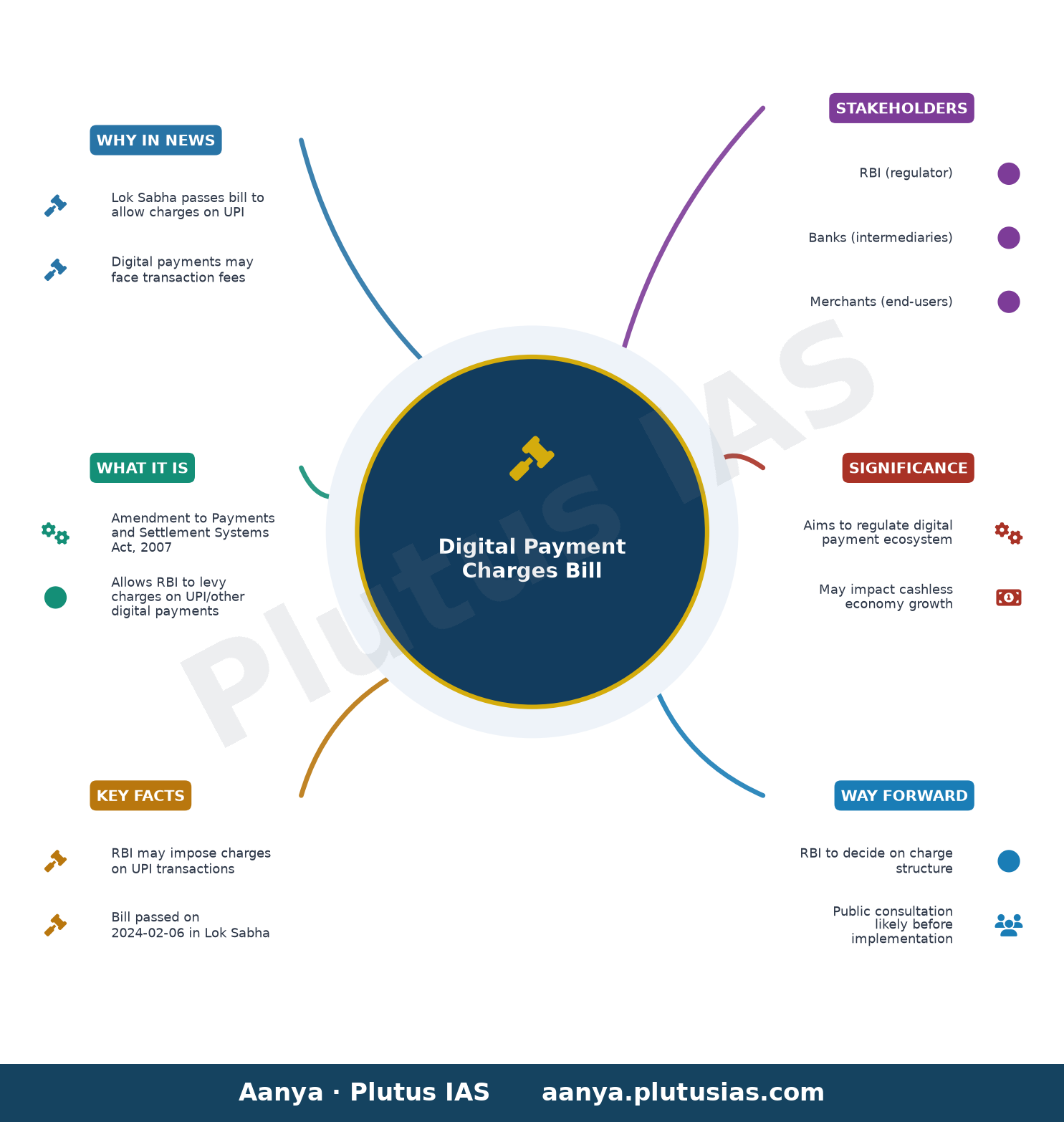
✎ Digital payment charges bill empowers RBI to regulate UPI/other transactions, potentially impacting India's cashless economy.
Relevance for Banking, SSC & RBI Grade B exams: Polity
The Lok Sabha recently passed the *Payment and Settlement Systems (Amendment) Bill, 2024*, which empowers the Reserve Bank of India (RBI) to permit charges on Unified Payments Interface (UPI) and other digital payment transactions. The bill aims to bring digital payment systems under a regulatory framework that allows for the imposition of fees, a move that could impact the cost structure of digital transactions for users and merchants. The amendment seeks to address concerns over the sustainability of payment systems while ensuring that the RBI maintains control over pricing mechanisms to prevent excessive charges. This legislative change is significant as it marks a shift from the current zero-charge regime on UPI transactions, which has been a key driver of digital adoption in India.
For banking and SSC aspirants, this development is crucial as it highlights the evolving regulatory landscape of digital payments, a topic frequently tested in exams. Candidates preparing for RBI Grade B must understand the RBI’s role in overseeing payment systems and its authority to regulate transaction charges. For banking exams like IBPS PO and SBI Clerk, this bill underscores the importance of digital payment infrastructure and its economic implications, including potential impacts on financial inclusion and consumer behavior. SSC aspirants, particularly those appearing for the CGL or CHSL exams, should note how such policies influence government initiatives like *Digital India* and the broader push for a cashless economy.
Source: ndtv.com
Generated by AanyaAi for educational purpose.
