
✎ MDR on UPI may be introduced for transactions above ₹2,000 to fund payment infrastructure and boost manufacturing.
Relevance for Banking, SSC & RBI Grade B exams: Polity
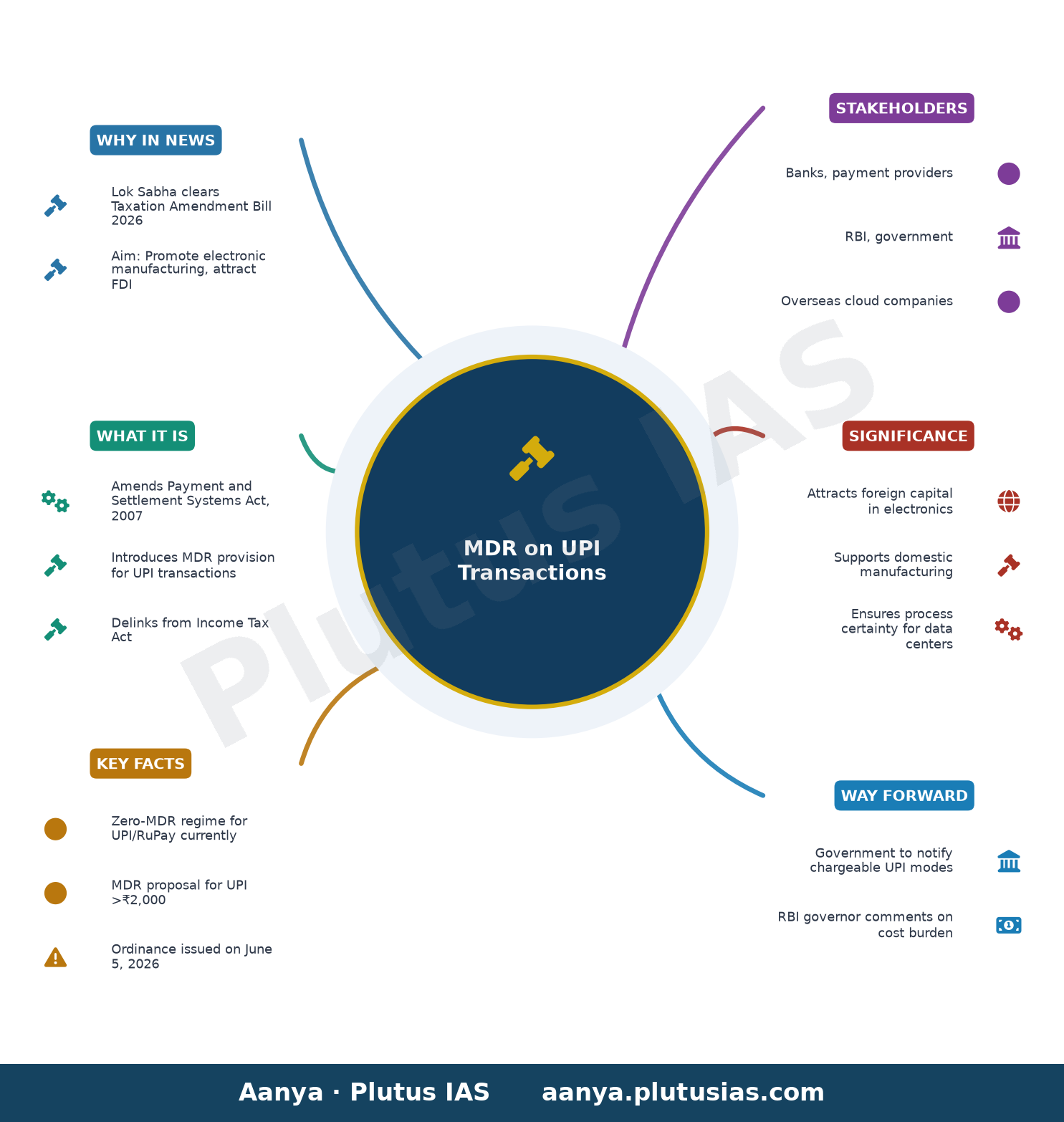
The Lok Sabha recently cleared the Taxation and Other Laws (Amendment) Bill, 2026, which includes a provision allowing the government to reintroduce Merchant Discount Rate (MDR) charges on UPI transactions under specific conditions. The Bill, passed without discussion due to Opposition disruptions, amends the Payment and Settlement Systems Act, 2007, to delink it from the Income Tax Act and introduce a legal framework for imposing MDR on UPI and RuPay transactions. Currently, these transactions are zero-charge, but the government may now notify certain categories where fees can be levied, particularly for transactions above ₹2,000, as suggested by RBI Governor Shaktikanta Das. This move aims to address concerns over the cost burden on payment aggregators and banks while ensuring sustainability in digital payment infrastructure.
For banking and SSC aspirants, this development is significant as it reflects the government’s evolving approach to digital payments and taxation policies. The provision for MDR on UPI transactions could impact the revenue models of fintech companies and banks, making it a potential topic for exams testing awareness of financial regulations. For RBI Grade B candidates, understanding the implications of MDR on UPI—such as its role in funding payment infrastructure or balancing consumer convenience with industry sustainability—is crucial, as it ties into broader monetary policy and financial inclusion objectives. The Bill’s focus on promoting electronic manufacturing and attracting foreign investment also highlights India’s push for self-reliance in tech, a key theme in current affairs for competitive exams.
Source: Times of India
Generated by AanyaAi for educational purpose.
