✎ Andhra Pradesh plans 5,000 new temples, restoration of 1,000 ancient ones, and digitisation under CM Naidu’s orders for cultural and social development.
Relevance for Banking, SSC & RBI Grade B exams: Art & Culture
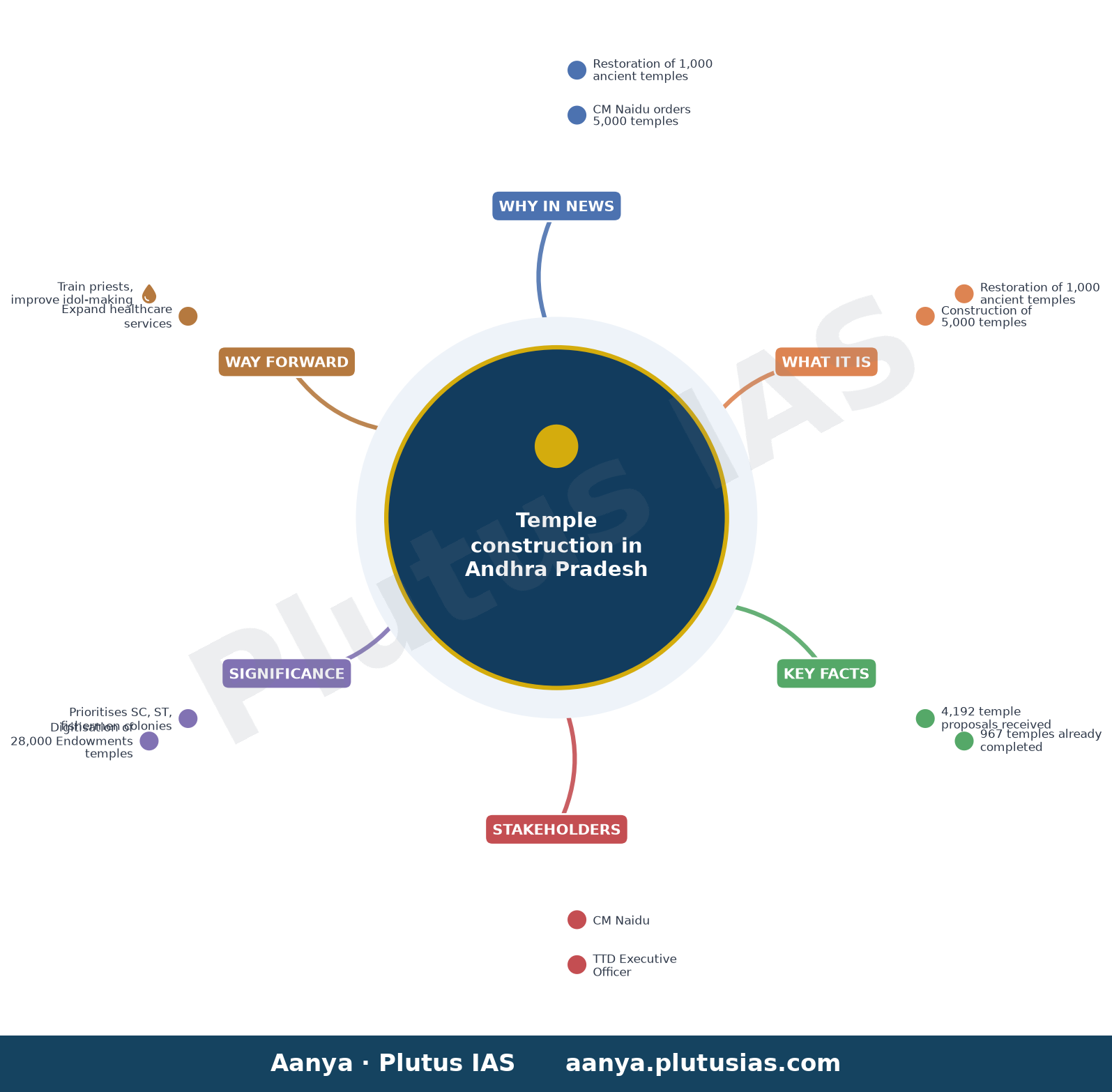
Andhra Pradesh Chief Minister N. Chandrababu Naidu has directed the Tirumala Tirupati Devasthanams (TTD) and the Endowments Department to expedite the construction of 5,000 temples across the state, prioritizing Scheduled Caste, Scheduled Tribe, fishermen, and weaker-section colonies, as well as general areas. During a review meeting, it was noted that proposals for 4,192 temples had been received from 161 constituencies across 28 districts, with 967 temples already completed. The Chief Minister also emphasized the restoration of 1,000 ancient temples and the development of Shiva temples and Shakti Peethas, alongside digitization of temple records and preparation of management plans for 28,000 Endowments temples, including 65 TTD temples. Additionally, Naidu called for greater participation of devotees, training of priests, expansion of healthcare and education services, and the development of Tirupati as a “complete divine destination.”
This initiative holds relevance for competitive exams like Bank PO, IBPS, SBI, RBI Grade B, and SSC, particularly in sections covering Art & Culture, Governance, and Current Affairs. For banking exams, understanding government schemes related to cultural heritage and temple management could be crucial, as questions may test awareness of administrative decisions impacting public resources. For SSC and RBI Grade B aspirants, the focus on digitization, restoration of ancient sites, and integration of services within temple ecosystems may appear in general awareness or descriptive papers, reflecting government priorities in heritage conservation and socio-economic inclusivity. The emphasis on community participation and skill development (e.g., priest training) also aligns with broader themes of employment generation and rural development, often tested in these exams.
Source: The Hindu
Generated by AanyaAi for educational purpose.
