✎ NIRF ranks Indian higher education institutions but faces criticism for overemphasizing quantity over quality, requiring reforms.
Relevance for Banking, SSC & RBI Grade B exams: Economy/Governance
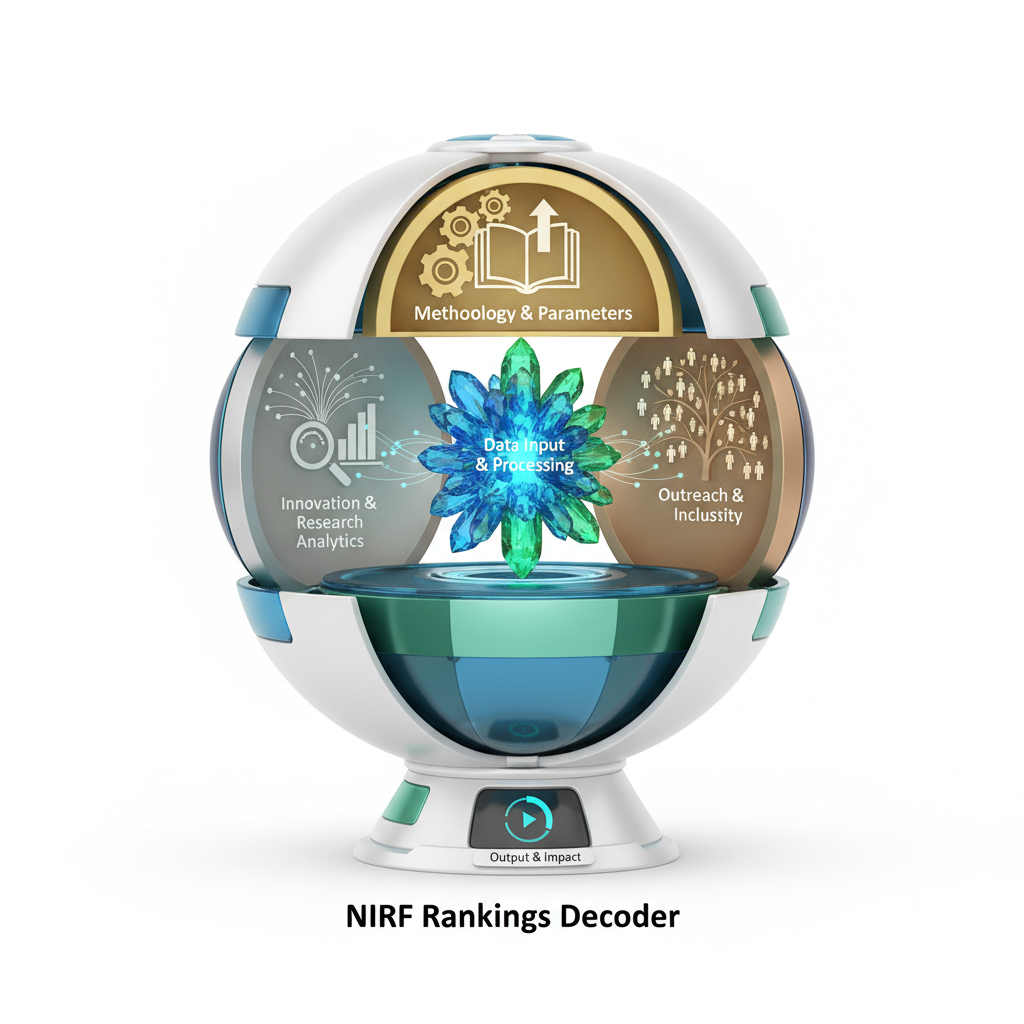
The National Institutional Ranking Framework (NIRF) evaluates Indian higher education institutions across five key parameters: Teaching, Learning and Resources; Research and Professional Practices; Graduation Outcomes; Outreach and Inclusivity; and Perception. Critics argue that while NIRF rankings aim to promote excellence, they often prioritize quantitative metrics over qualitative outcomes, potentially distorting institutional priorities. For banking aspirants preparing for exams like IBPS PO or SBI Clerk, understanding NIRF’s methodology is crucial as it reflects the government’s emphasis on institutional accountability and quality benchmarks in education—a sector increasingly linked to skill development and employability, both critical for the financial sector’s growth. Similarly, for SSC and RBI Grade B candidates, NIRF’s focus on research and professional practices underscores the importance of data-driven governance and institutional transparency, themes frequently tested in these exams.
The upcoming *The Hindu* webinar on October 3, 2026, featuring experts like Rajeev Sangal and Achal Agrawal, will dissect NIRF’s evolving criteria and its real-world implications. For RBI Grade B officers, who often oversee educational initiatives or policy frameworks, grasping these nuances can aid in designing programs that align with national priorities. Meanwhile, SSC aspirants, particularly those targeting Group B roles in ministries or regulatory bodies, must recognize how rankings influence funding and policy decisions, shaping India’s economic and educational landscape. The debate around NIRF also highlights broader governance challenges, such as balancing equity with excellence—a topic relevant to both banking and administrative roles.
Source: The Hindu
Generated by AanyaAi for educational purpose.

1 comment on “NIRF Rankings 2026: Key Changes & Impact on Higher Education & Exams”