
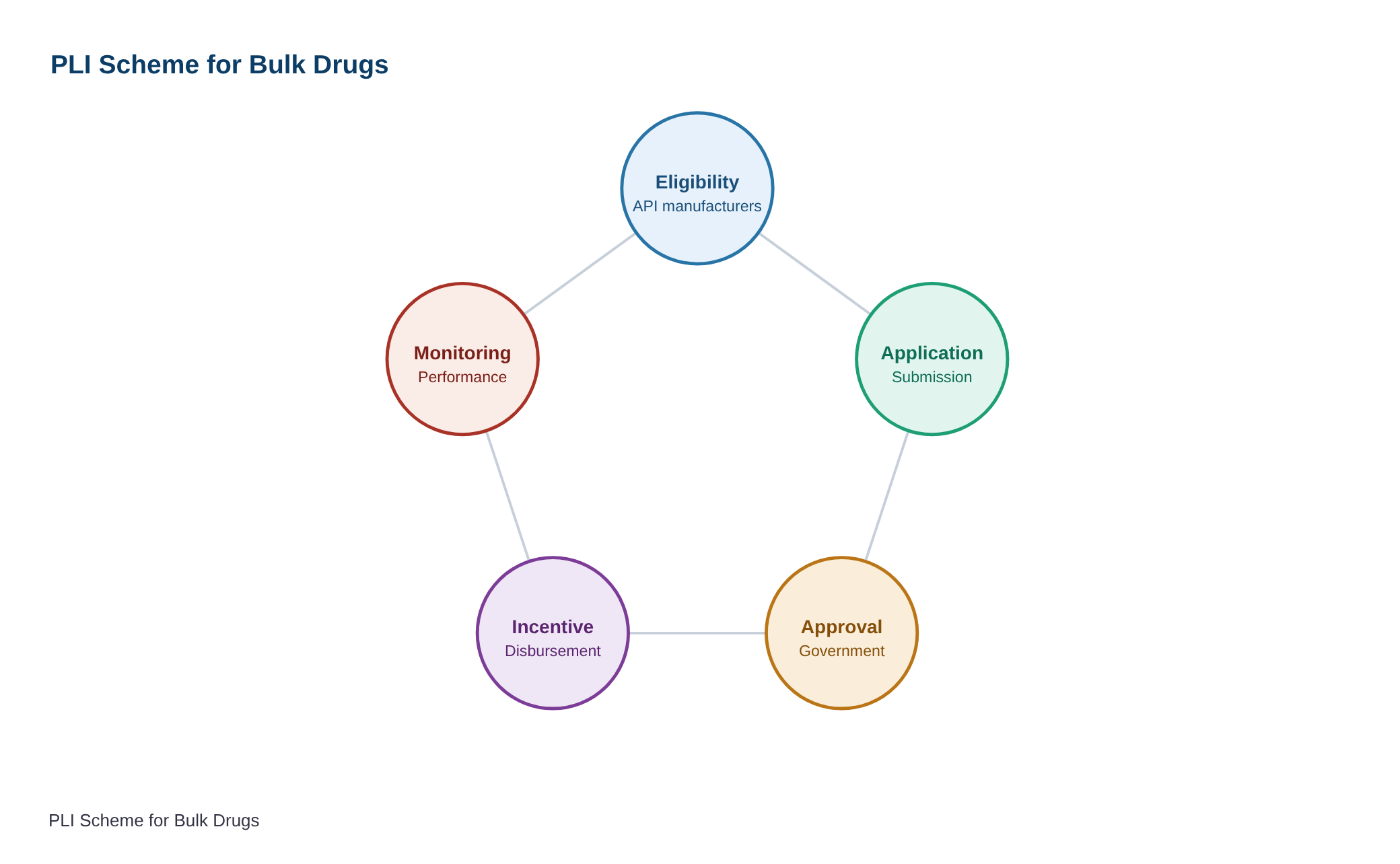
✎ PLI scheme boosts India’s bulk drug production, cuts imports, and enhances drug supply chain resilience.
Relevance for Banking, SSC & RBI Grade B exams: Polity & Governance
The Production-Linked Incentive (PLI) scheme for bulk drugs is a strategic initiative under India’s pharmaceutical policy aimed at reducing import dependence, enhancing domestic manufacturing capabilities, and strengthening the resilience of the drug supply chain. By incentivizing large-scale production of key starting materials (KSMs), drug intermediates (DIs), and active pharmaceutical ingredients (APIs), the scheme has catalyzed investments in critical sectors such as antibiotics, cardiovascular medications, and antipyretics like paracetamol. For instance, the establishment of penicillin G production facilities in Andhra Pradesh and clavulanic acid plants in Himachal Pradesh has not only revived domestic manufacturing after decades but also created thousands of jobs and generated substantial economic output. These developments align with broader policy objectives of self-reliance (Atmanirbhar Bharat), health security, and supply chain diversification, making the PLI scheme a significant case study in governance and industrial policy for competitive examinations.
For aspirants preparing for Bank PO, IBPS, SBI, RBI Grade B, and SSC exams, this initiative underscores the intersection of economic policy, public health, and governance—key areas frequently tested in these examinations. Questions may focus on the objectives of PLI schemes, their impact on import substitution, employment generation, or the role of government policies in fostering industrial growth. The scheme also highlights the importance of strategic sectors like pharmaceuticals in national security and economic stability, a theme often explored in RBI Grade B’s economic and social issues sections. Understanding such policies helps candidates analyze their implications on GDP growth, trade deficits, and public expenditure, which are critical for both descriptive and objective-type questions in these exams.
Source: PIB (Press Information Bureau)
Generated by AanyaAi for educational purpose.
