
Relevance for Banking, SSC & RBI Grade B exams: Economy
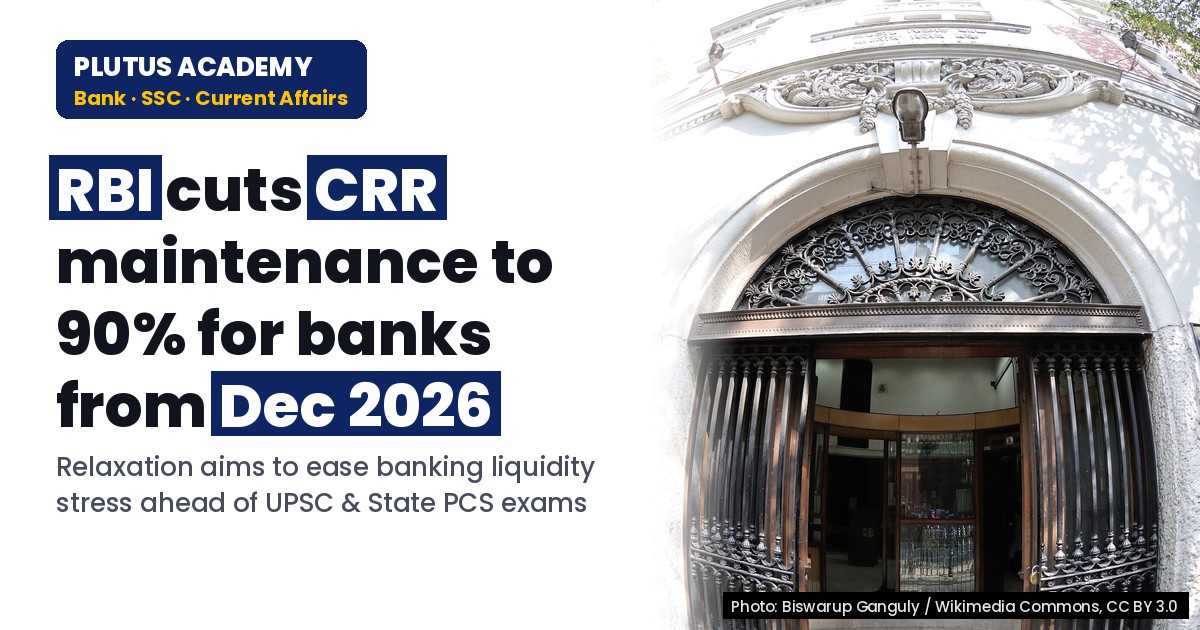
The Reserve Bank of India (RBI) recently reduced the minimum daily cash reserve ratio (CRR) maintenance requirement for banks from 99% to 90%, effective from December 1, 2026, amid a liquidity deficit in the banking system. This adjustment comes as liquidity slipped into deficit for the first time in five months, driven by GST outflows and RBI’s foreign exchange interventions. While the overall CRR remains unchanged at 3% of net demand and time liabilities, the relaxation allows banks greater flexibility in managing short-term liquidity fluctuations without altering deposit rates or customer access to funds.
For aspirants preparing for Banking, SSC, and RBI Grade B exams, this move highlights the RBI’s role in maintaining financial stability through liquidity management tools like CRR. It also underscores the impact of macroeconomic factors—such as GST collections and forex interventions—on banking operations. Understanding such policy shifts is crucial for exams, as they test knowledge of monetary policy tools, their transmission mechanisms, and their implications for banks and the broader economy.
Source: orissapost.com
Generated by AanyaAi for educational purpose.

2 comments on “RBI eases CRR norms to 90% amid banking liquidity crunch”