
✎ RBI raised repo rate by 25 bps to 5.50% (first hike in ~4 years) and shifted stance to 'calibrated tightening', signaling no near-term rate cuts.
Relevance for Banking, SSC & RBI Grade B exams: Polity & Governance
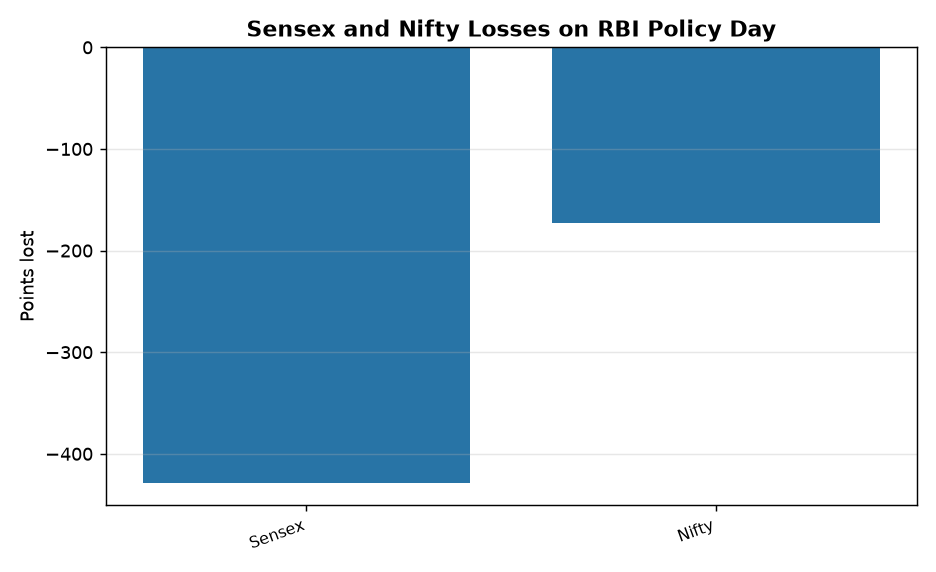
The recent 429-point fall in the Sensex, snapping a two-day rally, highlights the interplay between monetary policy and market sentiment, a key topic for banking and financial governance exams. The Reserve Bank of India’s (RBI) decision to raise the repo rate by 25 basis points to 5.50%—its first hike in nearly four years—shifts its stance to “calibrated tightening,” signaling a pause on rate cuts. This move, driven by inflation concerns and a weakening currency, directly impacts borrowing costs, liquidity, and investor confidence, making it crucial for aspirants preparing for RBI Grade B and SSC exams to understand the transmission mechanism of monetary policy. High crude prices, which surged to $102 per barrel, further exacerbated market volatility, reflecting the broader economic risks posed by external shocks, a theme often tested in competitive exams.
For banking exams like IBPS PO and SBI Clerk, this scenario underscores the importance of financial stability, inflation targeting, and the RBI’s role in maintaining equilibrium. The sharp decline in major Sensex constituents like Titan and Infosys, contrasted with gains in banking stocks like Kotak Mahindra Bank, illustrates sectoral sensitivities to policy shifts. Such dynamics are frequently examined in descriptive papers or group discussions, where candidates must analyze the ripple effects of RBI actions on equities, FII outflows, and macroeconomic indicators. SSC aspirants, particularly in the General Studies section, should note how these developments tie into broader governance issues, such as fiscal-monetary coordination and inflation management.
Source: orissapost.com
Generated by AanyaAi for educational purpose.

2 comments on “RBI Hikes Repo Rate to 5.5%: Sensex Drops 429 Points on Policy Shift”