
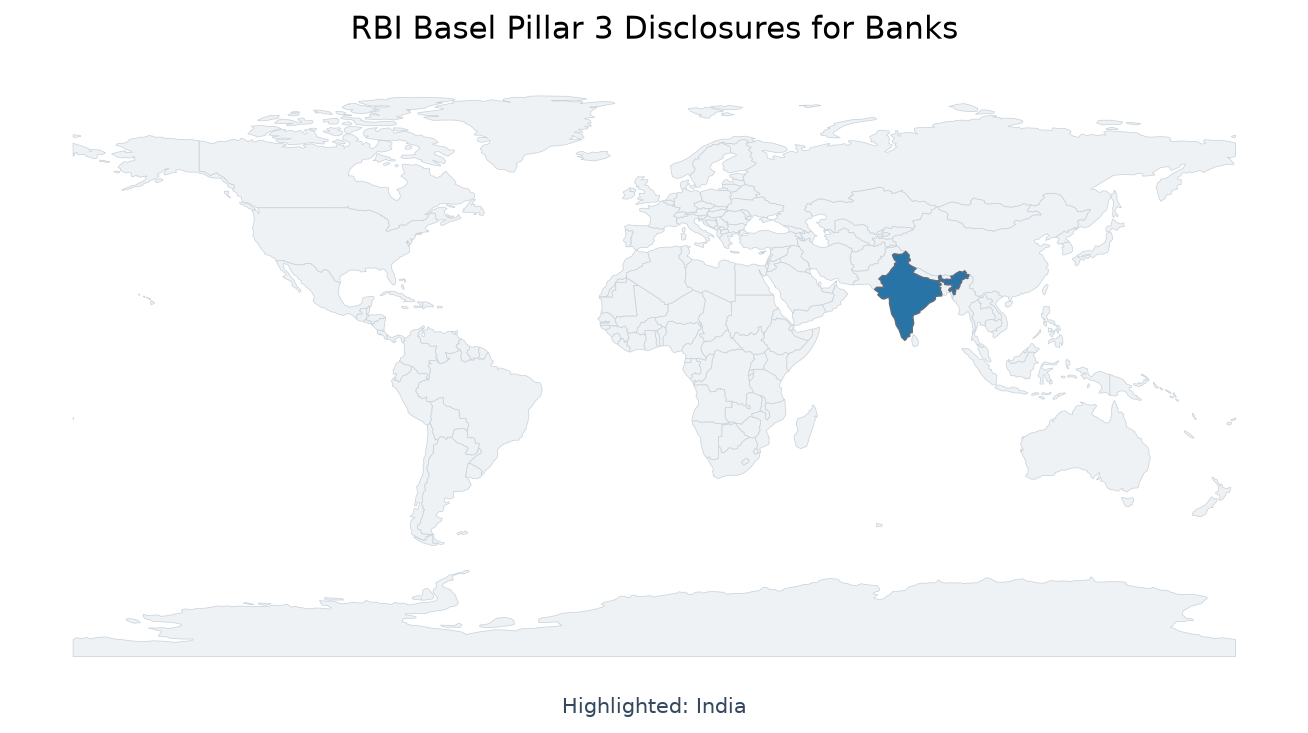
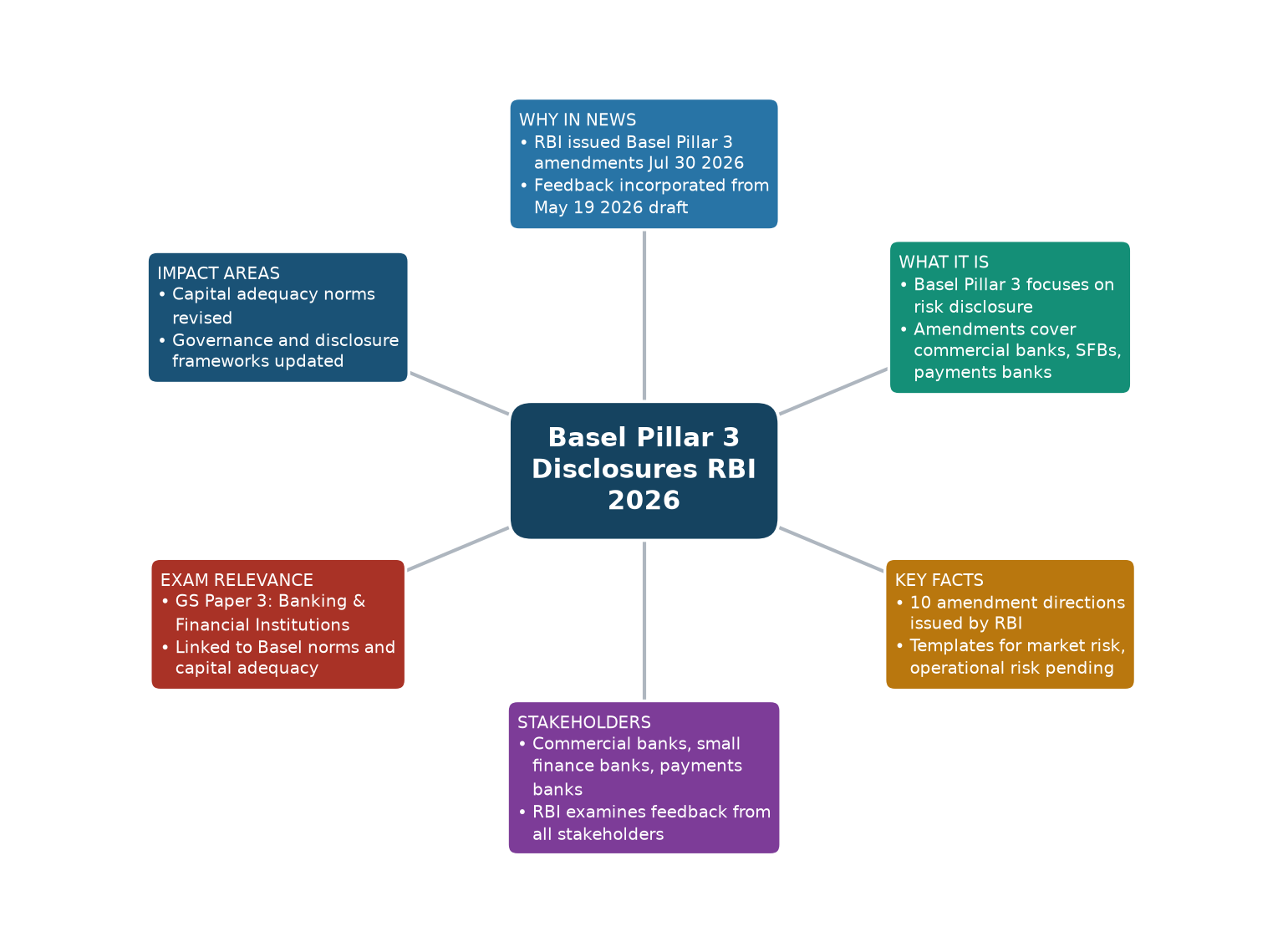
Map & concept mind-map: RBI Basel Pillar 3 Disclosures for Banks
Relevance for Banking, SSC & RBI Grade B exams: Economy
The Reserve Bank of India (RBI) issued ten Amendment Directions on July 30, 2026, revising prudential norms, governance, and disclosure requirements for commercial banks, small finance banks (SFBs), and payments banks under the Basel Pillar 3 framework. These amendments, incorporating stakeholder feedback from draft directions issued in May 2026, aim to enhance transparency, risk management, and financial stability by updating norms on capital adequacy, asset-liability management, and financial statement disclosures. Separate templates for market risk, operational risk, counterparty credit risk, and leverage ratio disclosures for commercial banks will be released later, following further examination of feedback. The changes reflect RBI’s ongoing efforts to align Indian banking regulations with global Basel standards, ensuring robust risk governance and improved market discipline.
For banking aspirants preparing for exams like Bank PO, IBPS, SBI, and RBI Grade B, this development is crucial as it highlights RBI’s focus on strengthening prudential norms and disclosure practices, directly impacting banking operations and compliance. The amendments underscore the importance of Basel III norms, governance frameworks, and risk-weighted asset calculations—key topics frequently tested in these examinations. Similarly, for SSC aspirants, understanding such regulatory updates can be relevant for general awareness sections, particularly in exams like SSC CGL or CHSL, where economic policies and banking reforms are often included. The move also signals RBI’s proactive stance on financial sector reforms, making it essential for candidates to stay updated on such policy shifts.
Source: RBI
Generated by AanyaAi for educational purpose.
