

Relevance for Banking, SSC & RBI Grade B exams: Economy
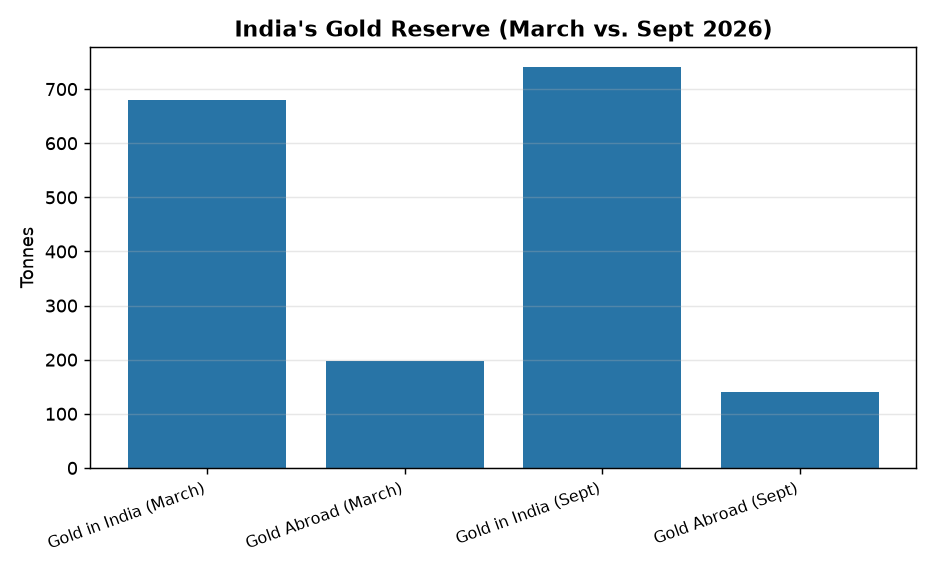
India has undertaken a significant strategic initiative regarding its gold reserves, with the Reserve Bank of India (RBI) repatriating over 60 tons of gold from abroad in the last six months. This move, while not altering the total quantity of India’s gold reserve, has substantially increased the proportion of gold held within the country. According to the RBI’s latest report, approximately 84% of its total gold is now stored in India, up from 77.23% at the end of March. This strategic shift saw 60.08 tons of gold moved between March and September 2026, increasing the domestic holding from 680.05 tons to 740.13 tons, even as the total gold reserve of 880.52 tons remained unchanged. The gold previously held abroad, with institutions like the Bank of England and Bank for International Settlements, has reduced from 197.67 tons to 140.39 tons.
For Banking, SSC, and RBI Grade B aspirants, this development is crucial for understanding India’s economic strategy and monetary policy. It highlights the RBI’s active management of foreign exchange reserves, a key topic for exams. Questions may arise regarding the reasons for gold repatriation (e.g., risk diversification, geopolitical considerations), its impact on the balance of payments, foreign exchange reserves composition, and the implications for the Indian economy. Furthermore, the report also notes a decrease in the value of RBI’s gold reserves despite stable quantity due to international price fluctuations, alongside an increase in India’s overall foreign exchange reserves and a shift in foreign currency asset investment towards securities, all of which are vital points for comprehensive exam preparation on economic indicators and central bank functions.
Source: indiatv.in
Generated by AanyaAi for educational purpose.

2 comments on “RBI Repatriates 60+ Ton Gold: Impact on India’s Reserves”