
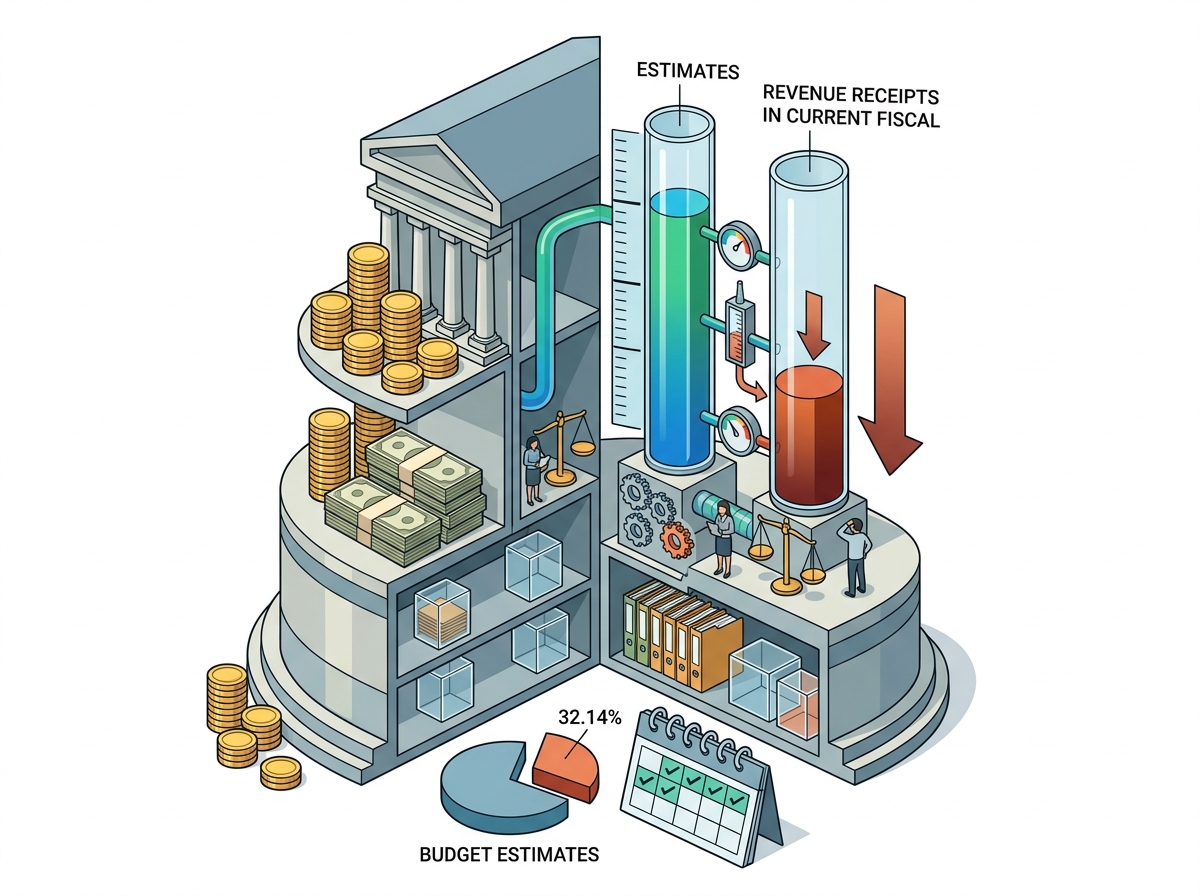
✎ Revenue receipts lagging behind estimates may strain state finances and impact fiscal deficit management.
Relevance for Banking, SSC & RBI Grade B exams: Economy
The sluggish performance of revenue receipts in the current fiscal—with state revenue receipts at just 32.14% of the ₹2.41 lakh crore budget estimates after five months—poses significant challenges for aspirants preparing for exams like Bank PO, IBPS, SBI, RBI Grade B, and SSC. For banking exams, understanding fiscal deficits, revenue receipts, and their impact on government borrowing is crucial, as these concepts often feature in economic awareness sections. Similarly, for SSC aspirants, questions on government finances, tax revenues, and fiscal policies are common in the general awareness and economics segments, making this topic highly relevant for both prelims and mains.
The data also highlights the strain on non-tax revenues, grants-in-aid, and key tax heads like GST and sales tax, which are critical for RBI Grade B aspirants focusing on macroeconomic stability and fiscal management. The high revenue deficit (₹14,840 crore) and primary deficit (₹21,110 crore) further underscore the need for fiscal discipline, a key area in RBI Grade B’s economic and social issues section. Aspirants should correlate these trends with broader economic policies, such as the impact of delayed dearness allowance payments and pay revisions, to strengthen their analytical and conceptual clarity for competitive exams.
Source: The Hindu
Generated by AanyaAi for educational purpose.
