
✎ FCNR(B) deposits temporarily strengthened the rupee but crude oil spikes reversed gains, impacting liquidity and inflation.
Relevance for Banking, SSC & RBI Grade B exams: Economy/Governance
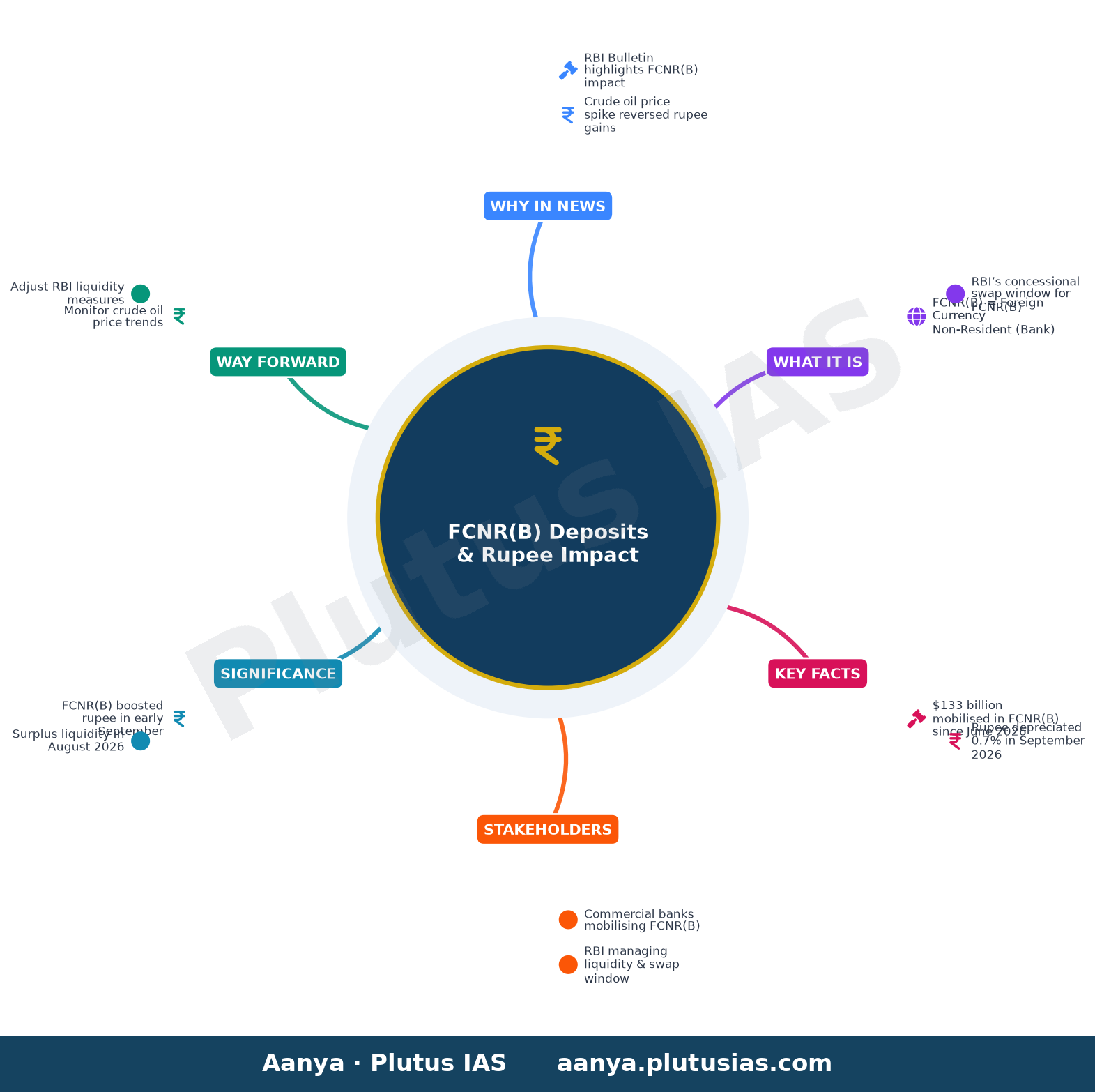
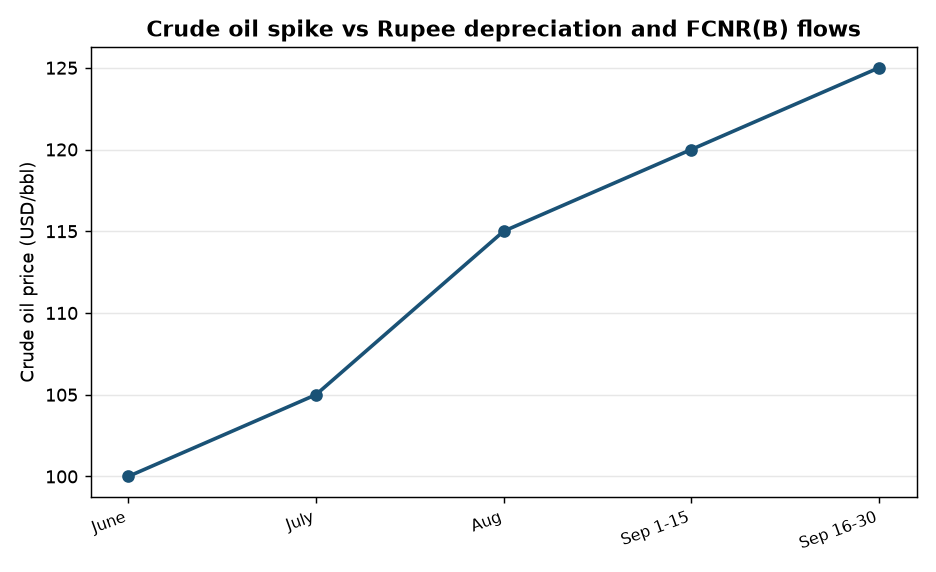
The recent RBI Bulletin highlights how the rupee’s gains from FCNR(B) deposit inflows reversed in September due to a spike in crude oil prices, reversing earlier gains driven by strong foreign currency non-resident (bank) deposits. Commercial banks mobilised $133 billion under the RBI’s concessional swap window since June, closing the scheme a month early. However, West Asia tensions and rising crude prices led to a 0.7% depreciation in September alone and a 5% decline since February, erasing the brief recovery seen in early September. The report also notes that surplus liquidity, which surged in August due to FCNR(B) inflows, moderated in September amid tax-related outflows and RBI’s liquidity measures, with banks parking funds in the LAF window dropping to Rs 4.27 trillion. For banking aspirants, this underscores the RBI’s role in managing liquidity and exchange rate stability, while the impact of crude oil prices on inflation and currency movements is crucial for understanding macroeconomic linkages in exams like RBI Grade B and SSC CGL.
The RBI Bulletin also highlights resilient GDP growth in Q1:2026-27 despite global headwinds, with high-frequency indicators showing sustained demand across industry and services. Inflation edged up to 4.8% in August, driven by food, beverages, and fuel components, while core inflation excluding precious metals also rose from recent lows. Additionally, net FDI inflows hit a five-year high of $7.4 billion in July, with Mauritius, UAE, and the US being major contributors, particularly in communication, financial, and computer services. For SSC aspirants, questions on inflation trends, FDI flows, and GDP growth are common, while banking exams like SBI PO and IBPS SO may test knowledge of RBI’s liquidity management tools and their impact on currency and inflation. The interplay between global oil prices, FDI, and domestic economic indicators remains a key area for exam preparation.
Source: Business Standard
Generated by AanyaAi for educational purpose.
