
Relevance for Banking, SSC & RBI Grade B exams: Polity & Governance
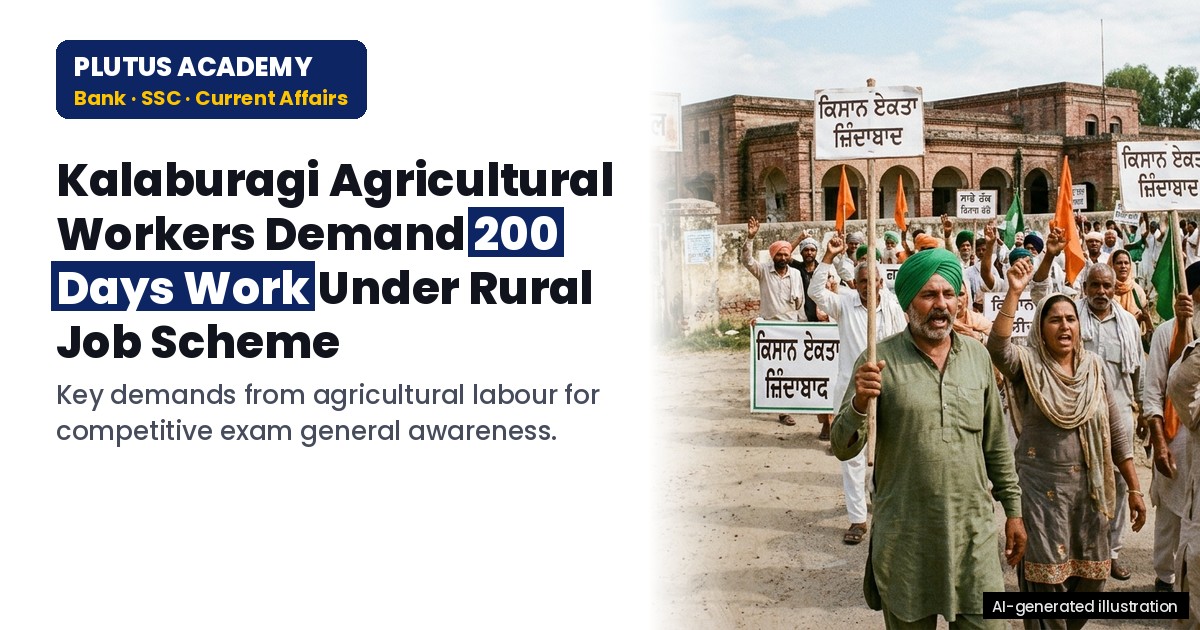
Agricultural labour, under the banner of the Karnataka Agricultural Workers Union affiliated to the All India Agricultural Workers’ Union (AIAWU), recently staged a demonstration in Kalaburagi, demanding an increase in guaranteed working days to 200 per year under the rural employment guarantee scheme. They submitted a memorandum to the Zilla Panchayat highlighting severe hardships due to prevailing drought conditions, which have led to significant crop damage and scarcity of agricultural work. The union also complained about delayed wage payments, nominal muster rolls recording wages of only ₹150 to ₹250, and sought the immediate launch of drought-relief works and implementation of a food for work scheme, alongside ensuring work provision within three days of application.
This development is highly relevant for Banking, SSC, and RBI Grade B exams, particularly under Polity & Governance, as it directly pertains to the implementation and efficacy of government welfare schemes like the rural employment guarantee scheme. Questions may arise regarding the scheme’s provisions, its role in rural distress mitigation, challenges in its execution such as wage payment delays and nominal muster rolls, and the socio-economic impact of drought on agricultural labour. Furthermore, the demands for increased working days and timely wage payments reflect critical issues in rural employment and income security, which are often topics in economic and social development sections of these competitive examinations.
Source: The Hindu
Generated by AanyaAi for educational purpose.
