✎ SEBI’s inspection reforms aim to simplify compliance for market intermediaries while strengthening market oversight.
Relevance for Banking, SSC & RBI Grade B exams: Economy
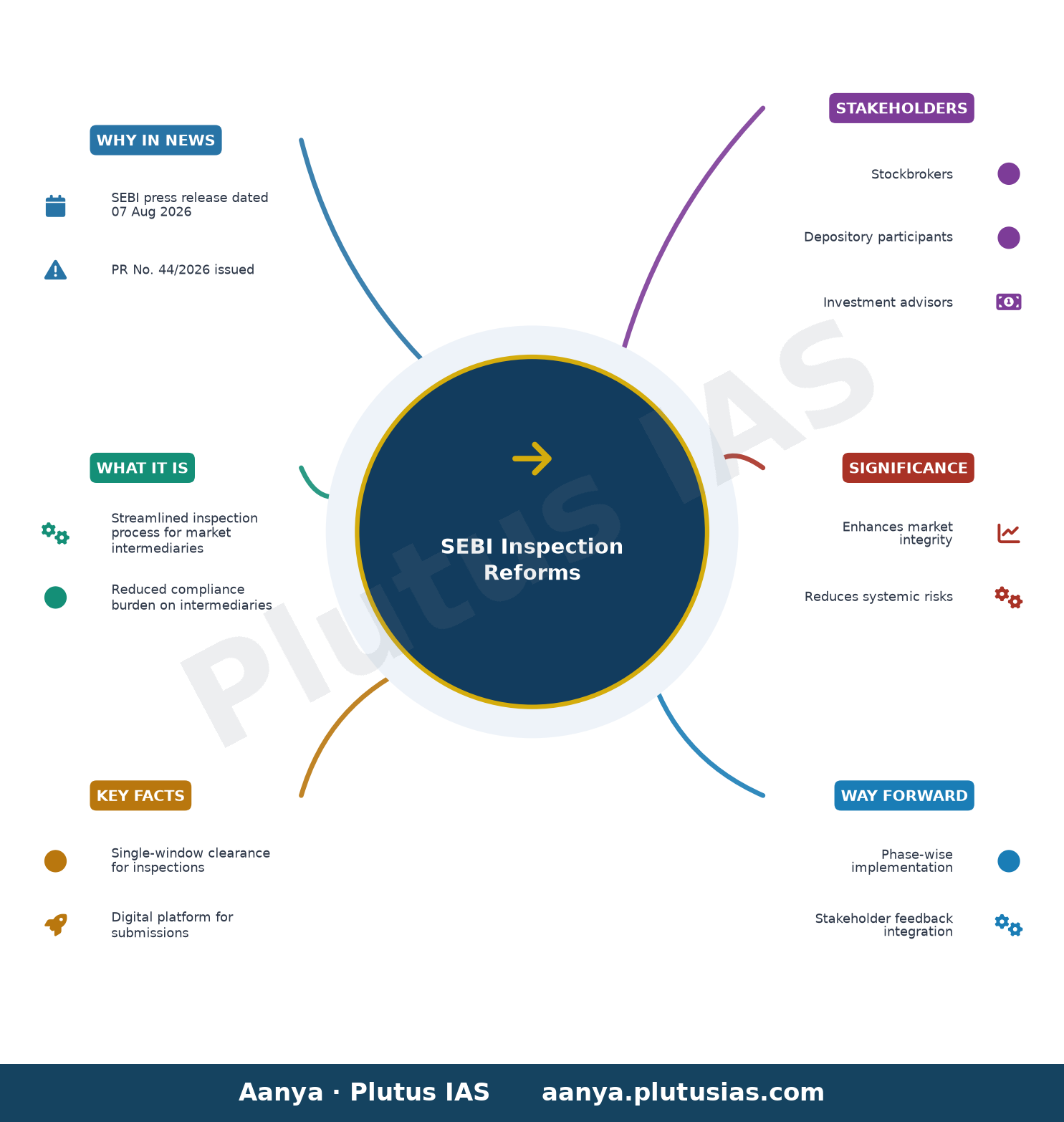
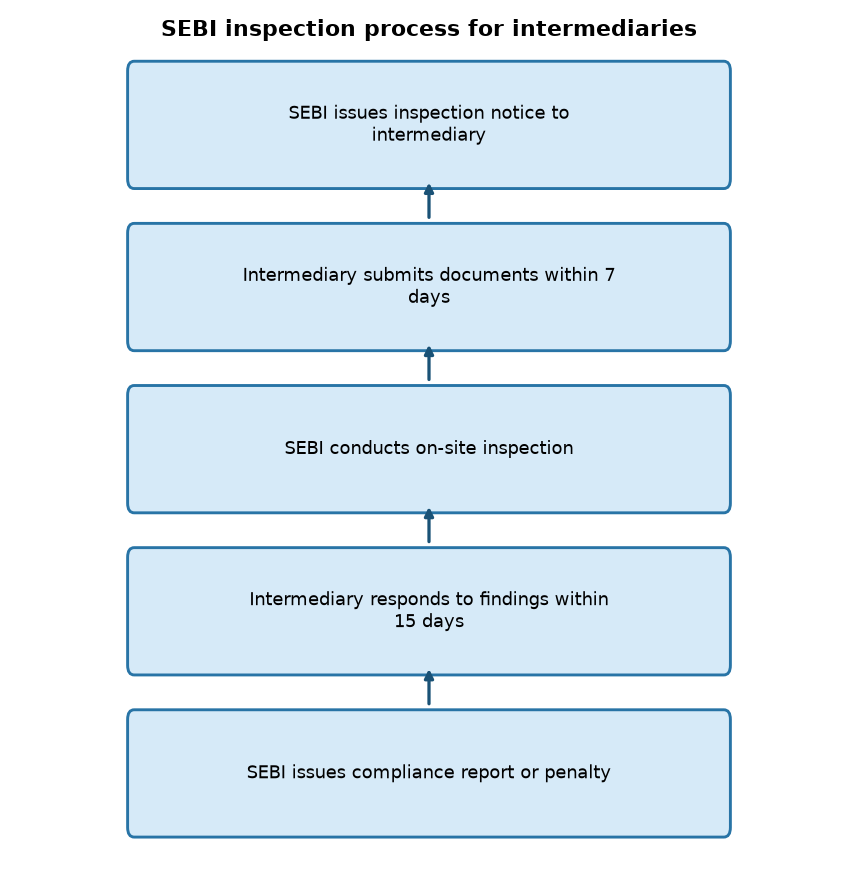
The Securities and Exchange Board of India (SEBI) has introduced a streamlined framework for inspecting market intermediaries, aiming to enhance efficiency and reduce compliance burdens. According to a press release dated August 7, 2026, the new system replaces traditional on-site inspections with a risk-based approach, leveraging technology-driven tools for real-time monitoring and data analytics. This move aligns with SEBI’s broader goal of promoting transparency and investor protection while easing operational challenges for intermediaries like brokers, investment advisors, and depositories. The reform is expected to expedite inspections, minimize disruptions, and foster a more dynamic regulatory environment.
For banking and SSC aspirants, this development underscores the importance of regulatory reforms in financial markets, a recurring theme in competitive exams. Understanding SEBI’s risk-based inspection model highlights the role of technology in modernizing oversight mechanisms, a concept increasingly tested in exams like IBPS and SBI PO. For RBI Grade B candidates, this reflects the interplay between market regulation and systemic stability, as efficient intermediaries are critical to maintaining financial integrity. The shift also signals SEBI’s proactive stance on balancing compliance with ease of doing business, a nuanced topic for aspirants preparing for descriptive papers or economic awareness sections.
Source: SEBI
Generated by AanyaAi for educational purpose.
