
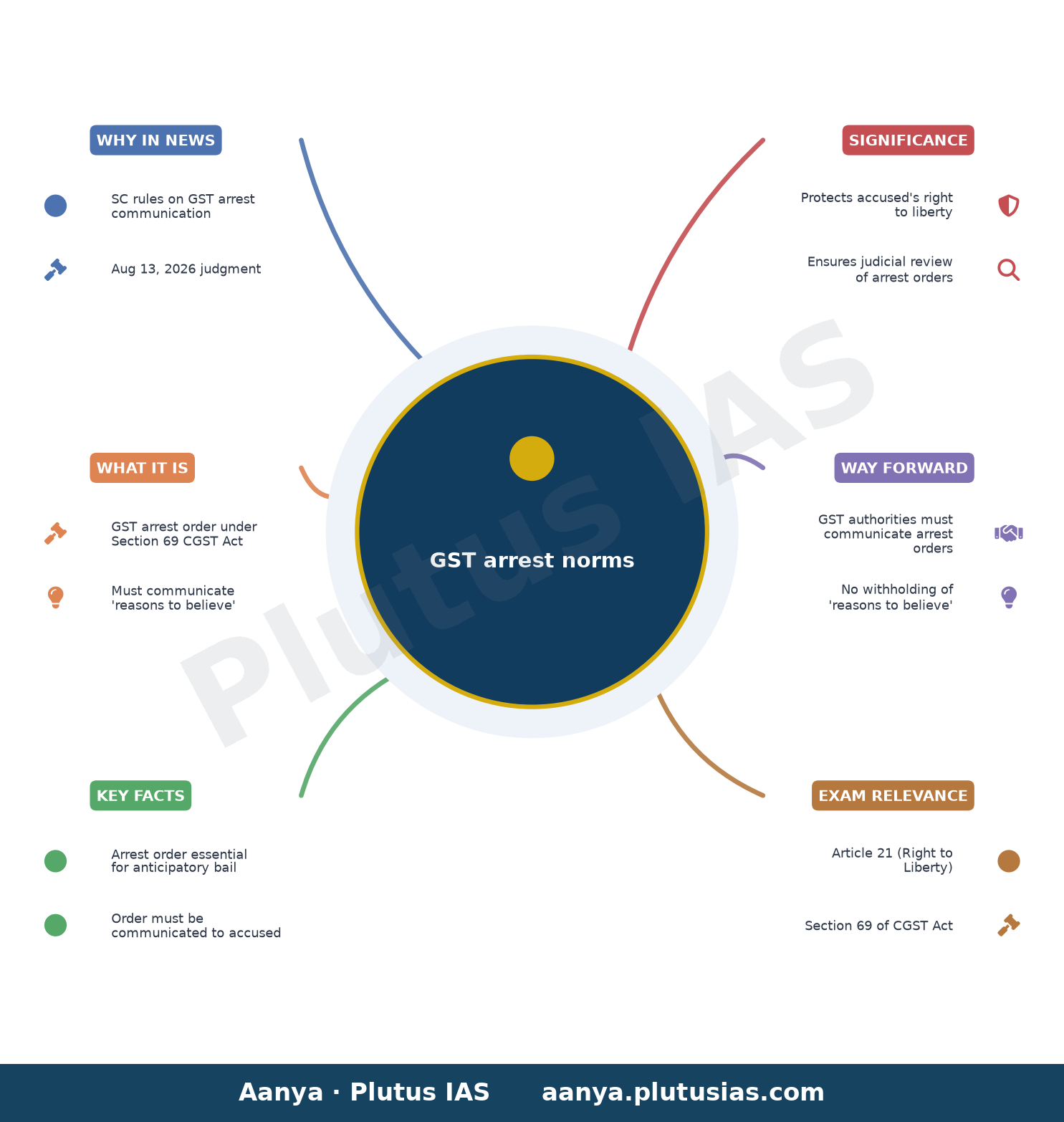
✎ SC mandates communication of GST arrest orders and 'reasons to believe' to protect accused's liberty and enable anticipatory bail.
Relevance for Banking, SSC & RBI Grade B exams: Polity
The Supreme Court has ruled that GST authorities cannot arrest a person without first communicating the arrest order and the “reasons to believe” recorded by the commissioner under Section 69 of the CGST Act. The court emphasized that disclosing these reasons is essential for individuals to seek anticipatory bail and challenge the order in court, as withholding such information could severely impact their right to liberty. The judgment underscores that the arrest order must be communicated before any arrest takes place, ensuring transparency and legal recourse for the accused. This ruling reinforces the principles of natural justice and judicial review, making it crucial for banking and financial regulatory exams like RBI Grade B, where legal frameworks governing arrests and due process are often tested.
For SSC and banking exams like IBPS PO and SBI Clerk, this judgment highlights the importance of constitutional safeguards in tax enforcement. It reflects the judiciary’s role in balancing investigative powers with individual rights, a recurring theme in polity and legal sections of competitive exams. Aspirants should note how the Supreme Court’s interpretation of Section 69 ensures that tax authorities cannot act arbitrarily, aligning with broader constitutional principles. This case also ties into the significance of digital communication in legal procedures, as the court allowed electronic modes like email for sharing orders, reflecting modern governance trends relevant for exam preparation.
Source: Hindustan Times
Generated by AanyaAi for educational purpose.
