
✎ CBSE's 3-language policy for Class 9 faces SC challenge over implementation and regional language conflicts.
Relevance for Banking, SSC & RBI Grade B exams: Polity & Governance
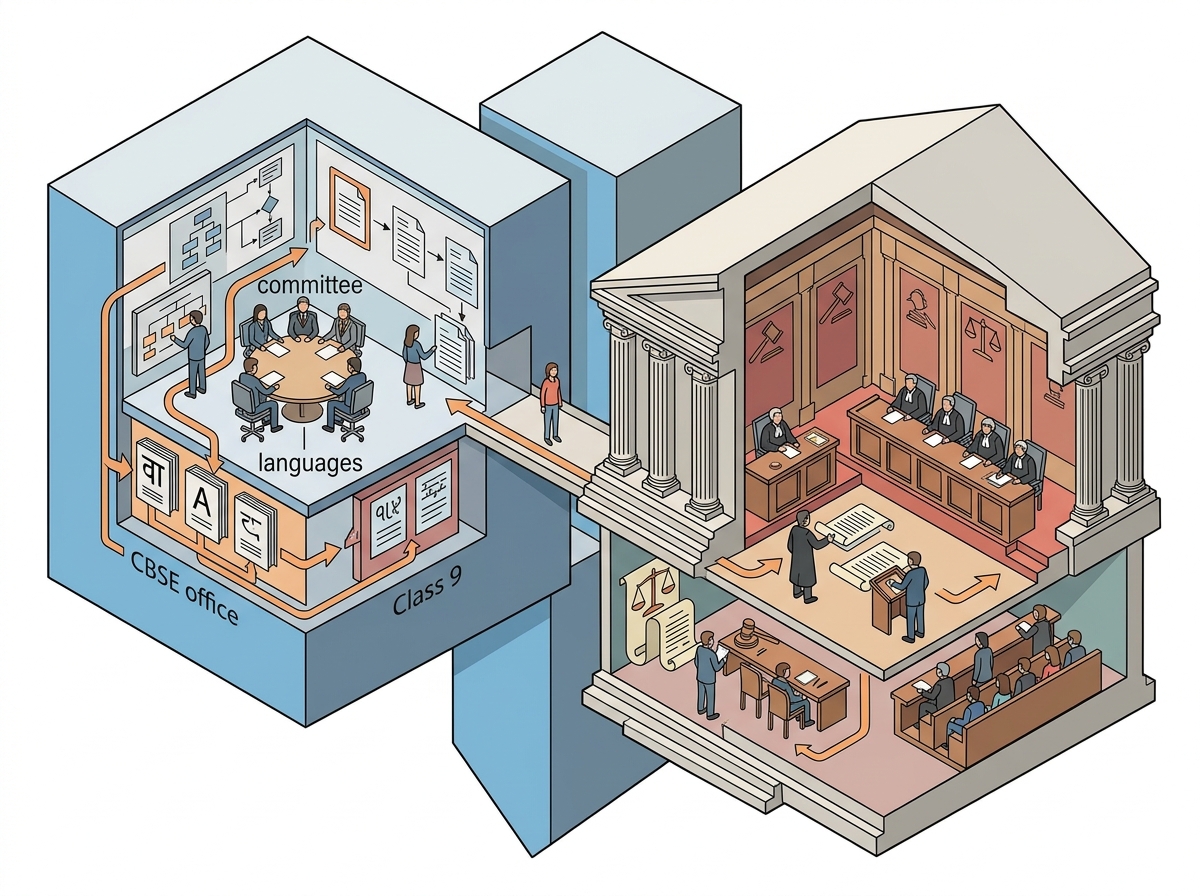
The Supreme Court is set to hear petitions challenging the Central Board of Secondary Education’s (CBSE) policy mandating three languages, including at least two Indian languages, for Class 9 students from the 2026-27 academic session. The policy, aligned with the National Education Policy (NEP) 2020, aims to promote multilingual education but has faced criticism for potentially overburdening students and conflicting with state language policies. The court has sought responses from the Centre, CBSE, and NCERT, raising concerns about the implementation feasibility and the authority of CBSE to introduce such a curriculum without adequate resources.
For aspirants preparing for Banking, SSC, and RBI Grade B exams, this issue highlights the intersection of governance, education policy, and judicial intervention. Questions related to NEP 2020, federalism (Centre-state relations in education), and the role of regulatory bodies like CBSE and NCERT are crucial for Polity & Governance sections. Additionally, the case underscores the importance of judicial review in policy implementation, a topic often tested in competitive exams. Understanding the rationale behind such policies and their legal challenges can provide an edge in analyzing governance-related questions.
Source: amarujala.com
Generated by AanyaAi for educational purpose.

1 comment on “Supreme Court to Hear CBSE’s 3-Language Policy Challenge for Class 9 in July”