✎ Tamil Nadu bans smartphones in 52 temples to maintain sanctity, allowing only non-camera phones with ₹5 deposit.
Relevance for Banking, SSC & RBI Grade B exams: Art & Culture
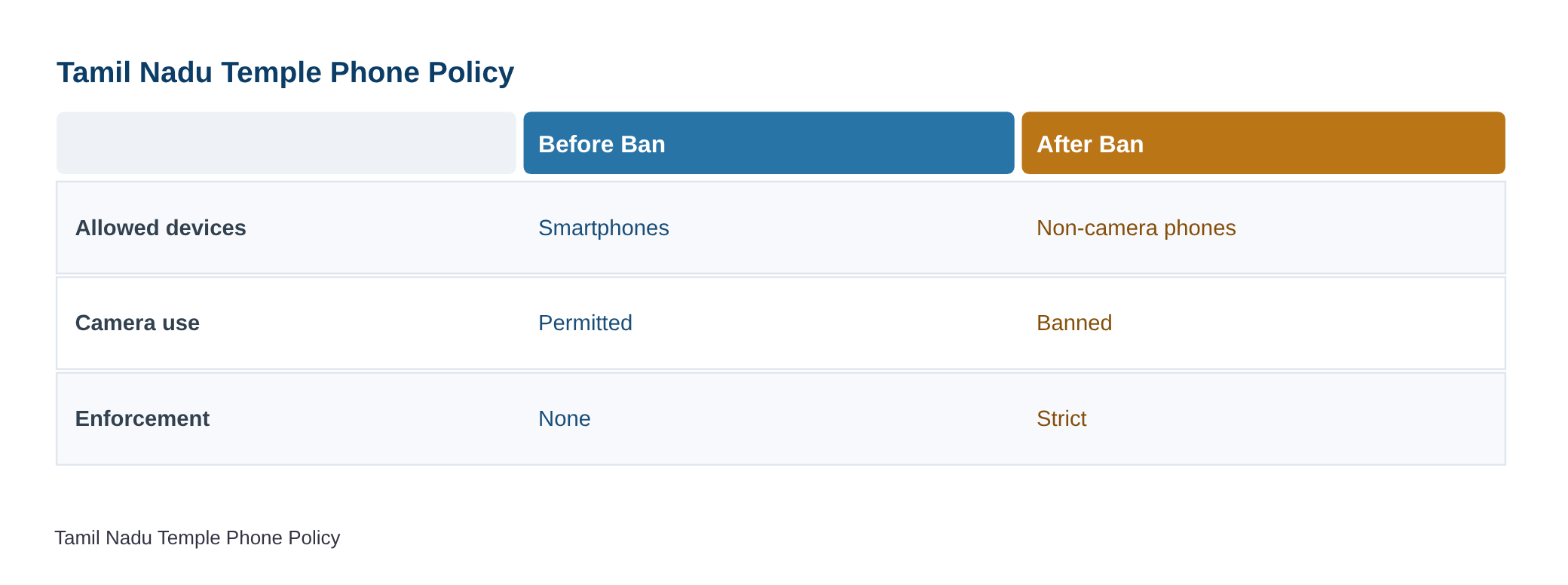
The ban on smartphones in 52 major temples across Tamil Nadu, managed by the Hindu Religious and Charitable Endowments (HR&CE) Department, came into effect on September 1, 2026, with a provision allowing only non-camera phones inside the premises. This move, mandated by existing court directives, aims to curb the rising trend of devotees taking photographs or videos of deities and idols, ensuring a peaceful worship environment. Temple authorities have set up phone deposit counters at entrances, charging ₹5 for safekeeping, while smartphones will be confiscated. The initiative reflects broader cultural preservation efforts, aligning with themes often tested in banking, SSC, and RBI Grade B exams under the Art & Culture segment, particularly regarding government policies and their socio-religious implications.
For aspirants preparing for competitive exams, this development underscores the intersection of governance, technology, and cultural heritage—a recurring topic in descriptive papers and interviews. Questions may probe the rationale behind such bans, their economic impact (e.g., temple revenue from donations), or the role of judicial directives in shaping public policy. Additionally, the ₹5 fee and locker system could be linked to financial inclusion or digital economy themes, while the ban’s enforcement highlights administrative challenges in public spaces, a potential case study for RBI Grade B’s socio-economic analysis sections.
Source: The Hindu
Generated by AanyaAi for educational purpose.
