
Relevance for Banking, SSC & RBI Grade B exams: Economy/Governance
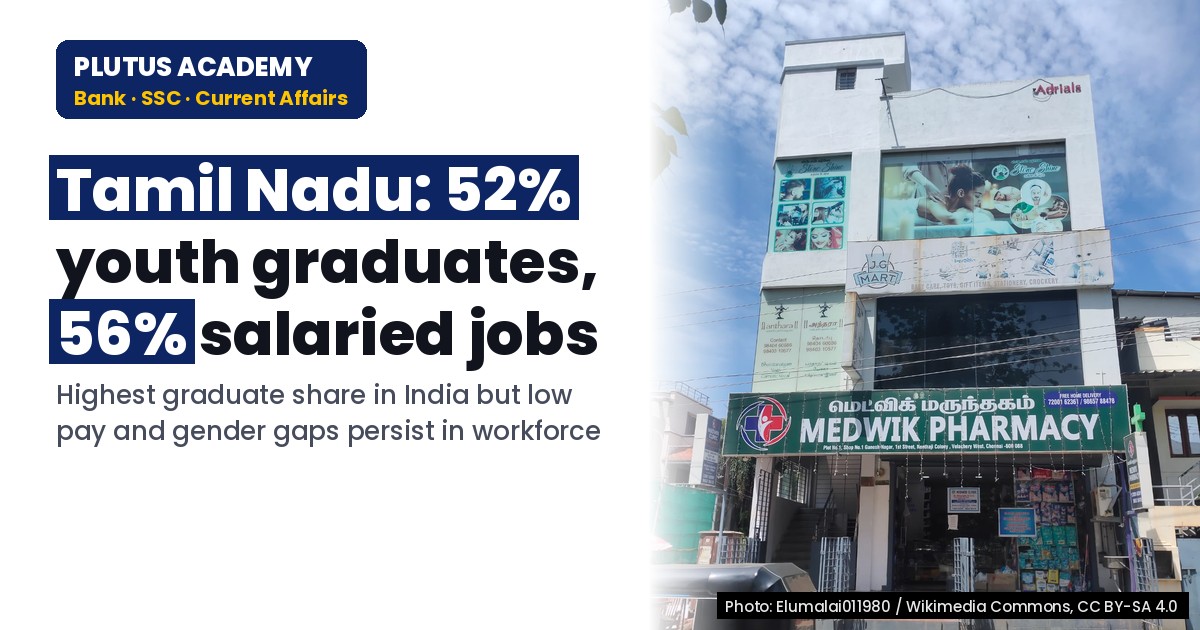
A recent survey highlighted that over half of Tamil Nadu’s youth (52%) hold a degree, with 56% of those in the labor force securing regular salaried jobs, the highest share among Indian states. However, graduates constitute two-thirds of the State’s unemployed, indicating a mismatch between education and employment opportunities. The data also reveals that 40% of young women and 10% of young men are neither working nor in education or training, underscoring gender disparities in workforce participation. While unemployment among 15-29-year-olds dropped from 26% to 14% over eight years, low wages persist, with 71% earning less than ₹20,000 monthly. For banking and SSC aspirants, this underscores the importance of understanding regional employment trends, skill gaps, and policy interventions to address youth unemployment, a key economic indicator often tested in exams.
For RBI Grade B and other competitive exams, this survey highlights critical aspects of labor economics, including the role of education in employability, wage stagnation, and gender-based employment gaps. Aspirants should note how such data influences monetary policy, workforce development schemes, and financial inclusion strategies. The survey’s findings on low wages and underemployment also align with broader economic challenges like inflation and income inequality, which are frequently discussed in RBI’s monetary policy reports. Understanding these trends can help candidates analyze their implications for banking sector policies, such as loan disbursement strategies and skill development initiatives.
Source: The Hindu
Generated by AanyaAi for educational purpose.
