Relevance for Banking, SSC & RBI Grade B exams: International Relations
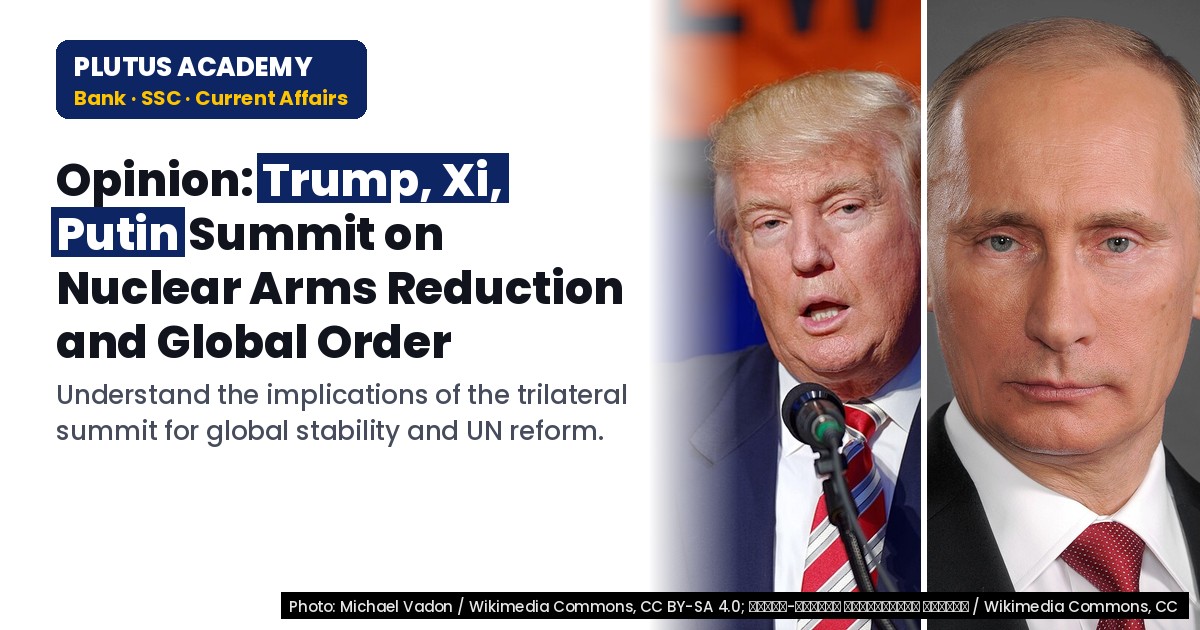
The first trilateral summit between the Presidents of China, the U.S. and Russia in Shenzhen on November 19, 2026, reflected a changing global order and a shared desire for engagement among the leaders. U.S. President Donald Trump sought to push for joint talks on reducing nuclear warheads, especially after the New START treaty expired. For President Xi Jinping, the summit reinforced China’s position as a peer competitor to the U.S., while Russian President Vladimir Putin gained a seat at the high table after efforts to isolate him. Though the summit resulted in a joint declaration that “a nuclear war cannot be won and must never be fought” and a decision to start trilateral talks on nuclear arms, it failed to achieve breakthroughs on nuclear arms reduction, non-proliferation, or the Ukraine war, and offered no clear roadmap for the future. The sustainability of the “Shenzhen spirit” remains uncertain, and while the leaders called for UN reform, any such attempt must involve other rising middle powers like India, South Africa, and Brazil to truly reform the international system.
For Banking, SSC, and RBI Grade B aspirants, understanding this summit is crucial for International Relations sections. Questions may arise on the key participants (Trump, Xi, Putin), the primary agenda items (nuclear arms reduction, non-proliferation, Ukraine war), and the outcomes (joint declaration, call for UN reform, but no major breakthroughs). The event highlights the evolving geopolitical landscape, the roles of major global powers, and the challenges to international stability, all of which are relevant for current affairs and general awareness components of these competitive exams. The mention of India as a rising middle power further emphasizes its growing significance in global affairs, a topic frequently tested.
Source: The Hindu
Generated by AanyaAi for educational purpose.

2 comments on “Trump, Xi, Putin Summit: Nuclear Talks & Global Order”