
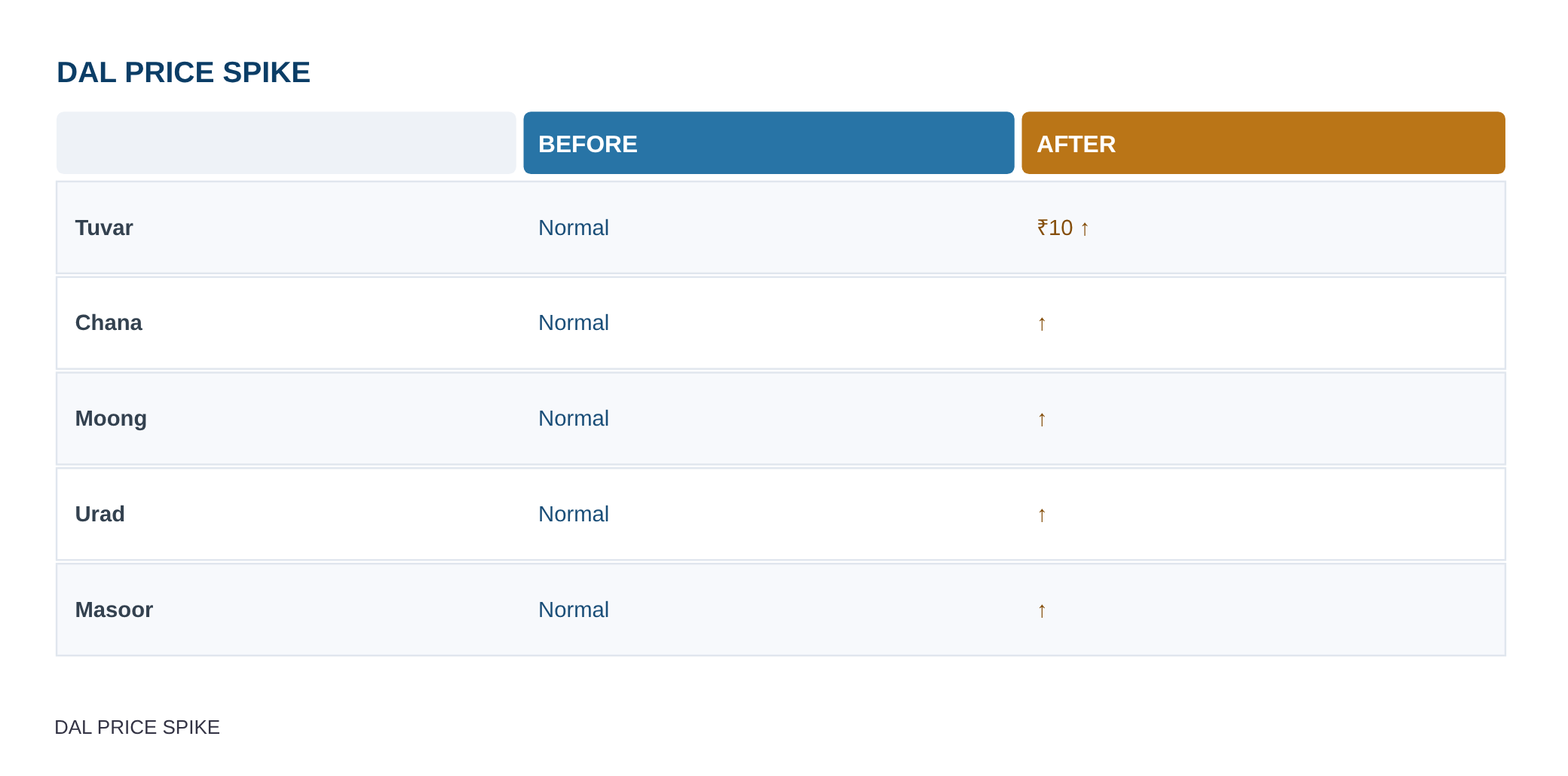
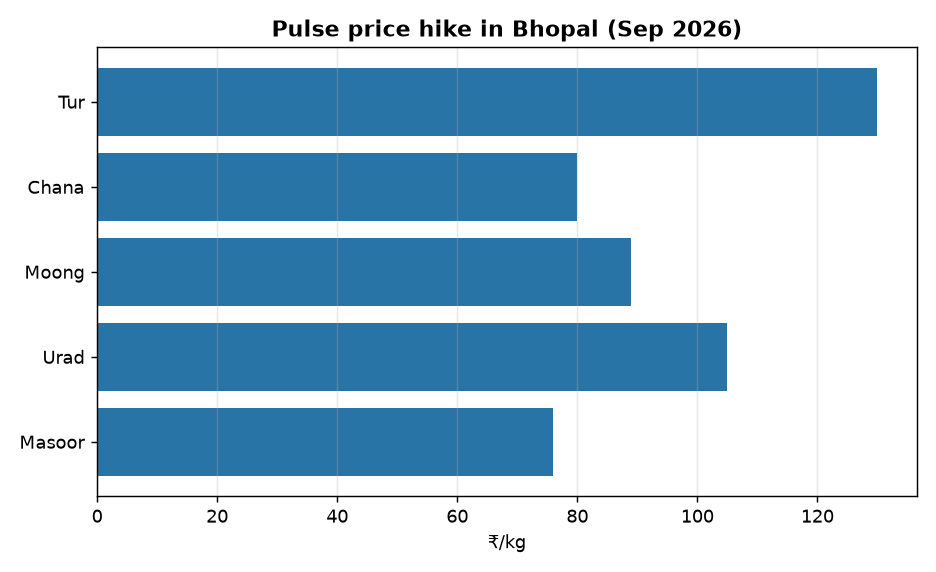
✎ Pulse prices surge due to festive demand and supply constraints, affecting household budgets and inflation metrics.
Relevance for Banking, SSC & RBI Grade B exams: Economy
The recent surge in pulse prices—with tur dal rising by ₹10 in a week and other varieties like chana, moong, urad, and masoor also witnessing hikes—poses significant concerns for inflation management and consumer welfare. For banking and SSC aspirants, this trend underscores the interplay between supply-side constraints (limited arrivals, weather disruptions) and demand-side pressures (festive season, weddings), directly impacting retail inflation—a key metric monitored by the RBI for monetary policy decisions. The Reserve Bank of India’s Grade B exam often tests candidates on inflation dynamics, supply chain vulnerabilities, and government interventions like buffer stock management, making this a critical case study for understanding real-world economic challenges.
For SSC aspirants, the pulse price volatility highlights broader themes in the Indian economy, such as agricultural productivity, import dependency (e.g., Myanmar, Canada), and the role of intermediaries in price transmission. Questions in exams like SSC CGL or CHSL may probe the impact of such inflationary pressures on household budgets, fiscal policies (e.g., subsidies), or even the GDP growth outlook. Similarly, banking exams like SBI PO or IBPS Clerk may expect candidates to link these trends to banking sector implications, such as loan defaults due to increased living costs or the role of financial institutions in stabilizing supply chains through trade finance. The RBI’s focus on inflation targeting (e.g., 4% ± 2%) further ties this issue to macroeconomic stability, a frequent topic in Grade B interviews and descriptive papers.
Source: amarujala.com
Generated by AanyaAi for educational purpose.

1 comment on “Tur Dal Prices Surge ₹10 in a Week: Exam-Relevant Economic Impact for Banking & SSC Aspirants”