✎ Uttarakhand orders 15-day verification of water schemes after deaths due to contaminated water, emphasizing PCB-led quality checks and surprise inspections.
Relevance for Banking, SSC & RBI Grade B exams: Polity & Governance
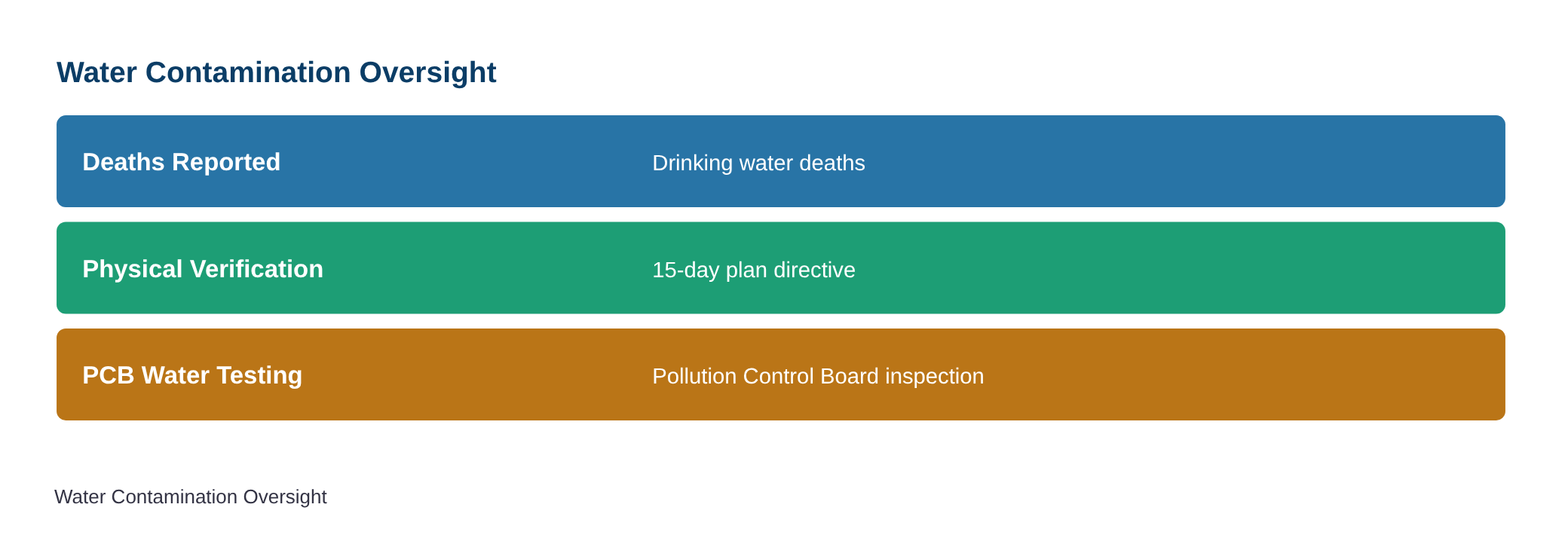
In Uttarakhand, the tragic deaths in Jeolikote due to contaminated drinking water have exposed critical gaps in the state’s water supply monitoring and field-level information systems. Following the incident, Chief Secretary Anand Bardhan directed a 15-day physical verification of all major water supply schemes across the state to assess ground realities, including leakages, storage, pipelines, and sewer lines. He also ordered the State Pollution Control Board (PCB) to conduct regular quality checks of drinking water sources, sewage treatment plants (STPs), and surface water, alongside surprise inspections of STPs in major cities. The directives emphasize strict accountability, with department heads facing punitive action for negligence in public health matters, underscoring the government’s commitment to preventing future lapses.
This incident holds significant relevance for Banking, SSC, and RBI Grade B exams, particularly in the Polity & Governance segment. For banking aspirants, it highlights the role of bureaucratic oversight in public welfare schemes, a theme often tested in exams like IBPS PO and SBI Clerk. SSC candidates may encounter questions on administrative accountability, disaster management, or the functioning of pollution control boards, while RBI Grade B aspirants could analyze the policy response to public health crises, linking it to governance frameworks. The case also illustrates the interplay between environmental regulations, infrastructure monitoring, and citizen welfare, making it a pertinent example for questions on governance reforms and crisis management in competitive exams.
Source: amarujala.com
Generated by AanyaAi for educational purpose.
