
Relevance for Banking, SSC & RBI Grade B exams: Polity & Governance
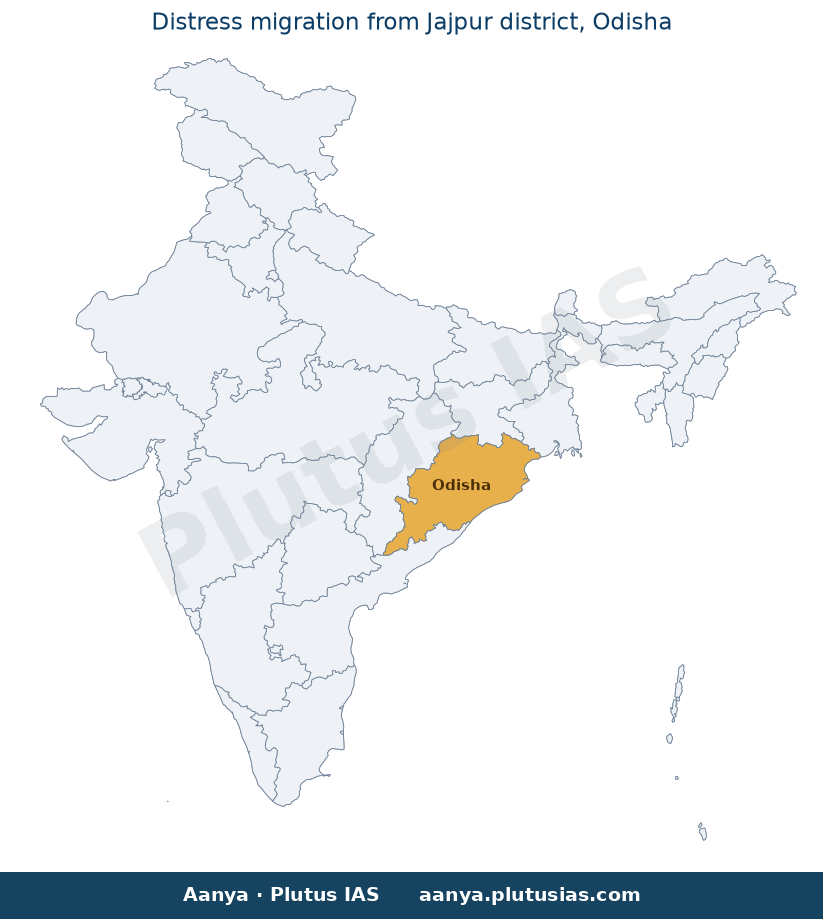
The VB-G RAM G scheme, launched under the Viksit Bharat initiative, aims to provide 100 days of guaranteed wage employment to rural households, but its implementation in Odisha’s Jajpur district has fallen short. Despite Jajpur’s mineral wealth and industrial growth, local workers in blocks like Sukinda and Danagadi continue to migrate to states like Tamil Nadu and Telangana due to limited job opportunities. Official data reveals that only 11,797 out of 15,339 households offered work under the scheme actually availed it, with no household completing the mandated 125 days of employment in eight months. Allegations of irregularities, such as fake job cards and wage delays, further erode trust in the program, exacerbating distress migration and its associated risks, including accidents and financial exploitation.
For banking and SSC aspirants, this case highlights governance challenges in rural employment schemes, a recurring theme in exams like RBI Grade B and IBPS. Questions may arise on the role of MGNREGA-like programs in reducing migration, the impact of mechanization in industries, and the need for transparent implementation. RBI Grade B candidates should note how such failures can affect labor productivity, remittances, and rural economies—key areas in monetary policy discussions. SSC aspirants may focus on the socio-economic consequences of migration, while banking exams could test knowledge of government schemes and their fiscal implications.
Source: orissapost.com
Generated by AanyaAi for educational purpose.

2 comments on “VB-G RAM G Scheme Fails to Check Jajpur’s Distress Migration Crisis”