
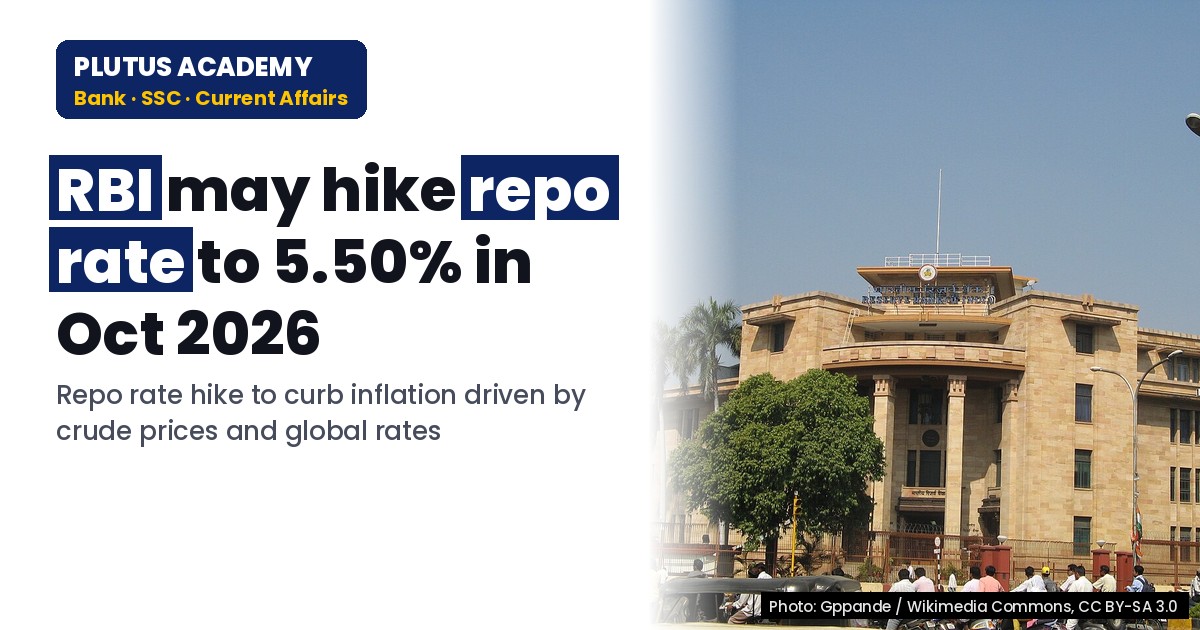
✎ RBI is likely to raise the repo rate by 25 bps to 5.50% in its October 7, 2026 meeting, potentially marking the start of a more aggressive rate-hiking cycle to curb inflation.
Relevance for Banking, SSC & RBI Grade B exams: Economy
The Reserve Bank of India (RBI) is widely expected to raise the repo rate by 25 basis points to 5.50% in its October 7 monetary policy review, marking a shift from its accommodative stance after nearly two years. The move, driven by persistent inflationary pressures, rising global interest rates, and elevated crude oil prices, aims to curb demand and anchor inflation expectations. Analysts suggest this could be the start of a more aggressive tightening cycle, with potential further hikes in December, as domestic inflation—currently at 4.82%—remains above the RBI’s 4% target due to food and energy price shocks. The central bank’s decision aligns with the US Federal Reserve’s recent rate hike, which has pushed global yields higher, narrowing India’s interest rate differential and increasing the urgency to act. For banking aspirants preparing for exams like IBPS PO, SBI Clerk, or RBI Grade B, understanding the transmission mechanism of repo rate hikes—impacting loan EMIs, deposit rates, and liquidity conditions—is crucial, as these concepts frequently appear in economic awareness sections. The RBI’s policy stance also reflects broader macroeconomic challenges, including El Niño-related agricultural disruptions and geopolitical risks, which can influence GDP growth projections and inflation forecasts—key topics in SSC and banking exams.
The relevance of this scenario extends to financial stability and monetary policy frameworks, which are often tested in RBI Grade B and SSC exams. A rate hike would tighten financial conditions, affecting credit growth, bond yields, and foreign exchange dynamics, all of which are critical for aspirants to grasp. For SSC candidates, questions on inflation drivers—such as food prices, crude oil, and global supply chain disruptions—are common in general awareness sections, while banking exams may focus on the operational aspects of rate hikes, like their impact on banks’ net interest margins (NIMs) and asset quality. The RBI’s cautious approach, balancing growth and inflation, also ties into broader themes like the MPC’s mandate, inflation targeting, and the role of liquidity adjustments—concepts that frequently feature in descriptive and analytical questions for RBI Grade B mains exams. Aspirants should also monitor the RBI’s forward guidance, as shifts in policy tone can signal future trends in borrowing costs and economic activity.
Source: The Indian Express
Generated by AanyaAi for educational purpose.

2 comments on “RBI to Hike Repo Rate: Why Inflation, Crude & Global Rates Matter for Exams”