
Relevance for Banking, SSC & RBI Grade B exams: Polity
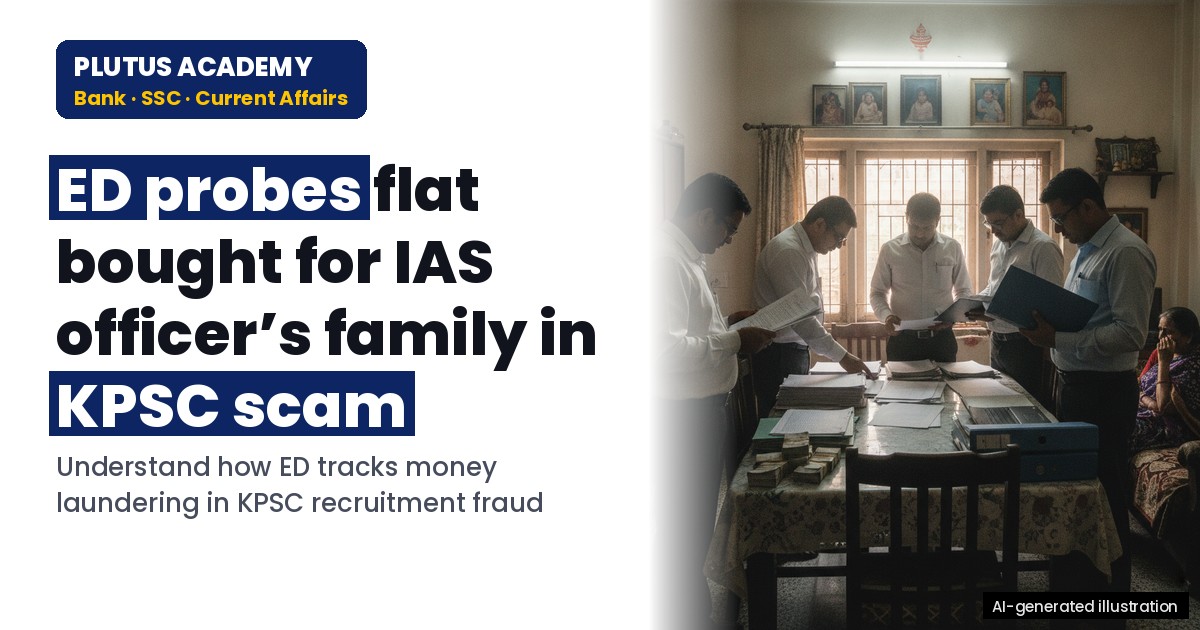
The Karnataka Public Service Commission (KPSC) recruitment scam has come under the scanner of the Enforcement Directorate (ED) after it was revealed that a flat near Bengaluru International Airport was purchased in the name of the arrested IAS officer Gyanendra Kumar Gangwar’s brother using proceeds from the alleged fraud. Gangwar, who served as KPSC’s controller of examinations, was suspended and arrested for allegedly leaking exam questions for 400 veterinary officer posts in exchange for bribes ranging from Rs 20 lakh to Rs 40 lakh per candidate. The ED is probing money laundering aspects, including unaccounted cash deposits of Rs 26 lakh in the accounts of the officer’s relatives and the acquisition of immovable assets like a semi-constructed house in Bareilly and a real estate business in Uttar Pradesh, all allegedly funded through illicit gains from the scam.
For Banking, SSC, and RBI Grade B aspirants, this case highlights critical aspects of governance, corruption, and financial vigilance. The ED’s investigation into money laundering and unaccounted assets underscores the importance of anti-corruption frameworks like the Prevention of Money Laundering Act (PMLA) and the role of investigative agencies in maintaining transparency. Questions on the functioning of public service commissions, ethical governance, and the impact of corruption on public trust may appear in exams. Additionally, understanding the mechanisms of financial crimes and regulatory oversight can be relevant for subjects like economics, banking regulations, and general awareness sections in competitive exams.
Source: The Indian Express
Generated by AanyaAi for educational purpose.
