
Relevance for Banking, SSC & RBI Grade B exams: Polity & Governance
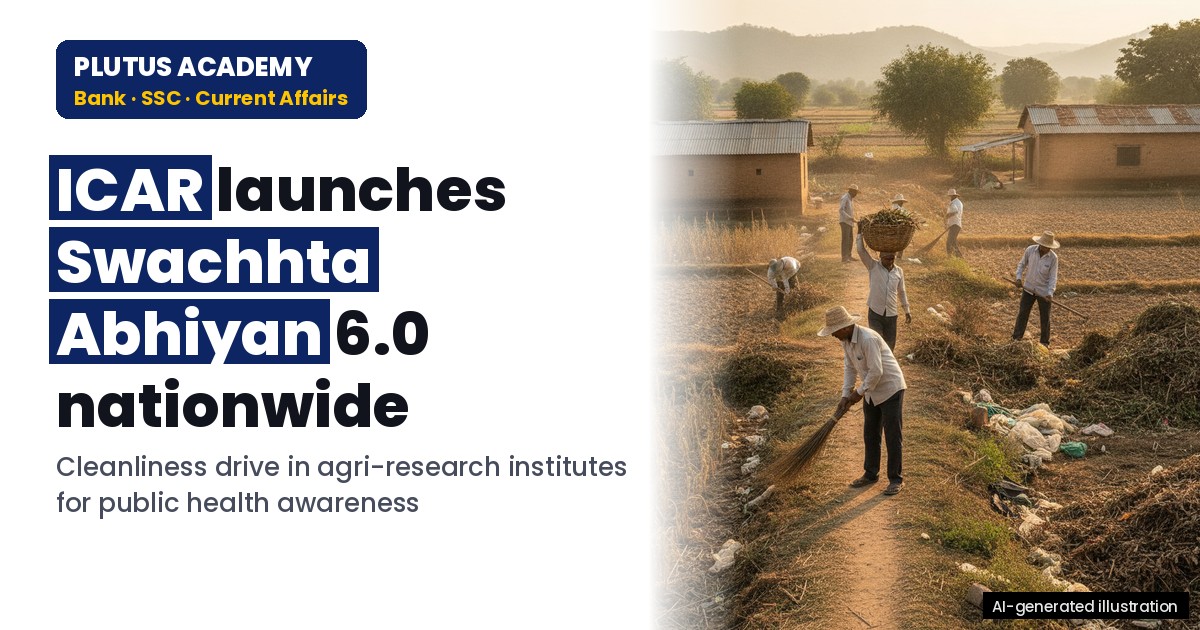
The Department of Agricultural Research and Education (DARE) and the Indian Council of Agricultural Research (ICAR) have intensified their efforts under *Swachhta Abhiyan 6.0* to promote hygiene and sanitation awareness, aligning with the government’s broader mission of fostering a cleaner and healthier society. Through targeted initiatives, DARE/ICAR has emphasized creating a safe and hygienic environment in agricultural research institutions, including clearing unwanted vegetation, managing waste, and ensuring cleanliness in farm areas to protect workers from harmful pests. These measures not only enhance workplace efficiency but also underscore the role of sanitation in safeguarding public health, a critical aspect for aspirants preparing for exams like Bank PO, SSC, and RBI Grade B, where governance and public welfare policies often feature prominently.
The campaign’s relevance extends to governance and policy implementation, as seen in ICAR’s initiatives such as sorting physical vouchers for better record management at the Central Coastal Agricultural Research Institute (CCARI), Goa, and identifying scrap materials like metals, panels, and plastics for proper disposal. Such activities reflect the government’s commitment to institutionalizing cleanliness, reducing pending cases, and promoting sustainable practices. For banking and SSC aspirants, understanding these initiatives highlights the intersection of public administration, environmental sustainability, and institutional efficiency—key themes in exams that test awareness of government schemes and their socio-economic impact.
Source: PIB (Press Information Bureau)
Generated by AanyaAi for educational purpose.
