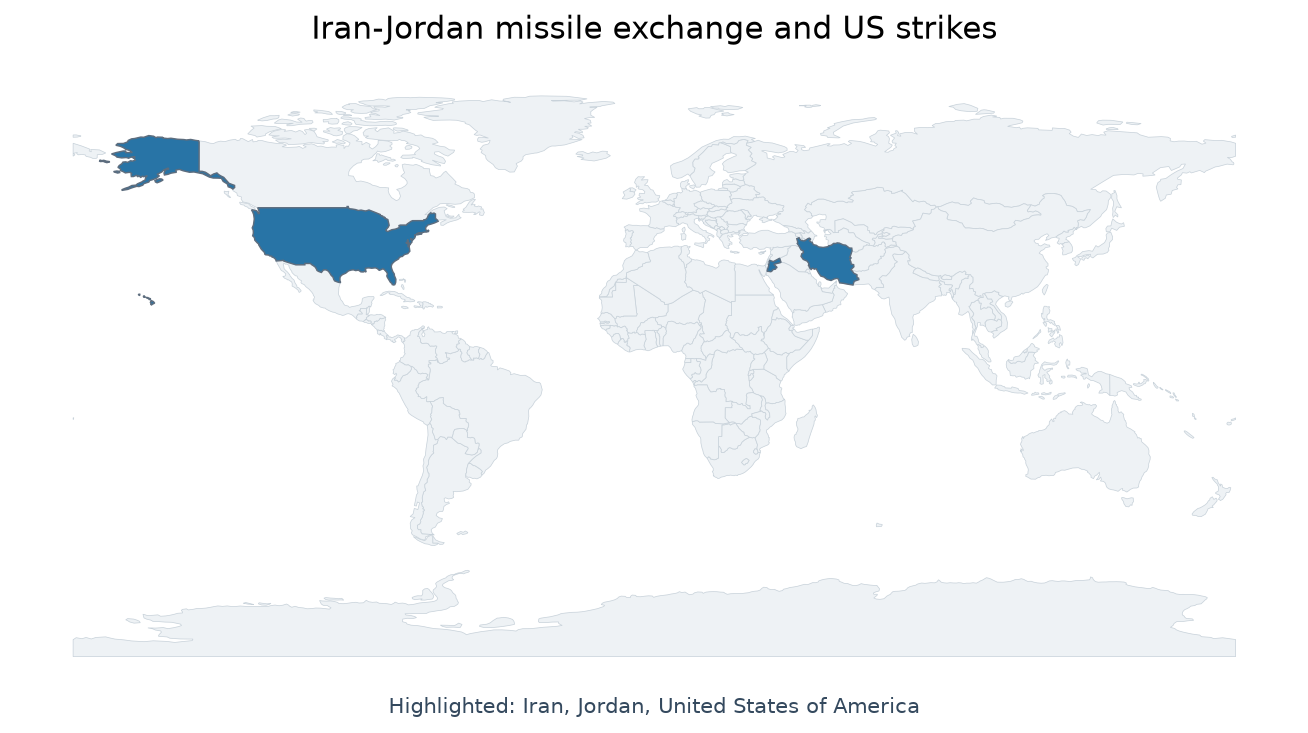
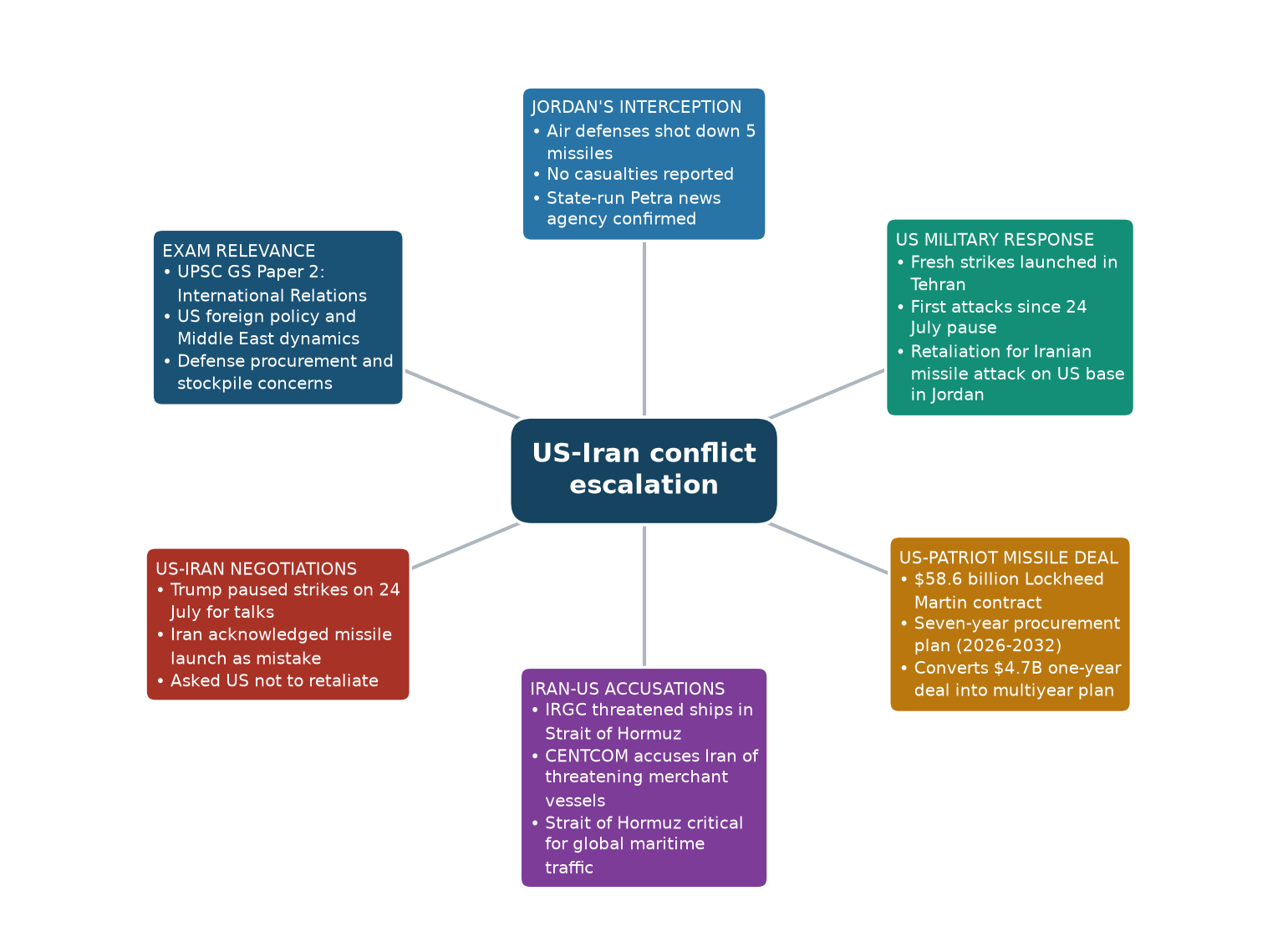
Map & concept mind-map: Iran-Jordan missile exchange and US strikes
Relevance for Banking, SSC & RBI Grade B exams: Economy/Governance
The escalating tensions between the US and Iran, marked by recent missile exchanges and retaliatory strikes, hold significant implications for global economic stability and governance frameworks. For banking and financial services aspirants preparing for exams like IBPS, SBI, or RBI Grade B, understanding the geopolitical undercurrents is crucial, as such conflicts often disrupt oil supply chains, trigger inflationary pressures, and impact currency markets. The US-Iran confrontation, particularly the Strait of Hormuz—a critical chokepoint for oil transit—could lead to supply disruptions, affecting crude prices and, consequently, inflation rates and monetary policies. Additionally, the Pentagon’s $58.6 billion Patriot missile deal underscores the strain on defense inventories, a topic relevant for governance and fiscal policy discussions in competitive exams.
For SSC aspirants, the US-Iran conflict serves as a case study in international relations, governance, and crisis management. The Jordanian interception of Iranian missiles highlights the role of regional alliances and air defense systems, while the US sanctions on IRGC-linked entities reflect the broader “maximum pressure” campaign. These developments are pertinent for exams covering current affairs, as they test candidates’ awareness of global events and their impact on economic policies, trade, and security dynamics. The conflict also ties into broader themes like energy security and diplomatic negotiations, which are frequently tested in SSC examinations.
Source: Mint
Generated by AanyaAi for educational purpose.
