
✎ Amendment introduces digital birth/death certificates to modernize record-keeping and reduce fraud.
Relevance for Banking, SSC & RBI Grade B exams: Polity
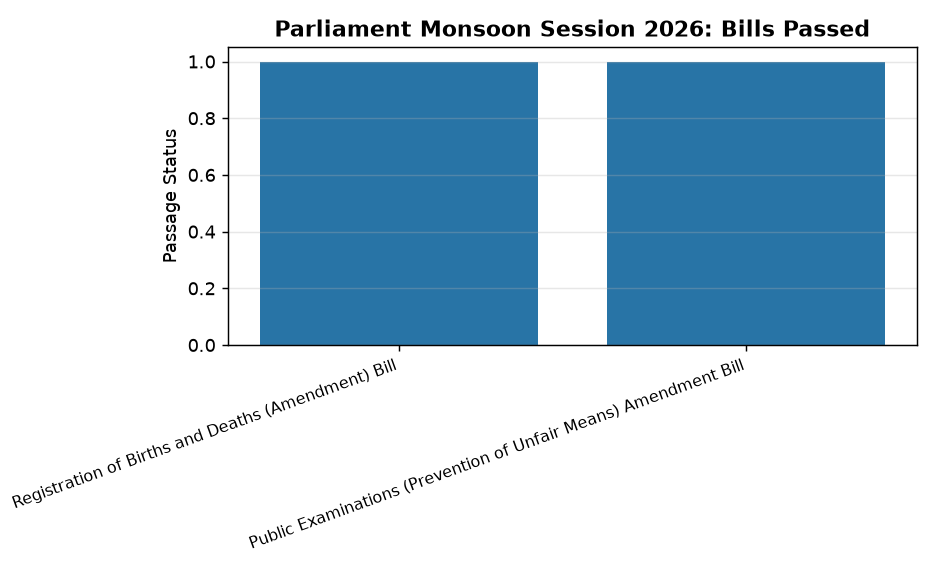
The Lok Sabha passed the **Registration of Births and Deaths (Amendment) Bill, 2026** on July 31, 2026, amid Opposition protests, marking a significant legislative development. The Bill aims to digitize birth and death records, enabling seamless integration with other government databases like Aadhaar, voter lists, and property records. This amendment is crucial for improving governance efficiency, reducing fraud, and ensuring accurate demographic data—key aspects often tested in banking and SSC exams under governance and digital initiatives. For RBI Grade B aspirants, understanding such amendments helps in grasping how administrative reforms impact financial inclusion and data-driven policymaking, which are frequently discussed in economic surveys and RBI reports.
The passage of this Bill also highlights the **disruptions in Parliament**, with Opposition parties protesting the police crackdown on student agitators and raising demands for Home Minister Amit Shah’s resignation. Such political dynamics are relevant for exam aspirants as they reflect on the functioning of democratic institutions, which is a recurring theme in Polity sections of competitive exams. Banking exams often test knowledge of government schemes and legislative processes, while SSC exams may include questions on constitutional amendments or parliamentary procedures. The Bill’s focus on digital records also aligns with broader themes of e-governance and transparency, making it a pertinent topic for aspirants preparing for these examinations.
Source: The Hindu
Generated by AanyaAi for educational purpose.
