
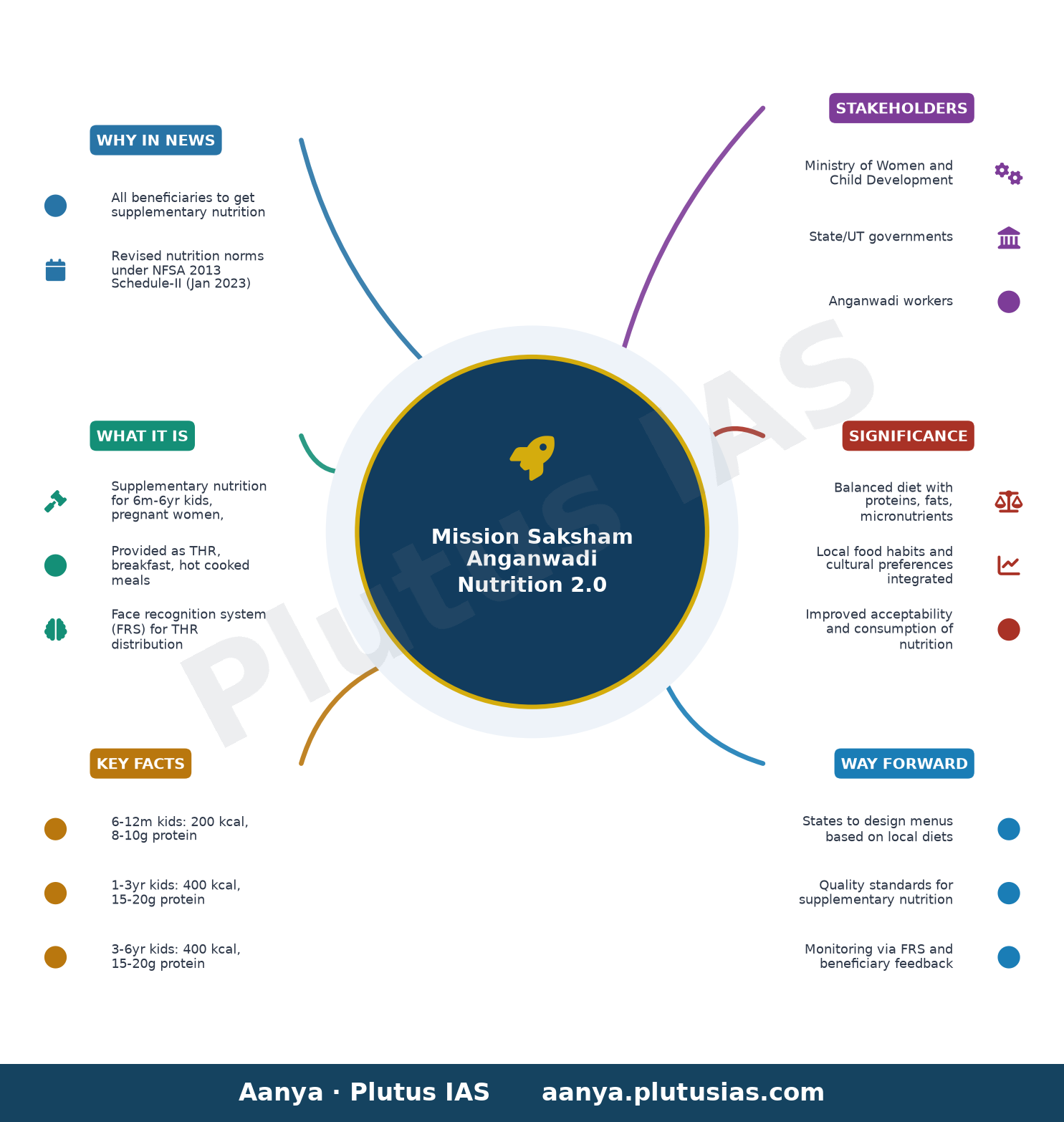
✎ Mission Saksham Anganwadi Nutrition 2.0 ensures balanced supplementary nutrition for vulnerable groups via THR, breakfast, and hot meals with local dietary integration.
Relevance for Banking, SSC & RBI Grade B exams: Polity & Governance
The *Mission Saksham Anganwadi and Nutrition 2.0* scheme, under the Ministry of Women and Child Development, ensures supplementary nutrition for all beneficiaries, including children aged 6 months to 6 years, pregnant and lactating women, and adolescent girls (14-18 years). The scheme provides nutrition in the form of take-home rations (THR), morning snacks, and hot-cooked meals, with provisions tailored to meet the Recommended Dietary Allowances (RDA) and address gaps in Average Daily Intake (ADI). For instance, children aged 6-12 months receive 200 kcal and 8-10g protein, while those aged 1-3 years and 3-6 years get 400 kcal and 15-20g protein, along with essential micronutrients like iron, vitamin A, and zinc. The scheme also targets severely malnourished children (SAM) with additional THR, aligning with the revised nutritional norms under the *National Food Security Act, 2013 (Schedule-II)*.
This initiative is particularly relevant for banking, SSC, and RBI Grade B exams as it reflects the government’s commitment to social welfare and public health, a recurring theme in governance and polity sections. The scheme’s emphasis on nutrition security, dietary diversity, and localized food preferences underscores the importance of evidence-based policymaking—a key area often tested in competitive exams. Additionally, the integration of technology, such as facial recognition systems for THR distribution, highlights the intersection of governance and digital innovation, a topic frequently explored in current affairs sections of these examinations.
Source: PIB (Press Information Bureau)
Generated by AanyaAi for educational purpose.
