
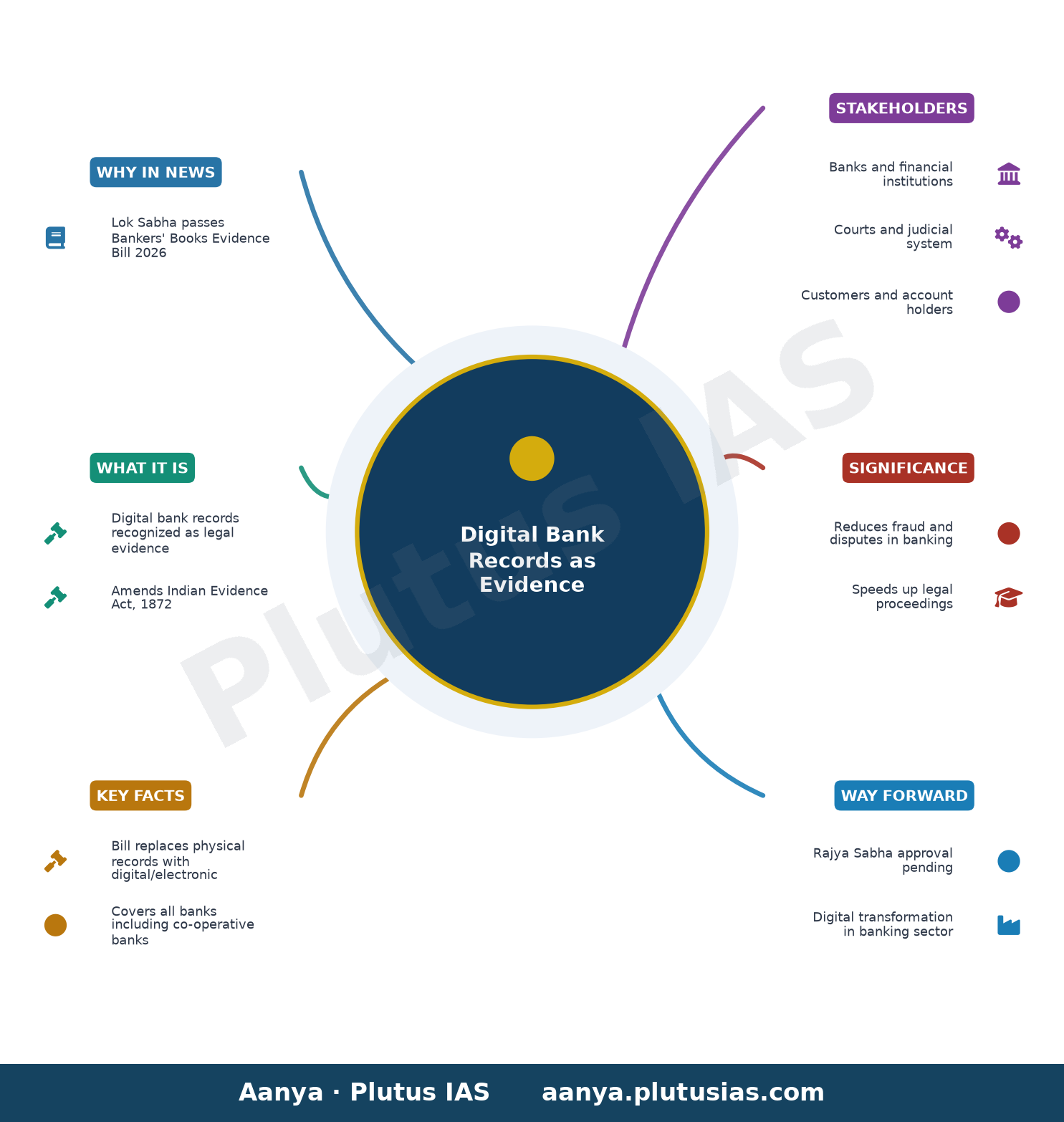
✎ Digital bank records now legally valid evidence under Indian Evidence Act, enhancing transparency and efficiency.
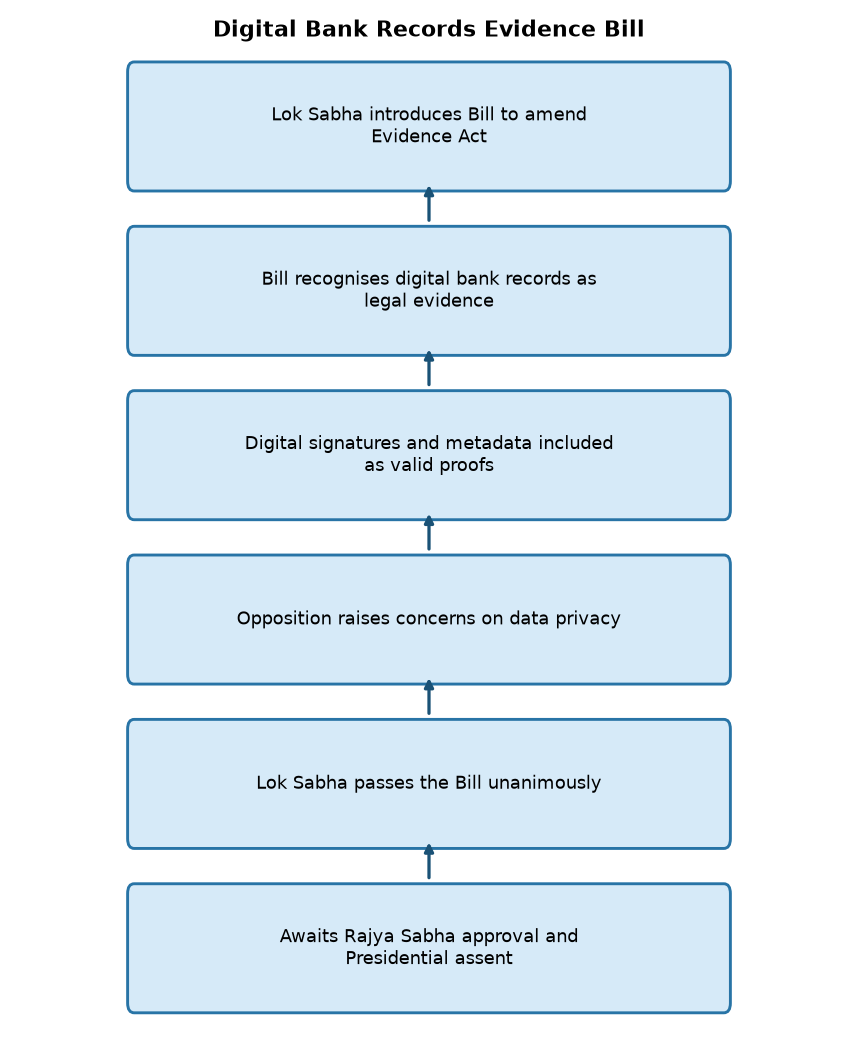
Relevance for Banking, SSC & RBI Grade B exams: Polity
The Lok Sabha recently passed a significant amendment to the Indian Evidence Act, 1872, recognising digital bank records as legally valid evidence in courts. The Bill, titled *Bankers’ Books Evidence (Amendment) Bill, 2026*, seeks to modernise the legal framework by allowing digital records—such as transaction statements, passbooks, and electronic ledgers—to be admissible as evidence without requiring physical documents. This move aligns with the growing digitalisation of banking and financial services, ensuring that courts can rely on authentic, tamper-proof digital evidence in disputes related to loans, frauds, or financial transactions. The amendment also empowers banking regulators like the RBI to issue guidelines for the preservation and authentication of such records, enhancing transparency and accountability in the financial sector.
For aspirants preparing for Banking PO, IBPS, SBI, RBI Grade B, and SSC exams, this development holds high relevance, particularly in the *Polity* and *Economic & Social Issues* sections. Banking exams often test knowledge of regulatory frameworks and digital banking reforms, while SSC and RBI Grade B exams may include questions on legal provisions related to evidence and financial governance. Understanding the implications of digital evidence in courts can help candidates grasp broader themes like financial inclusion, cybersecurity, and judicial reforms, which are frequently examined. Additionally, the Bill reflects the government’s push towards a paperless economy, a topic often discussed in current affairs and economic surveys.
Source: ndtv.com
Generated by AanyaAi for educational purpose.
