✎ Rising POCSO cases in Kerala reflect better reporting, not necessarily higher crime, driven by legal literacy and awareness.
Relevance for Banking, SSC & RBI Grade B exams: Economy/Governance
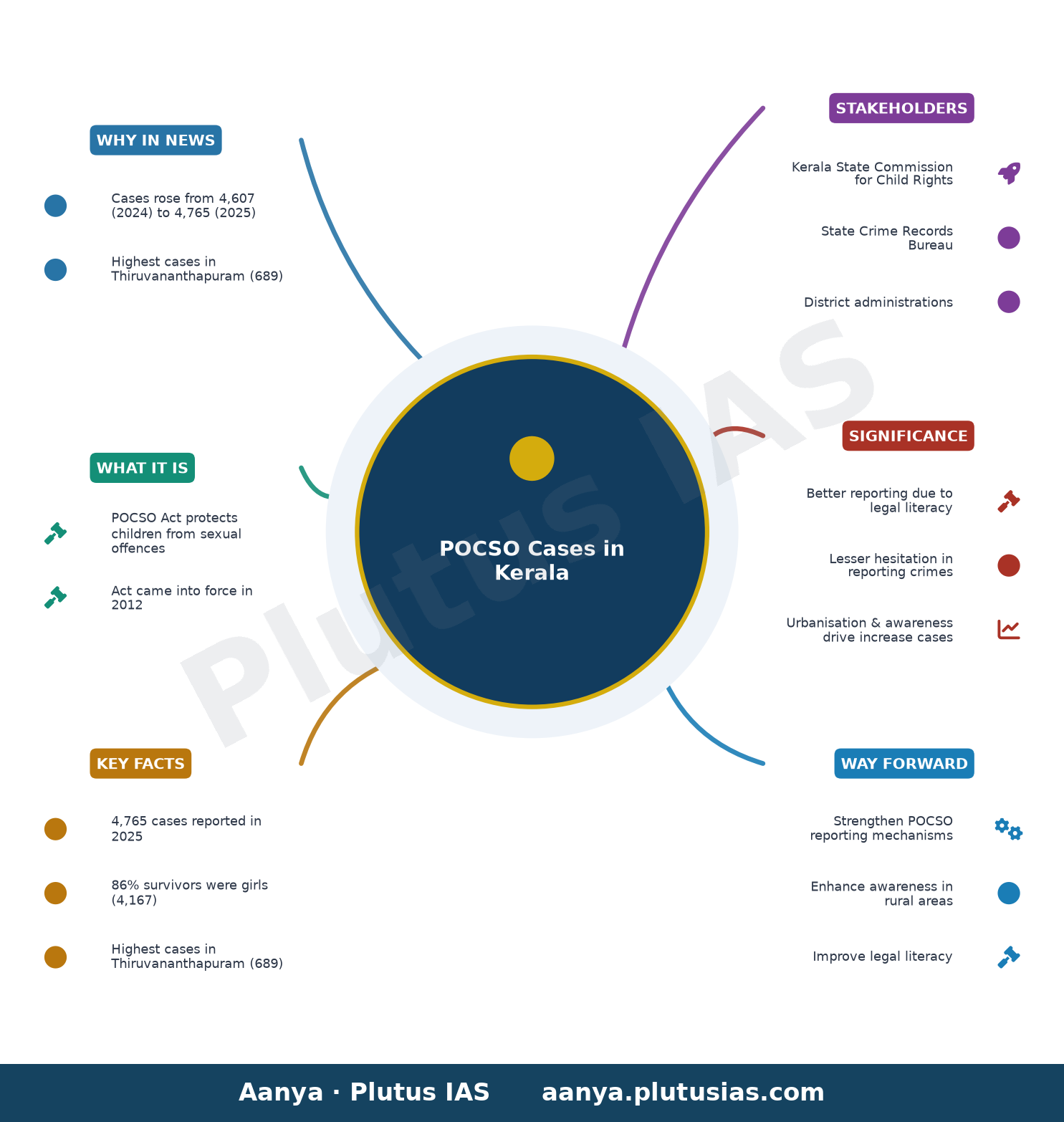
The rise in POCSO cases in Kerala, as highlighted in the Kerala State Commission for Protection of Child Rights report, underscores the persistent vulnerability of children despite existing legal frameworks. The number of cases reported under the Protection of Children from Sexual Offences (POCSO) Act increased from 4,607 in 2024 to 4,765 in 2025, with Thiruvananthapuram district reporting the highest number at 689. While this may reflect improved reporting due to heightened awareness and reduced hesitation, it also signals the need for stronger preventive measures. For banking aspirants, this data is relevant in understanding socio-economic challenges that influence policy formulation, such as child protection laws, which can impact workforce productivity and long-term economic stability. Similarly, for SSC and RBI Grade B aspirants, this issue ties into governance and public administration, where effective implementation of laws like POCSO is crucial for societal well-being and economic growth.
The report also highlights that 86% of survivors were girls, with the 15-18 age group being the most vulnerable, and a significant portion of offences occurring in familiar spaces like homes or among relatives. This trend reflects deeper societal issues, such as gender inequality and lack of awareness, which can have long-term economic implications, including healthcare costs and reduced human capital development. For banking exams, such insights are vital for questions related to socio-economic indicators, while for SSC and RBI Grade B, they provide context for governance and public policy discussions. Understanding these trends helps aspirants grasp the intersection of social issues and economic policies, a key area in competitive examinations.
Source: The Hindu
Generated by AanyaAi for educational purpose.
