
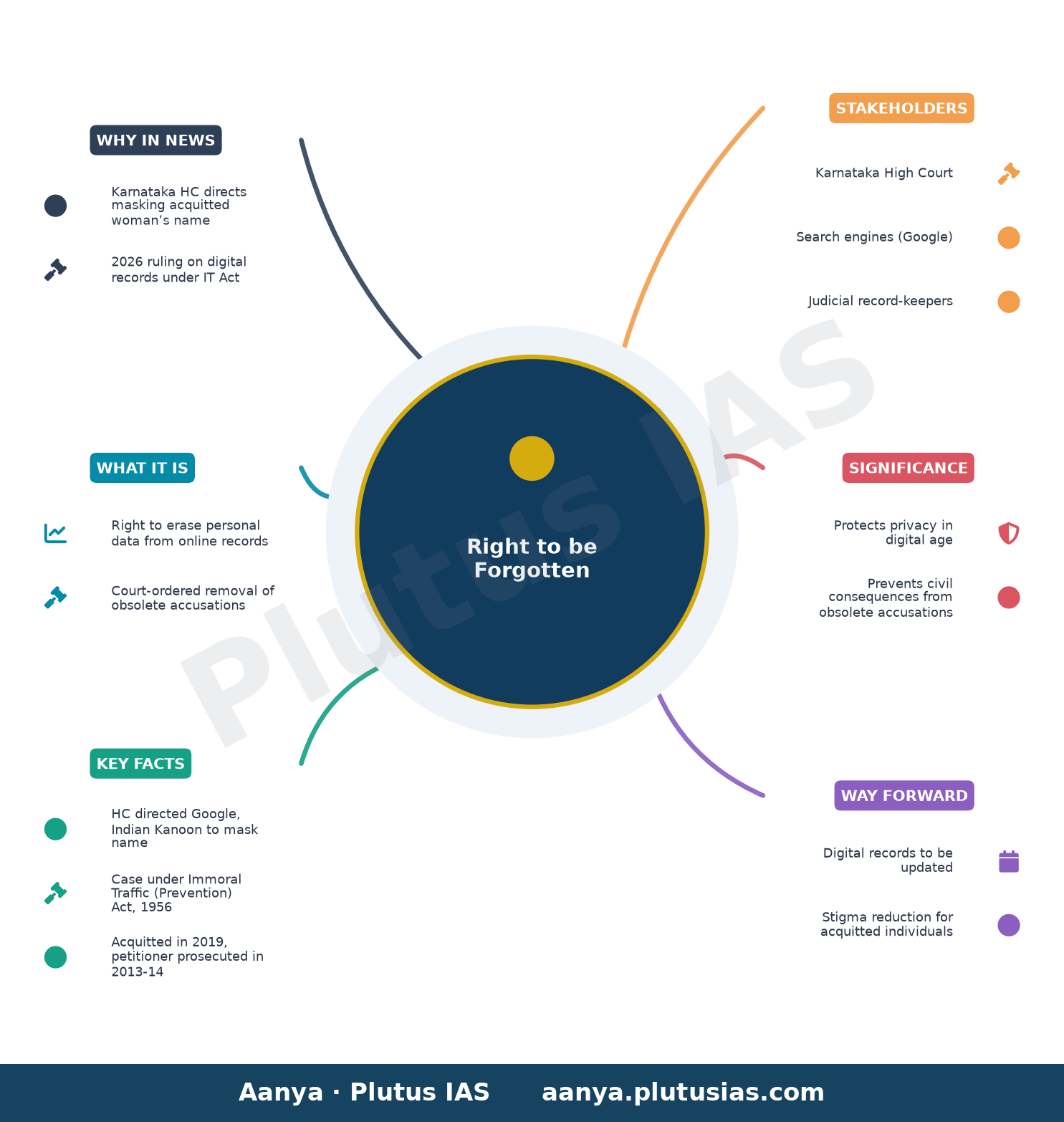
✎ Right to be forgotten allows erasure of obsolete digital records to protect privacy and prevent stigma.
Relevance for Banking, SSC & RBI Grade B exams: Polity
The Karnataka High Court’s recent directive to mask an acquitted woman’s name from online records under the ‘right to be forgotten’ underscores the growing intersection of digital privacy and judicial accountability. The court’s observation that digital search results often shape public perception highlights the need for legal safeguards against the lingering stigma of obsolete accusations. For aspirants preparing for exams like Bank PO, IBPS, SBI, RBI Grade B, and SSC, this ruling is significant as it reflects the evolving jurisprudence on data protection and fundamental rights, particularly the balance between transparency in judicial records and individual privacy. The case also ties into broader themes of cybersecurity and ethical governance, which are increasingly relevant in banking and administrative roles.
The judgment reinforces the importance of constitutional guarantees, such as the right to dignity and freedom from unwarranted surveillance, in the digital era. For banking and SSC aspirants, understanding such legal precedents is crucial, as questions on digital rights, privacy laws, and judicial activism frequently appear in exams. The court’s stance on not rationing fundamental rights due to potential misuse (“opening floodgates” argument) further emphasizes the judiciary’s role in upholding constitutional values, a topic often tested in RBI Grade B’s economic and political awareness sections. This case serves as a practical example of how legal rulings impact societal norms and institutional practices.
Source: The Hindu
Generated by AanyaAi for educational purpose.
