✎ 2026 Mines Bill centralizes mineral control, threatens Odisha's fiscal autonomy and developmental funds.
Relevance for Banking, SSC & RBI Grade B exams: Polity
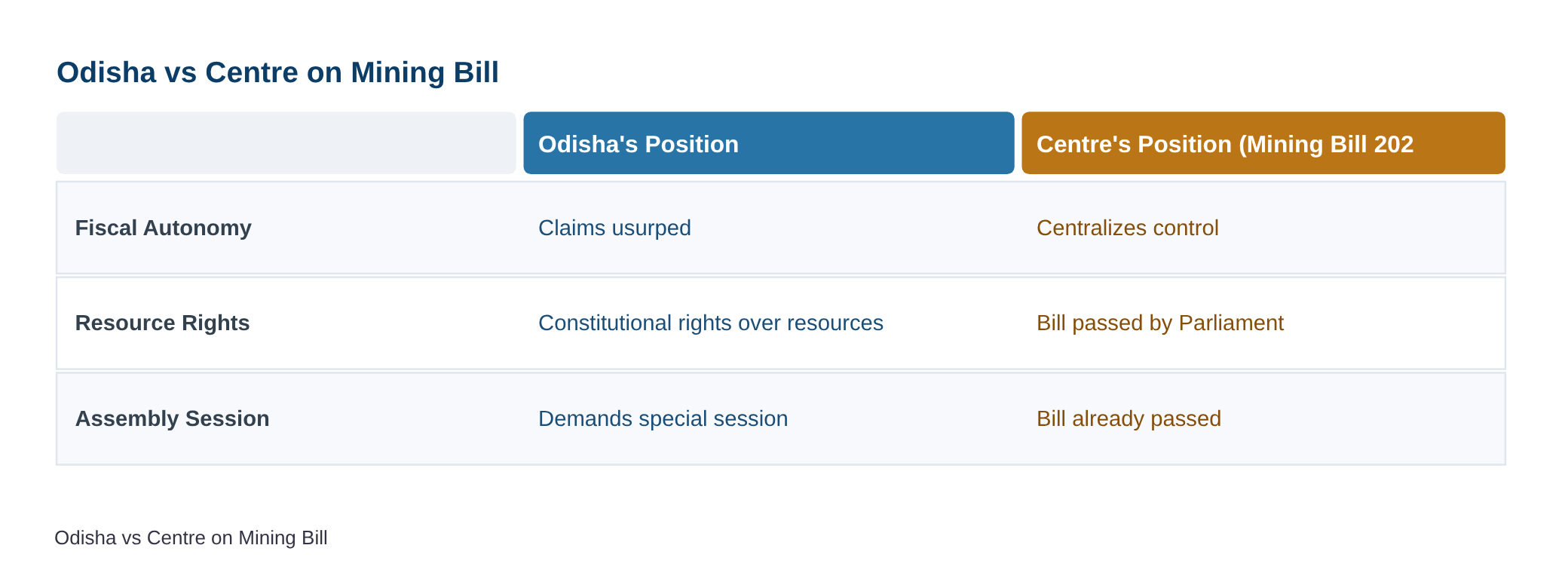
The recent passage of the Mines and Minerals (Development and Regulation) Amendment Bill, 2026, has sparked significant political and constitutional debates, particularly in mineral-rich states like Odisha. BJD president Naveen Patnaik has strongly criticized the Bill, arguing that it undermines Odisha’s fiscal autonomy by centralizing control over mineral resources and restricting the state’s power to levy taxes on mining activities. This move, he asserts, threatens the state’s developmental priorities, including healthcare, education, and infrastructure, as revenue from mining is a critical source of funding for such initiatives. The Bill’s provisions, which grant the Centre sole authority to frame rules while limiting state-level taxation, have been seen as a direct assault on federalism, raising concerns about the balance of power between the Union and state governments.
For aspirants preparing for Banking, SSC, and RBI Grade B exams, this issue is highly relevant as it intersects with constitutional provisions, federalism, and economic governance. Questions on federalism, the distribution of legislative powers under the Seventh Schedule, and the role of the Centre versus states in resource management could feature in exams. Additionally, understanding the economic implications of such legislation—such as its impact on state revenues, developmental funding, and inter-state disputes—can be crucial for current affairs sections. The debate also highlights the importance of cooperative federalism, a topic often tested in competitive exams, making it essential for candidates to grasp the nuances of such legislative changes and their broader implications.
Source: The Hindu
Generated by AanyaAi for educational purpose.

1 comment on “Odisha’s Fiscal Autonomy at Risk: BJD’s Protest Against Mining Bill 2026”