
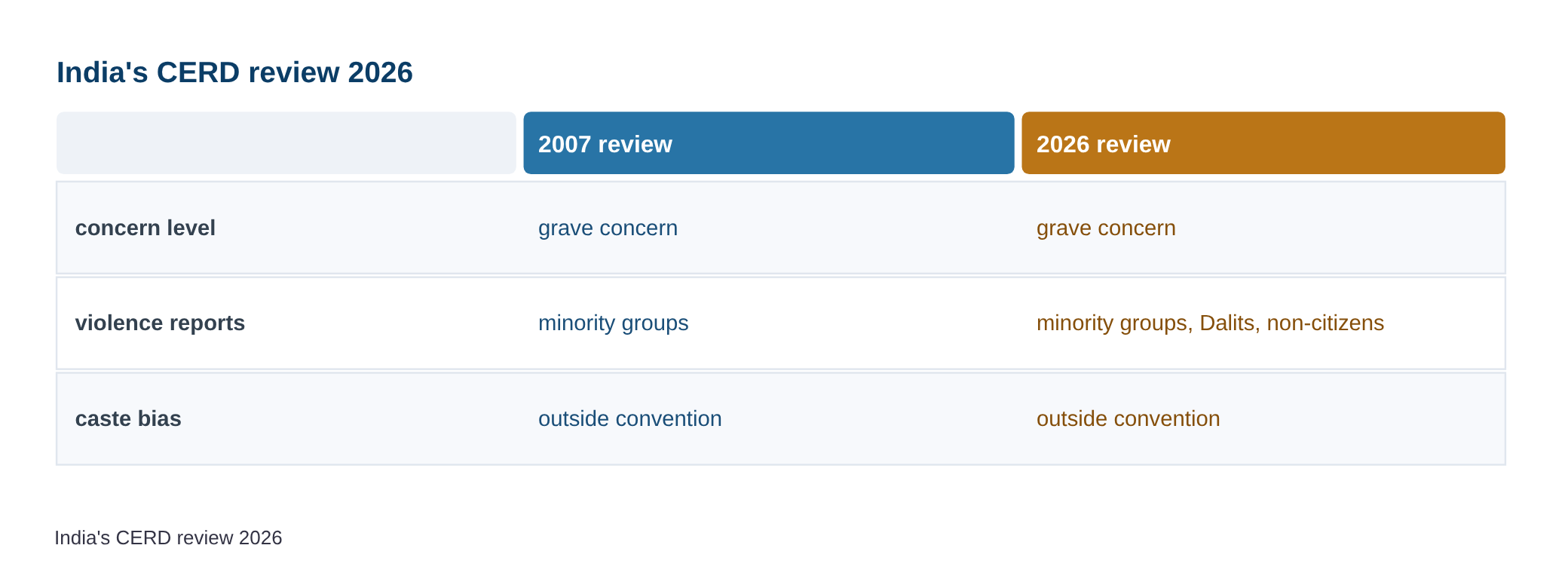
✎ UN CERD report highlights systemic discrimination in India, urging legal reforms and data transparency.
Relevance for Banking, SSC & RBI Grade B exams: Economy/Governance
The UN Committee on the Elimination of Racial Discrimination (CERD) has expressed “grave concern” over India’s compliance with the International Convention on the Elimination of All Forms of Racial Discrimination, citing persistent discrimination against minority ethnic and ethno-religious groups, Dalits, and non-citizens. The report highlights systemic issues such as law enforcement violence, caste bias, manual scavenging despite legal bans, hate speech, poor living conditions of Rohingya Muslims, mass citizenship deprivation via the NRC, and the misuse of laws like the UAPA and AFSPA to suppress civil society. These concerns are particularly relevant for banking and SSC aspirants, as governance and socio-economic disparities often influence policy frameworks, credit risks, and socio-economic indices that impact financial stability and regulatory compliance.
For RBI Grade B and other competitive exams, understanding such reports is crucial as they underscore the importance of inclusive governance, data transparency, and human rights compliance in economic policies. The CERD report also points to the need for disaggregated data, which is essential for designing targeted welfare schemes, assessing credit risks in minority-dominated regions, and ensuring equitable financial inclusion. Aspirants should note how governance failures, such as delayed Census data or NHRC independence issues, can create systemic risks, affecting everything from loan defaults to policy credibility.
Source: The Hindu
Generated by AanyaAi for educational purpose.

1 comment on “UN CERD Report 2026: India’s Human Rights Concerns & Governance Gaps”