
✎ Bhopal’s e-waste crisis demands urgent regulatory action to prevent lead poisoning and environmental damage.
Relevance for Banking, SSC & RBI Grade B exams: Economy/Governance
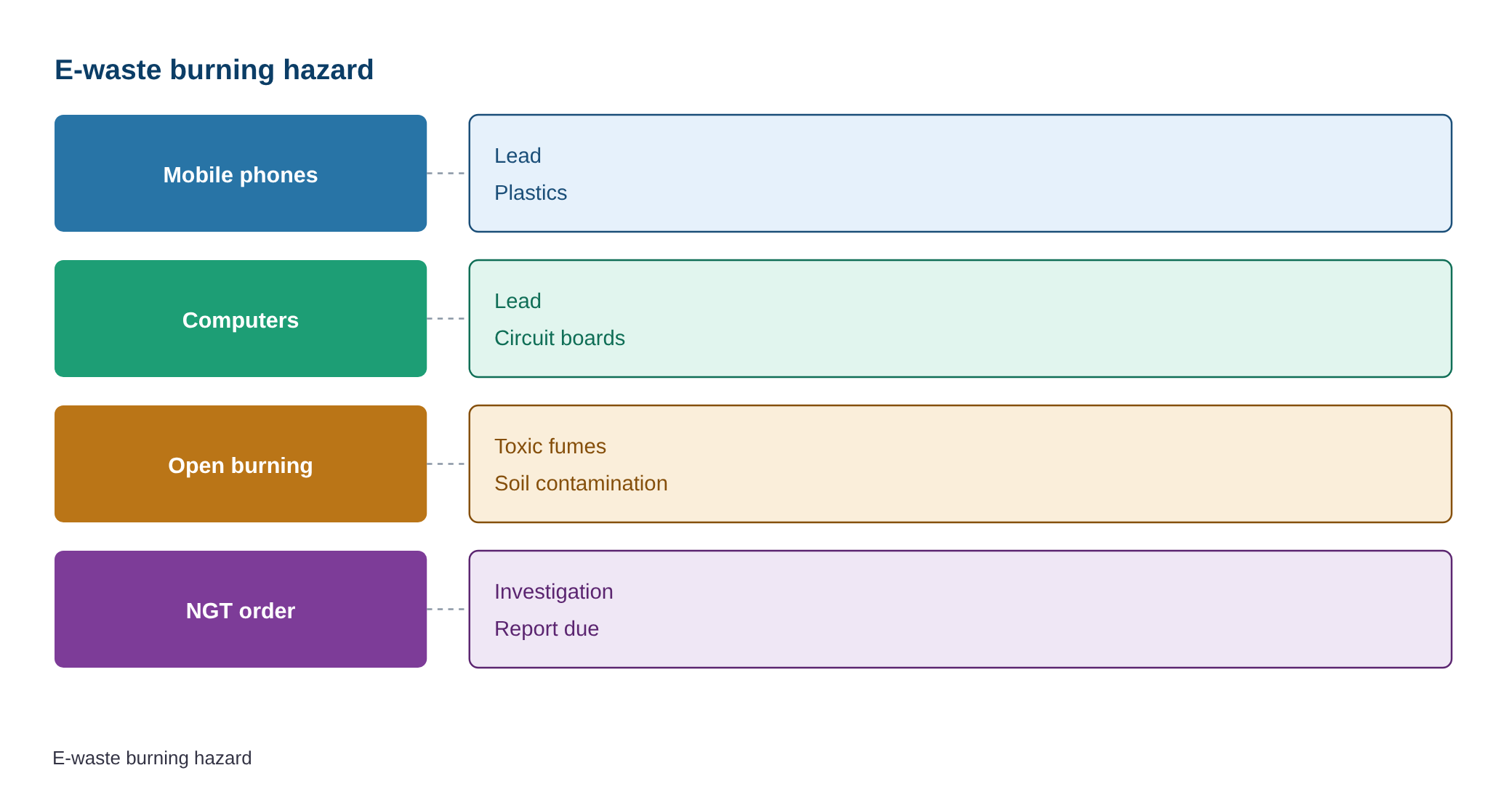
The National Green Tribunal (NGT) has taken suo motu cognizance of the hazardous e-waste management practices in Bhopal, where mobile phones, computers and other electronic devices are allegedly being burnt in the open, releasing toxic heavy metals like lead into the environment. The tribunal has constituted a committee to investigate the environmental and public health impact within four weeks and directed multiple state departments—including the Bhopal collector, Madhya Pradesh Pollution Control Board, municipal corporation, environment, health and electronics departments—to file their responses. The next hearing is scheduled for 1 October 2026, with the committee comprising representatives from the Ministry of Environment, Central Pollution Control Board and state authorities to assess the scale of unscientific processing and recommend remedial measures.
This issue is highly relevant for Banking, SSC and RBI Grade B aspirants as it intersects with governance, environmental sustainability and public health—key themes in the syllabus. For Banking exams, understanding regulatory bodies like the NGT and their role in environmental governance can be crucial for questions on financial institutions and policy frameworks. SSC aspirants may encounter this in general awareness sections on environmental laws or government initiatives, while RBI Grade B candidates could face questions linking e-waste management to economic policies, public health expenditure or sustainable development goals. The case also highlights the importance of inter-departmental coordination in governance, a topic often tested in these exams.
Source: amarujala.com
Generated by AanyaAi for educational purpose.
